“Learn the powerful strategies of top Digital Wallet Referral Programs to rapidly scale user acquisition, build trust, and lower customer acquisition costs (CAC) for your fintech app.”
The fintech world is brutal. It’s a cutthroat, high-stakes race for market share, user trust, and, ultimately, a spot on the user’s home screen. In this environment, growth isn’t just significant; it’s the only thing that matters. As customer acquisition costs (CAC) for financial products skyrocket, innovative fintechs are realizing that traditional advertising alone is no longer enough.
So, how did the giants—the apps that became verbs like “Venmo me”—get so big?
They didn’t just buy users. They activated them. They transformed their existing, happy customers into their most potent, authentic, and effective sales force.
They mastered the digital wallet referral program.
This isn’t just another item on a marketing checklist. For companies like PayPal, Cash App, and Venmo, referral marketing is a crucial component of their product growth engine. It’s a finely tuned machine built on deep psychological triggers: simplicity, social proof, and instant gratification.
In this in-depth analysis, we will dissect the legendary growth strategies of these peer-to-peer (P2P) payment giants. We won’t just admire their success; we’ll break it down into a concrete playbook. This is a fintech marketing case study designed to give you, the founder, marketer, or product manager at the next big fintech, actionable lessons you can use to build your own growth machine.
We’ll explore the specific mechanics of their programs, the subtle psychology that makes them work, and the “viral loop” that separates the good from the truly dominant.
Why Referral Marketing is a Fintech Superpower
Before we dive into the “how,” let’s lock in the “why.” Why is referral marketing for financial services so effective?
It comes down to one, single, non-negotiable currency: Trust.
Finance is built on trust. You’re asking a user to connect their bank account, hold their money, and process their payments. That’s a massive ask in a world full of digital noise and security risks.
- A Facebook ad can’t build that trust.
- A clever banner ad can’t build that trust.
- Even a Super Bowl commercial, while flashy, struggles to build genuine, personal trust.
But a text from a friend? That’s different.
When your friend Sarah texts you, “Hey, you’ve got to try this new neobank app. I just used it to split dinner, and it’s so easy. Plus, if you sign up with my link, we both get $10,” the entire dynamic changes.
- Trust is Transferred: The trust you have in Sarah is instantly transferred to the app. Her recommendation cuts through all the marketing noise.
- Friction Disappears: Your usual skepticism (“Is this a scam? Is it hard to use?”) is preemptively answered. Sarah, a human you know, has already vetted it.
- The Incentive is a Bonus, Not the Reason: The $10 is a great kicker, but the real driver was the social proof from a trusted source.
This is the power of peer-to-peer payment referrals. The “peer-to-peer” part isn’t just about the technology; it’s about the marketing strategy. The very nature of the product—connecting two people—is a perfect vehicle for a viral loop.
Traditional marketing is “one-to-many.” You shout your message from a mountaintop (like an ad) and hope people listen. Referral marketing is “many-to-many.” You empower each user to become a node in your network, creating a chain reaction that’s cheaper, more authentic, and infinitely more scalable. This is the core of modern user acquisition for fintech apps.
Case Study 1: The OG — PayPal’s $10 Million Gamble
You can’t talk about fintech growth without paying respect to the original. The “PayPal Mafia” (led by Peter Thiel and Elon Musk, among others) didn’t just build a payment product; they wrote the playbook for viral growth.
In the early 2000s, PayPal faced a classic “chicken and egg” problem. A payment network is useless without people to pay. How do you get the first million users?
The Program:
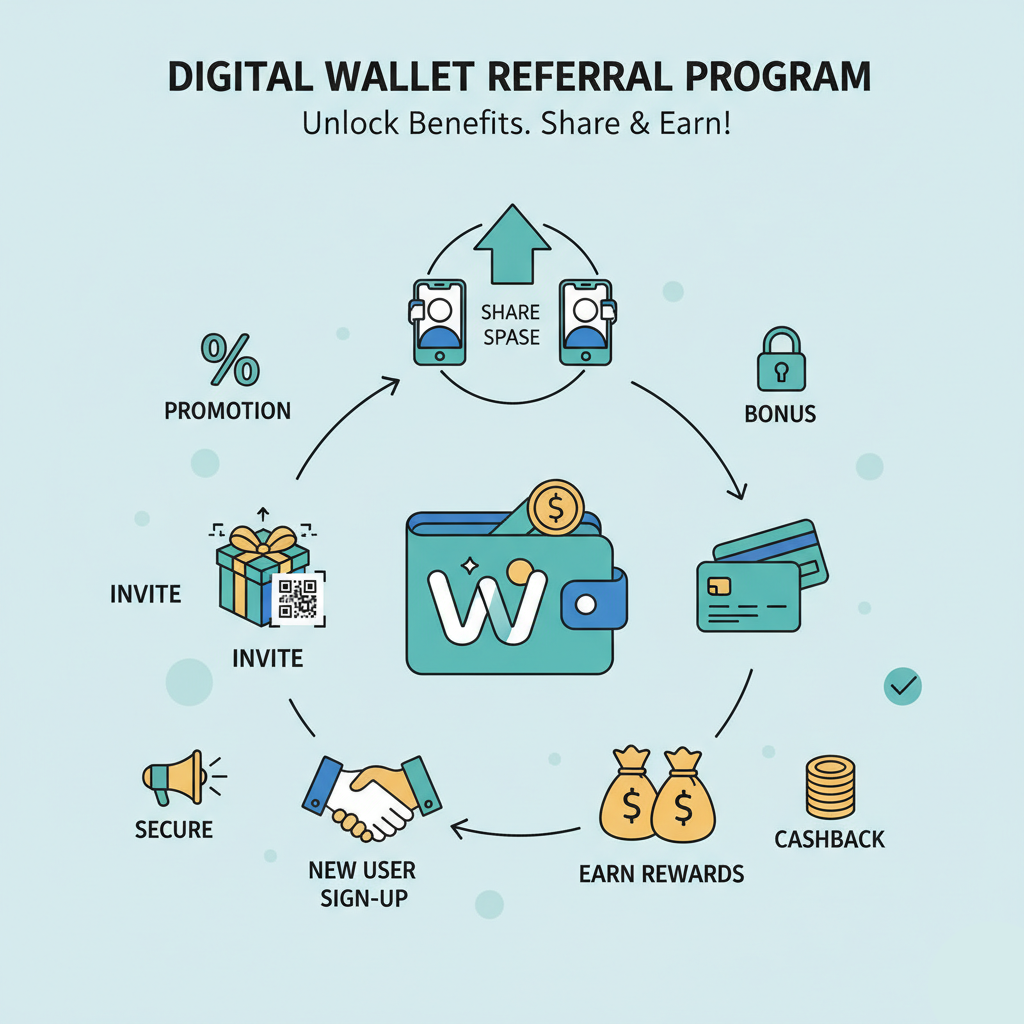
PayPal’s initial program was audacious in its simplicity: “Refer a friend. When they sign up and activate, you get $10. They get $10.”
Why It Worked: Deconstructing the Genius
- 1. Simplicity Over Everything: The offer was dead simple. There were no points to calculate, no complex tiers. It was just cash. “We’ll pay you to get your friends on board.” This clarity is essential. If you need a spreadsheet to explain your referral program, it’s already failed.
- 2. A Bold, Tangible Reward (Instant Gratification): This wasn’t “100 bonus points” or “a 5% discount on a future, unknown transaction.” It was $10 cash. In 2000, that was real money. The reward was as tangible as the product itself. The user could immediately use that $10 reward on the PayPal platform, which brings us to the next point.
- 3. The Reward Drove Product Adoption: This is the most brilliant part. What do you do with $10 in your new PayPal account? You use it. You send it to someone else. The reward itself was an activation tool. It compelled new users to experience the app’s core value immediately.
- 4. A Calculated Risk on CAC: PayPal was, in effect, paying $20 for every two users (the referrer and the new friend). Their competitors were spending money on traditional ads. PayPal has given that money directly to its users. They correctly identified that a new, active user was worth far more than the $20 it cost to acquire them. They spent over $10 million on this program, essentially “buying” their initial user base and kickstarting the network effect that made them unbeatable.
The Key Lesson from PayPal:
Be bold. Make your reward tangible and straightforward. Structure your reward so that using it is the first step toward becoming an active, engaged user. Don’t just pay for a signup; pay for activation.
Case Study 2: The Social Engine — Venmo’s Public Feed
Venmo (now owned by PayPal) entered a more crowded market. They couldn’t just out-spend PayPal. They had to out-smart them. They needed a different kind of viral loop example.
The Program:
Venmo has run various referral programs over the years, typically a “$5 for you, $5 for them” or “$10 for you, $10 for them” structure. But to be blunt, their explicit referral program isn’t their real growth engine.
Venmo’s true genius is its social feed.
Why It Worked: The “Social Object”
Venmo’s masterstroke was turning a boring, private financial transaction into a public, social, and curious event.
- 1. Transactions as a “Social Object”: When you pay your friend for “🍕🍻”, that transaction appears in the (default) public feed. This is what’s known as a “social object”—a piece of content that people can talk about, interact with, and gather around. A bank statement is private and boring. A Venmo feed is a dynamic, emoji-filled, and slightly voyeuristic look into what your friends (and strangers) are doing.
- 2. FOMO is the Real Marketing: The real Venmo growth loop looks like this:
- Alice and Bob (both Venmo users) go to a concert with Carol (a non-user).
- Alice pays for the tickets. Bob “Venmos” her his half.
- Carol, seeing this, asks, “What’s Venmo?”
- Alice says, “Oh, it’s this app. Here, download it, and I’ll request the money from you.”
- Carol now has to download the app to participate in the social event.
- 3. The Feed is the Ad: Every single transaction in the public feed is a micro-advertisement. It screams, “People are using this! It’s active! It’s fun!” This social proof is infinitely more powerful than a referral bonus. The referral bonus ($5) is just the final nudge to get Carol to sign up right now, but the social context created the need.
The Key Lesson from Venmo:
Your product’s core function can be one of its best marketing tools. How can you make a single-player financial action (like saving, investing, or paying) a multiplayer experience? Venmo did it by adding a social feed. This neobank marketing strategy is key: don’t just build a tool; build a community or an experience around the tool. Make your product visible.
Case Study 3: The Growth Machine — Cash App’s Activation Trigger
Cash App (formerly Square) is a notable example of the most aggressive and successful modern fintech companies. They studied the PayPal and Venmo playbooks and optimized every single step of the process.
The Program:
Cash App’s program is a masterclass in fintech growth strategies.
“Invite friends, you get $5 (or $10, $15… it changes), they get $5.”
But there’s a crucial, non-negotiable step…
The new user MUST send at least $5 within 14 days.
Let’s deconstruct this. It’s the most essential part of this entire article.
Why It Works: The Activation Mandate
- 1. The Dual-Sided “Gift”: Like PayPal, it’s a dual-sided incentive. This is critical. It reframes the referral from “I’m selling to my friend” to “I’m giving my friend a free $5.” The referrer (you) feels generous, not greedy. The new user (your friend) feels welcomed with a gift.
- 2. The Activation Trigger: That “must send $5” rule is the secret sauce. Cash App isn’t paying for signups. Signups are a vanity metric. Signups can be faked. They are paying for active, new users.
- This step forces the new user to do three things:
- Connect a debit card or bank account (a huge friction point).
- Learn and use the app’s core feature (sending money).
- Complete the viral loop.
- This step forces the new user to do three things:
- 3. The Perfected Loop: Think about the new user’s journey. Who are they most likely to send that first $5 to? The friend who just referred them.
- Alice texts Bob: “Use my code to get $5 on Cash App.”
- Bob signs up. He sees, “Send $5 to get $5.”
- Bob texts Alice: “Hey, I signed up. I’m sending you $5 to get my bonus.”
- Bob sends Alice $5.
- INSTANTLY: Bob gets a push notification: “🎉 Your $5 bonus is here!”
- INSTANTLY: Alice gets a push notification: “🎉 Bob just used your code! Here’s your $5 bonus.”
- 4. Pure Instant Gratification: The reward isn’t “pending” or “coming in 3-5 business days.” It is instant cash. The moment the action is completed, the reward is delivered. This creates a powerful dopamine hit, a feedback loop that trains the user: “Referring friends = instant money.”
Cash App combined PayPal’s tangible cash reward with Venmo’s social P2P nature and added a non-negotiable activation trigger. The result is one of the most effective, fraud-resistant, and powerful growth engines in financial technology marketing.
The Playbook: 4 Actionable Lessons for Your Fintech
Okay, the case studies are great. But how do you, a neobank marketing team, or a new mobile payment app, apply this?
Here are the four key pillars, distilled into an actionable playbook.
Lesson 1: Nail Your Incentive (It’s About Gifting, Not Selling)
Your incentive structure is the foundation. Get this wrong, and nothing else matters.
- Go Dual-Sided: I’ve said it three times, and I’ll repeat it. A dual-sided program ($X for you, $Y for your friend) is almost always superior. It turns your referrer into a benefactor, not a salesperson. It’s a “we both win” scenario, which massively reduces social friction.
- Cash is King (Especially in Fintech): For a financial app, the most logical and compelling reward is… money. It’s what your app does. Offering “reward points” when your app’s purpose is to manage real money can feel disconnected. Cash is instant, tangible, and universally understood.
- Align the Reward with Your Goal:
- P2P App: A small cash bonus ($5-$10) is perfect.
- Neobank / Challenger Bank: You’re asking for more (a direct deposit). Your reward should be bigger ($50-$100).
- Investing App: “One free stock” (like Robinhood) is a genius idea. The reward is not just cash; it’s an experience that drives the user directly into the product’s core loop (trading).
- High-End Credit Card: “50,000 bonus points” is effective here because the entire product ecosystem is built around points.
Lesson 2: Engineer Ruthless Simplicity
Complexity is the enemy of growth. Your referral program must be so simple that you can explain it in a single breath.
- The One-Sentence Test: If you can’t explain your program’s rules and rewards in one sentence, it’s too complicated.
- Good: “Invite a friend, and you both get $10 when they make their first transaction.”
- Bad: “Refer a friend and get 200 points, which, after a 30-day clearing period, can be redeemed for a 5% discount on partners, provided your friend maintains a $500 balance.”
- Make the Link/Code Unmissable: Don’t hide “Refer a Friend” in a nested settings menu. It’s not a “feature.” It’s your growth engine.
- Put it on the home screen.
- Put it in a persistent banner.
- Pro-Tip: Show it to the user after a “moment of delight.” For example, right after they complete their first transaction. “Loved that? Invite a friend and you both get $10!”
- Map the Friend’s Journey: The referrer’s experience is only half the battle. What does the friend see?
- When they click the link, does it go to a generic App Store page or a customized landing page? (“Alice wants to give you $10! Sign up to claim it.”)
- When they open the app, is the referral code automatically applied? Or do they have to hunt for a “promo code” box? (Hint: it must be automatic).
- Are the next steps crystal clear? (“Welcome! Just connect a bank and send $5 to get your $10 reward.”)
Lesson 3: Master the Viral Loop (Require Activation)
This is the key lesson from Cash App, and it is vital for customer acquisition in fintech. Do not pay for signups. Pay for activated users.
- Define Your “Activation Event”: What is the one key action a new user must take to “get” your product?
- P2P App: Send their first $5.
- Neobank: Set up a direct deposit.
- Investing App: Fund their account with $100.
- Budgeting App: Connect their first bank account.
- Insurance Tech: Get their first real quote.
- Make This Event the “Trigger”: The referral reward (for both sides) should only be paid out after this activation event is completed.
- Benefits of This Model:
- Filters for Quality: It thoroughly filters out low-intent users and fraudsters who are only interested in the bonus.
- Improves “Stickiness”: A user who has connected a bank and made a transaction is 100x more likely to stick around than one who just gave you an email.
- Justifies the Cost: You’re not “spending” $20 on a referral. You’re investing $20 to acquire a fully funded, fully activated user, which is a steal in fintech.
Lesson 4: Drive Instant Gratification
The human brain is wired for immediate feedback. The shorter the time between action and reward, the more powerful the habit.
- “Pending” is a Four-Letter Word: A “Your reward is pending for 30 days” message kills all momentum. It breaks the psychological loop. The user feels tricked, not rewarded.
- The Power of the Push Notification: The moment the friend completes the activation event, two things should happen instantly:
- Referrer: “🎉 You just got $10! Your friend Sarah has joined.”
- New User: “🎉 Welcome to the club! Here’s your $10 reward.”
- Make it Cash, Not “Credits”: As we discussed, real money in their real balance is the ultimate instant gratification. They see the number go up. They can spend it immediately. This makes the reward real and reinforces the behavior. This is the mobile payment app marketing at its finest.
How to Implement This: The Nightmare In-House vs. The Smart Way
At this point, you should be fired up. You have the playbook. You know the “what” and the “why.”
Now comes the “how.”
Your first instinct might be to tell your engineering team, “We need a referral program. Let’s copy Cash App.”
Stop. This is a trap.
What appears to be a simple “if-this-then-that” system is actually a complex minefield, especially in fintech. Building this in-house is a “simple” project that will balloon into a six-month-long nightmare.
Why Building It Yourself is a Bad Idea:
- The “It Works on My Machine” Fallacy (Scalability): This is the reason most frequently missed by teams who claim they can “build it in a few weeks.” Sure, your team can write a script to handle referrals for your first 500 users. But what happens when you actually succeed? Fintech and Web3 companies are famous for massive, sudden traffic spikes. If an influencer tweets your link or a promo goes viral, you could see tens of thousands of hits in an hour. Homegrown referral scripts aren’t built for that load; they crash. And when your referral system crashes during a viral moment, you lose momentum and credibility. You need enterprise-grade infrastructure that can handle the flood without missing a beat. We prioritize reliability as a core feature, maintaining a 99.9% uptime rate (you can verify our track record at: status). Do not let your own growth break your infrastructure.
- Fraud is a Nightmare: This is financial technology. The moment you offer real money, you will be attacked by fraudsters. People will use bots, burner phones, and VPNs to inflate their own referrals hundreds of times. Your team will need to build a sophisticated fraud detection engine (utilizing device fingerprinting, IP tracking, and velocity checks) instead of… You know… your core product.
- Tracking & Attribution are Hard: How Do You Track a Referral Across Platforms? What if Alice texts Bob, who clicks the link, doesn’t sign up, then sees an ad three days later and signs up from his laptop? Who gets credit? The link? The ad? Your team will drown in attribution models.
- The Ledge is a Liability: You are creating a financial ledger. You’re promising to pay people money. This isn’t a “like” counter; it needs to be 100% accurate, auditable, and secure. A bug here doesn’t just annoy users; it costs you real money and breaks user trust.
- Flexibility is Zero: What happens when marketing wants to test a $15 reward for a weekend instead of $10? Does that require a new engineering sprint and a complete resubmission to the App Store? By the time you can make changes, the opportunity will have passed.
- It’s an Opportunity Cost: Every single engineer-hour spent building and maintaining a referral system is an hour not spent on your core banking, investing, or payment technology. You’re diverting your most expensive resources away from the very thing that makes your product unique.
You don’t build your own email servers (you use SendGrid). You don’t make your own payment processor (you use Stripe).
So why would you build your own growth engine from scratch?
The Solution: Replicate Proven Success with Viral Loops
This is where you work smart, not just hard. Instead of trying to reinvent a wheel that PayPal and Cash App already perfected, you use a platform designed to do precisely this.
Viral Loops is a referral and viral marketing platform built to run these sophisticated programs. It’s designed to let fintechs and neobanks deploy digital wallet referral programs that have all the power of the giants, but with the flexibility and security you need.
Here’s how a platform like Viral Loops solves all the in-house problems:
- Replicate What Works: Viral Loops has templates based on these legendary programs. You can literally choose to build a “Cash App-style” loop. It’s designed to handle the “refer-and-activate” logic (such as “send $5”) right out of the box.
- Security & Fraud Prevention First: The platform is built with robust fraud detection. It’s designed to distinguish between genuine referrals and bots, protecting your budget from the start. This is a core feature, not an afterthought.
- Seamless Integration: It’s designed to integrate with your existing tech stack seamlessly. With a flexible API, it can “talk” to your app. Your app simply tells Viral Loops, “Hey, user 123 just completed the ‘send $5’ activation event.” Viral Loops handles the entire rest of the process: checking for fraud, crediting both users, and triggering the reward notifications.
- Total Flexibility for Marketers: Want to change the reward from $10 to $15 for a holiday promo? Want to A/B test a “$10 cash” offer vs. a “one free stock” offer? You can do it all from a dashboard. No engineers required. This lets you optimize your program in real-time.
- Full Automation: It handles the tracking. It handles the reward ledger. It handles the notifications. It frees up your engineering team to focus on your core product—the one that makes you money.
Your fintech’s success depends on two key factors: a great product and a robust growth engine. Let your team build the first one. Let a platform like Viral Loops provide the second.
Final Thoughts: Your Growth Engine Awaits
The success of PayPal, Venmo, and Cash App was not an accident. They didn’t just stumble into millions of users. They built a machine to create them.
Their digital wallet referral programs are a masterclass in fintech marketing. They are built on simple, robust, and repeatable principles:
- Simplicity: A one-sentence offer.
- Dual-Sided Incentives: Make it a gift, not a sale.
- Activation Triggers: Pay for active users, not just signups.
- Instant Gratification: Use cash and instant notifications to create a powerful dopamine loop.
You can see this exact machinery at work in our Revolut referral marketing case study—they didn’t rely on luck; they relied on engineering.
Your fintech, whether it’s in payments, banking, investing, or insurance, can and must learn from this playbook. Your users want to share your product, but you have to make it easy, compelling, and rewarding.
Don’t spend the next year trying to build a fragile, fraud-prone version of what already works. The playbook is written. The tools are available.
Now, build your growth engine.
Frequently Asked Questions (FAQs)
1. What is a digital wallet referral program?
A digital wallet referral program is a marketing strategy where a company (like Cash App or PayPal) incentivizes its existing users to invite their friends to sign up. Typically, the program offers a reward (like $5 or $10) to both the existing user and the new friend, creating a powerful, dual-sided incentive.
2. Why is a dual-sided (double-sided) incentive so important?
A dual-sided incentive (e.g., “you get $10, your friend gets $10”) is psychologically much more effective. It reframes the referral from a selfish act (“I’m selling this to you”) to a generous one (“I’m giving you a $10 gift”). This massively reduces the social friction and makes your existing users far more
likely to share.
3. How much should I offer as a referral reward for my fintech app?
This depends entirely on your product and your Customer Acquisition Cost (CAC). A good rule of thumb is that your total referral cost (the reward for the referrer + the reward for the new user) should be significantly lower than your normal CAC from paid ads. For a P2P app, the standard price range is $5 to $10. For a neobank requiring a direct deposit, rewards can be $50-$100+, because the LTV (Lifetime Value) of that activated user is much higher.
4. How do I prevent fraud in my fintech referral program?
Fraud is the single most significant danger. You must have systems to detect and block it. Key methods include:
- Requiring an Activation Event: This is the #1 best defense. Fraudsters can create fake signups, but it’s much harder to connect 1,000 unique, legitimate bank accounts.
- Technical Defenses: Blocking duplicate IP addresses, using device fingerprinting, and setting velocity limits (e.g., “a user can’t refer more than 10 people in one day”).
- Using a Platform: This is the easiest way. A dedicated platform like Viral Loops has all these anti-fraud measures built in, saving you the engineering headache.
5. Can a neobank or investing app use these P2P strategies?
Absolutely. You just have to be more creative.
- Neobank: Your “activation event” isn’t “send $5,” it’s “set up a direct deposit” or “make 5 card purchases.” Your “social object” could be a unique metal card or shared savings “Pots” that friends can contribute to.
- Investing App: Your “activation event” is “fund your account with $100.” Your “social object” can be sharing a (non-sensitive) look at your portfolio, a specific stock you’re watching, or celebrating a “win.” Robinhood’s “free stock” referral was genius because the reward was the product.
6. Why shouldn’t I just build my own referral program?
You could, but it’s a massive “opportunity cost.” Your engineers are your most valuable resource. Do you want them spending 6 months building and debugging a fraud-detection and payment-ledger system, or do you want them building the core features that make your fintech unique? Using a specialized, secure, and flexible platform enables you to launch a best-in-class program in a fraction of the time, allowing your team to focus on what they do best.