
![9 Best Referral Marketing Platforms [In-Depth Comparison]](https://viral-loops.com/blog/wp-content/uploads/2025/06/UPDATE-9-Best-Referral-Marketing-Platforms-In-Depth-Comparison.png)
You’ve heard about the numerous benefits that launching a word-of-mouth marketing campaign can have for your business:
- Increased brand trust and credibility
- Increased loyalty with existing customers (39% of businesses confirm this)
- Lower customer acquisition costs compared to other channels
Referral marketing can make a big difference in how you grow your business.
To make it easier to get started, you need referral marketing software.
This guide lists some of the best referral marketing tools you can find in the market today.
It’s a full comparison that explains what makes them different, along with their pricing, pros, and cons, and real user reviews for each.
Disclosure: This article was created by Viral Loops and may reference its own products and services. The content reflects the author’s perspective and is based on publicly available information, accurate as of August 2026. Companies and tools are listed for informational purposes only and are not ranked or endorsed unless explicitly stated.
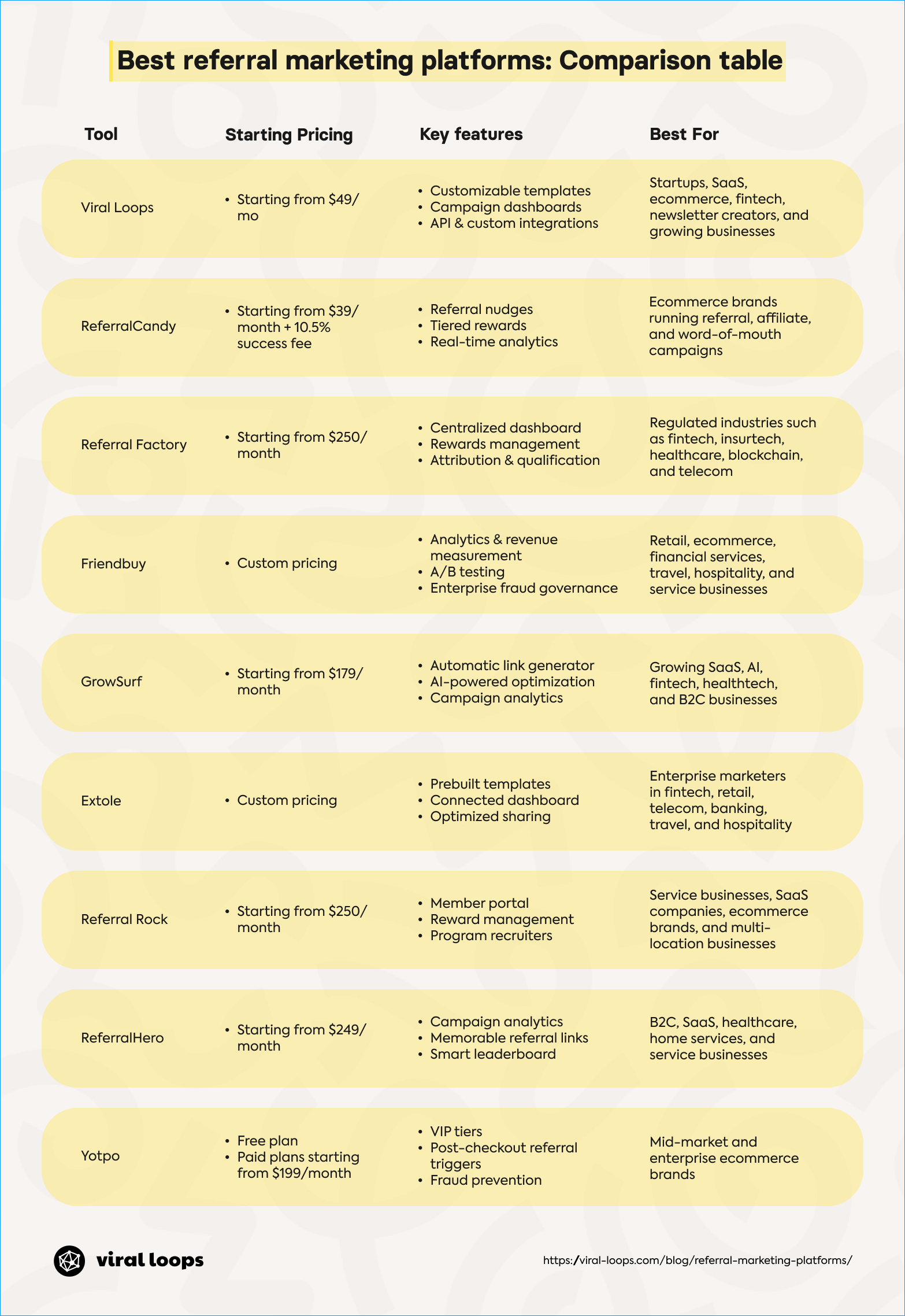
1. Viral Loops
Viral Loops is one of the top referral marketing platforms because of our template-based approach to referral and affiliate marketing. We make it easy for new, growing, or established businesses to launch campaigns with or without technical expertise.
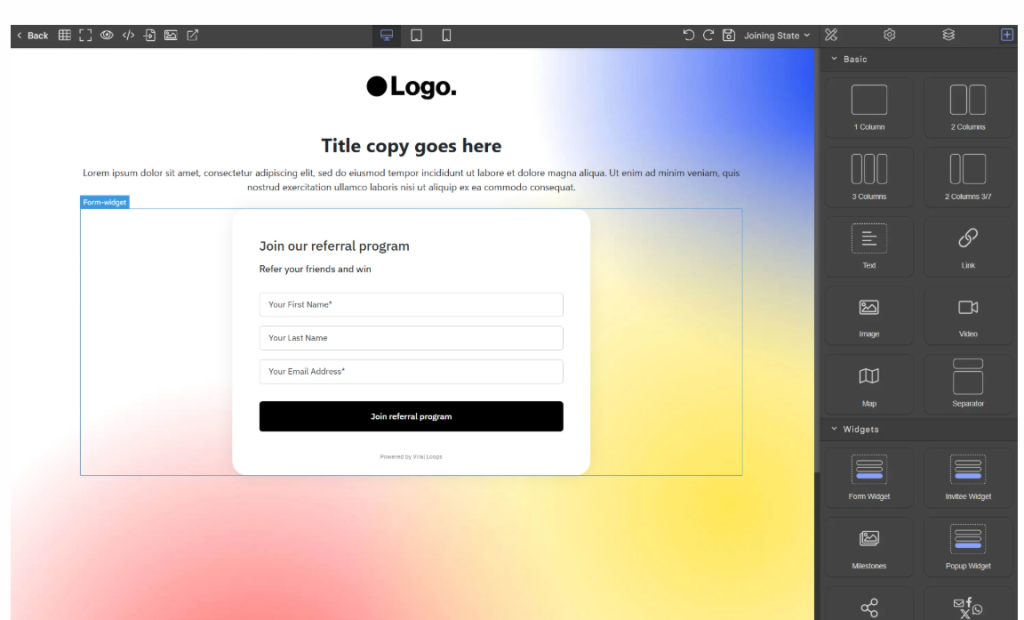
Our customizable templates are based on successful referral programs to give you a good chance at success.
You can embed the experience into your web page, build a dedicated landing page, or create a custom program using our API.
This means you can choose simple or advanced referral program customizations, depending on your team’s expertise.
To simplify data sharing and automation, we integrate with popular platforms like Shopify, GoHighLevel, and HubSpot CRM. For rewarding participants in your customer referral campaigns, our platform natively connects with Stripe and Tremendous.
Viral Loops also has a reliable support team and campaign wizard to guide you through setting up and launching a referral program.
Who it’s for:
Viral Loops is ideal for startups, SaaS teams, newsletter creators, sole proprietors, growing businesses, e-commerce brands, fintech companies, and large enterprise businesses.
Key Features:
- Customizable templates: Templates that fit your business needs and help you launch a campaign quickly.
- Intuitive campaign dashboards: Get real-time analytics of everything that goes on in the campaign. Track performance, shares, referral status, and rewards by different channels.
- Viral Loops API: Install referral campaigns directly on your website and personalize them to match your brand’s visual identity.
- Concierge services: We can help you design and implement referral campaigns as an added service, including referral tracking, automated rewards, and optimized user experience.
Pricing:
- Startup: $49/month
- Plus: $139/month
- Growing: $229/month
- Power: $399/month
Pros:
- Great customer support: “Account management support is second to none. Continuous support has made the post-set-up stage so easy.”
- Fun referral and loyalty experience: “This product feels like adding a party to your customer communications. I use it to give gifts and discounts to loyal customers who can, in turn, offer something special to anyone they refer. It’s fun!”
- Effective viral marketing tool: “Viral Loops is a great tool to drive viral marketing and turn your biggest fans into an army of ambassadors.”
- Great user interface: “The UI is clean and easy to navigate, which makes setting up and testing a campaign much less overwhelming.”
Cons:
- Few helpful articles: “The support could benefit from more detailed and clearly written help articles. Some guides are a bit vague, which makes it harder to troubleshoot independently. Still, a solid tool if you’re willing to dig a bit on your own.”
2. ReferralCandy
ReferralCandy is a word-of-mouth software platform for e-commerce businesses that want to launch referral programs, influencer campaigns, and affiliate marketing campaigns.
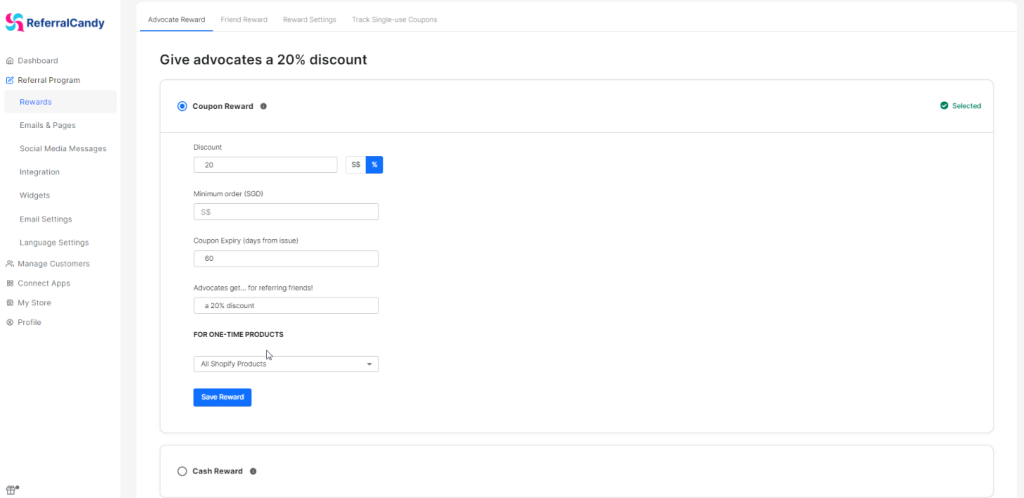
ReferralCandy integrates with popular e-commerce platforms like WooCommerce, Shopify, BigCommerce, and Magento. It also plugs into multiple subscription apps and provides a custom API for advanced integrations.
It has a built-in AI tool that helps set up a campaign, offers multiple reward options (cash, coupon codes, discounts, products, or store credits), and automates reward distribution.
Who it’s for:
E-commerce brands interested in running word-of-mouth campaigns.
Key Features:
- Referral nudges: Place the referral experience where customers will most likely see it and participate: post-purchase thank you page, their Shopify account, homepage, product, or cart pages.
- Tiered rewards: Offer participants leveled rewards that unlock as they refer more people, driving more revenue to your store.
- Real-time analytics: Track referral revenue, identify top brand advocates, get full-funnel visibility from share to purchase, and see what your top referrers are saying on social media.
Pricing:
- $39/month + 10.5% success fee
- Grow: $79/month + 3.5% success fee
- Scale: $249/month + 1.5% success fee
- Enterprise: $799/month + 0.25% success fee
Pros:
- Easy setup and Shopify integration: Quick to implement with seamless Shopify connectivity.
- Flexible branding options: Customization features make it easy to match your campaigns to your brand style.
- Simple sharing and reward tracking: Customers can refer others easily, and rewards are tracked accurately.
Cons:
- No repeat-purchase rewards: It doesn’t support earning points for repeat purchases.
- No unified member dashboard: Participants can’t view all of their campaigns in one place.
- Limited fraud alert details: Suspicious referral notifications lack enough information for effective troubleshooting.
3. Referral Factory
Referral Factory helps businesses run affiliate campaigns and customer referral programs even if they lack the required technical skills.
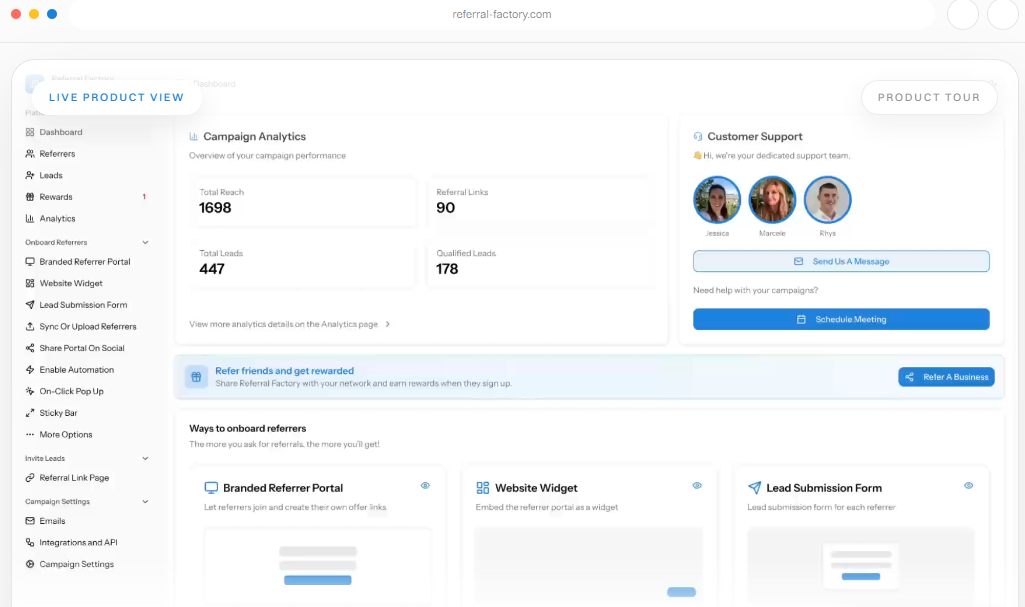
Similar to Viral Loops, Referral Factory provides referral campaign templates to give you a head start in launching growth campaigns across multiple languages.
It automates referral tracking and rewards, and provides multiple ways to promote the referral experience (email, website widgets, or popups).
Its other differentiators include:
- Integration with top CRM tools like HubSpot and Salesforce Commerce Cloud, payment systems like Stripe, and API and webhooks for custom systems.
- Enterprise-grade security systems for compliance, control, and trust.
Who it’s for:
Marketers across regulated industries like insurtech, health and fitness, fintech, blockchain, and telecommunications.
Key Features:
- Centralized dashboard: Gives you a detailed view of campaign health, totals, and activity so you know how well each campaign is performing.
- Rewards management: An incentives hub where you can track when rewards are due and to whom, so you can stay up-to-date.
- Attribution and qualification: Referral Factory monitors the relationship from referrer to lead, tracks who referred whom across codes, links, and forms, and lets your team qualify the referral when the commercial milestone is achieved.
Pricing:
- Operator Plan starts at $250/month
- Enterprise: available on demand
Pros:
- Well-organized platform: Keeps internal and external stakeholders aligned in one place.
- Easy-to-use dashboard: Simple, intuitive interface for managing referral programs.
- Structured referral management: Replaces manual spreadsheets and email tracking with an organized workflow.
Cons:
- Confusing pop-up setup: Setting up the online pop-up can be difficult because the instructions are unclear.
- Unclear campaign configuration: It’s not always obvious which settings need to be configured when a campaign goes live.
- Learning curve for certain referral rules: Qualified referral settings could be explained more clearly for first-time users.
4. Friendbuy
Friendbuy helps high-growth businesses run referral campaigns, loyalty programs, and influencer marketing.
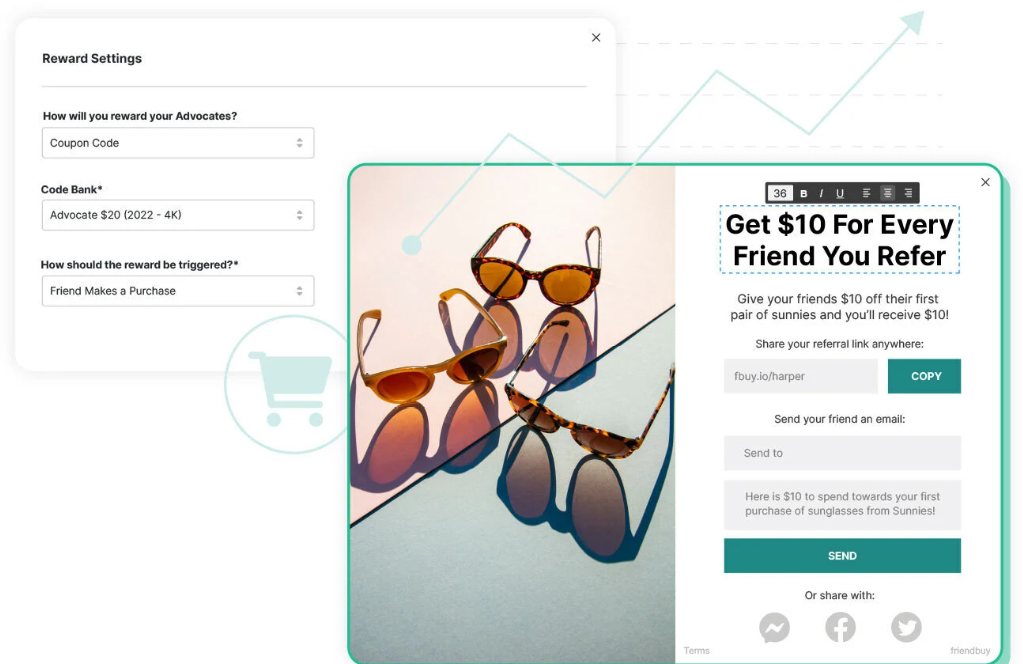
Rather than prompting every customer to share, Friendbuy identifies those who are likely to be advocates within your customer base. Then, it reaches them across web, email, and SMS at the moments they’re most likely to act.
It offers flexible reward options, from discounts to store credit, gift cards, cash rewards, loyalty points, or subscription credits, and full-funnel visibility, monitoring shares to purchases.
Who it’s for:
Retail and e-commerce businesses, financial services, service businesses, and travel and hospitality companies.
Key Features:
- Analytics and revenue measurement: Friendbuy helps track the full impact of referral programs, from participant activation through revenue generation.
- A/B testing: Experiment with multiple incentives, creatives, and placements to know which one produces the best results.
- Enterprise fraud governance: Protect the campaign’s attribution integrity and program economics through safeguards like email similarity detection, new customer validation, device fingerprinting, and workflow validation.
Pricing:
Friendbuy’s pricing is available on demand.
Pros:
- Easy-to-use referral system: Simple, intuitive platform that delivers a smooth referral experience.
- Effective fraud detection: Helps prevent fraudulent referrals and protects program integrity.
- Customer-friendly rewards: Makes it easy for customers to earn and redeem points.
Cons:
- Complex secret management: Handling sensitive data and security credentials can be challenging.
- Slow bug fixes: Code-related issues may take longer than expected to resolve.
5. GrowSurf
GrowSurf is a growth marketing tool for building, managing, and measuring customer referral programs and affiliate programs you can embed in your product.
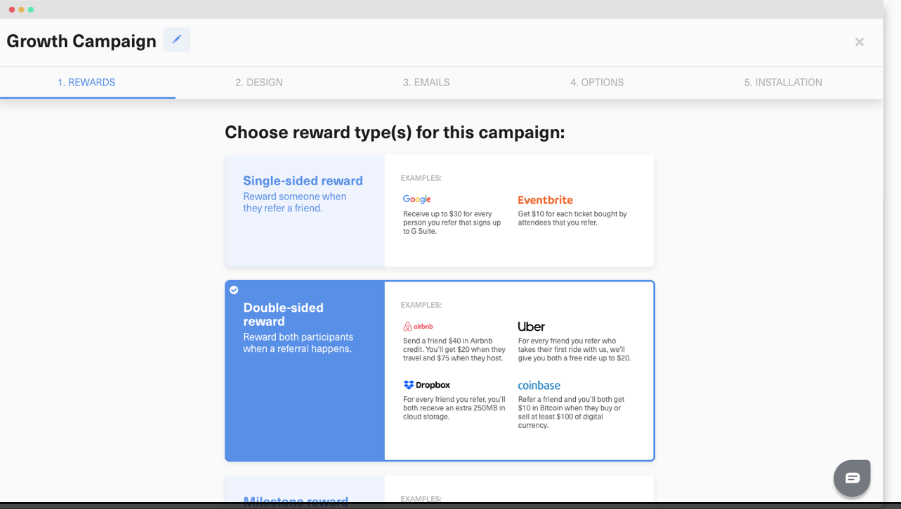
It’s a bit more technical to set up than other tools on the list, but it still promises a quick setup time.
GrowSurf enables businesses to build fully white-labeled campaigns with automated reward fulfillment.
Its integration with third-party tools like ActiveCampaign, Amplitude, AppsFlyer, AWeber, ConvertKit, GetResponse, Google Analytics, HubSpot, Intercom, Klaviyo, Mixpanel, Pendo, Salesforce, Segment, Stripe, Webhooks, and Zapier also means you could automate the referral program from start to finish.
Who it’s for:
Marketing and product systems for growing businesses across insurtech, healthtech, SaaS, AI, fintech, and B2C.
Key Features:
- Automatic link generator: Create unique links for each participant so they can share without them signing up.
- AI-powered optimization: Recommends tailored rewards for your campaign, including promotional copy, and optimizes sharing links.
- Campaign analytics: Get detailed insights into your program — invites, leads, impressions, and referrals.
Pricing:
- Startup: $179/month for up to 2,500 participants
- Business: $449/month for up to 10,000 participants
- Custom plan for over 150,000 participants
Pros:
- Automates manual referral management: Replaces spreadsheets and manual processes with an automated referral program.
- Simple and hands-off: Easy to use and automates most referral tasks with minimal effort.
- Quick to launch: Makes it easy to deploy and manage referral programs without heavy technical resources.
Cons:
- Limited analytics: Reporting could be more robust and offer better filtering options.
- Customization could be improved: More flexibility is needed to tailor the platform to specific requirements.
- Manual referral approvals: Approving and disbursing referrals requires manual updates and can be slow.
6. Extole
Extole is an enterprise-grade engagement platform for customer acquisition and retention programs. Here, you can launch refer-a-friend, influencer, employee advocate, and loyalty programs.
Similar to Friendbuy, Extole helps you identify and engage active customers from your database.
But it stands out in other ways:
- It supports customer segmentation and lets you customize rewards for the different segments.
- You can A/B test different elements of your referral program, from offers to rewards, or even rules.
- It lets you create custom on-brand experiences for mobile and websites.
- You can engage and reward active participants or influencers with complementary campaigns.
Who it’s for:
Enterprise consumer marketers and product teams in industries like fintech, retail, telecom, travel, hospitality, and banks.
Key Features:
- Prebuilt templates: Let you launch campaigns with minimal technical effort.
- Connected dashboard: Understand your campaign numbers with real-time analytics based on the different steps customers take.
- Optimized sharing: Share referral offers through QR codes and native links with pre-filled messaging.
Pricing:
Extole’s pricing is available upon request.
Pros:
- Easy program management: Simple to edit campaigns and monitor referral performance.
- End-to-end referral management: Effectively manages the entire referral program from start to finish.
- Highly customizable with strong support: Accommodates complex website customizations with responsive implementation support.
Cons:
- Performance and reporting issues: Platform bugs can affect overall performance and reporting accuracy.
- Backend interface isn’t intuitive: Some administrative tasks require support due to a less user-friendly interface.
7. Referral Rock
Referral Rock is a referral software program for building automated campaigns, where referrals are tracked, rewards are awarded, and participants are notified.
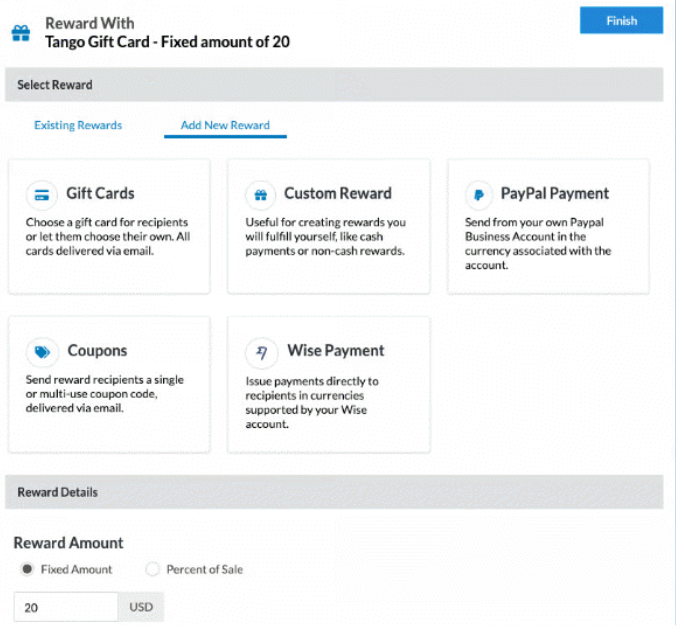
This software provides a dedicated advisor to users, helping you set up a campaign so it runs in the background and matches your current business needs.
Referral Rock has email campaigns built in to help promote the program to customers, and it lets you run multi-location campaigns from a single dashboard.
Who it’s for:
Service businesses, e-commerce brands, SaaS companies, and multi-location enterprises.
Key Features:
- Member portal: Participants get a central location to view their unique link, share via email, text, or social, and track progress and rewards in real time.
- Reward management: Define the rules for awarding incentives, and Referral Rock automates payouts for you.
- Program recruiters: Give your front-facing teams a portal so they can enroll customers on the spot.
Pricing:
- Operator Plan starts at $250/month
- Enterprise: available on demand
Pros:
- Easy to use: Intuitive platform that requires minimal training.
- Seamless integrations: Connects smoothly with existing tools and workflows.
- User-friendly interface: Simple navigation makes day-to-day program management straightforward.
Cons:
- Navigation can be cumbersome: Finding certain settings can take time, especially after not using the platform for a while.
- Outdated interface design: The backend feels less modern and requires too many clicks to complete tasks.
8. ReferralHero
ReferralHero is an AI-driven tool for building and launching referral and affiliate programs, including waitlists and contests.
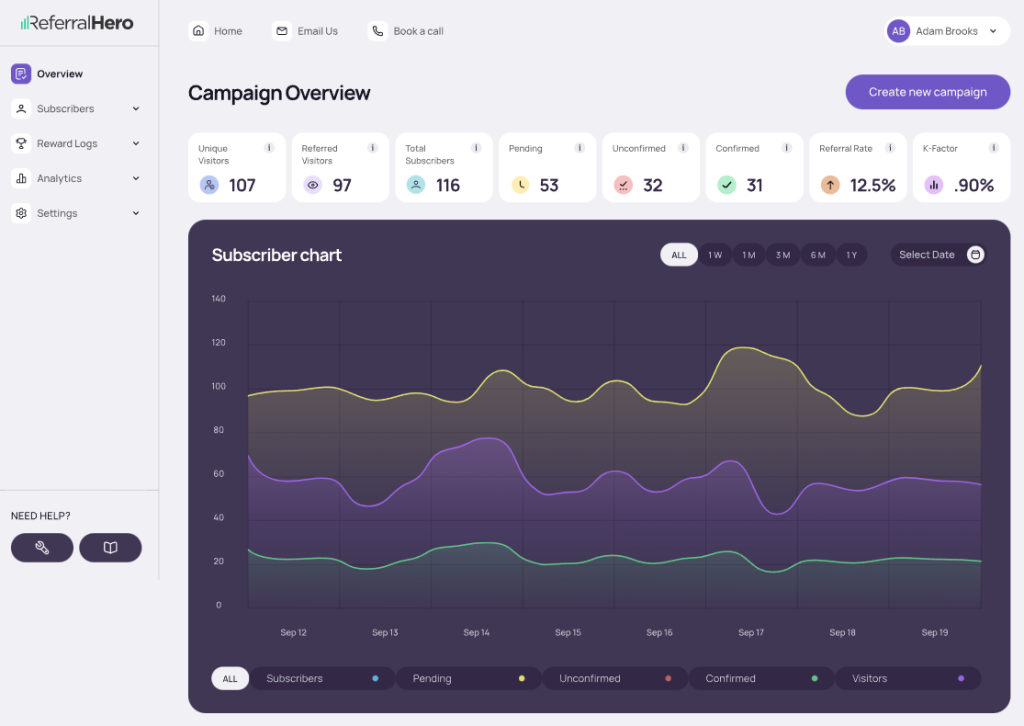
What makes ReferralHero stand out is the flexibility in getting started: either through AI-assisted setup or pre-built widgets, depending on how much control you want over the build process.
Once live, the platform handles participant communication through built-in email and SMS, segments participants automatically based on activity, and surfaces your most active referrers so you know who to prioritize. It also supports one-click manual review for teams that want to verify referrals before they count.
For brands running campaigns across multiple markets, ReferralHero supports localization into different languages — a feature most referral tools don’t offer natively.
Who it’s for:
B2C, SaaS, and service businesses, like home services, dental practices, med spas, and healthcare clinics.
Key Features:
- Campaign analytics: Get comprehensive insights into each subscriber, including who referred them, conversions attributed to them, and how active they are.
- Memorable referral link: Allows you to give participants a unique link that includes their name.
- Smart leaderboard: Provides a leaderboard that adapts to each participant by showing them what they could earn by referring others.
Pricing:
- Basic: $249/month
- Pro: $399/month
- Pro+Done for you service: Available on demand
Pros:
- Easy to launch: Simple to implement and manage referral programs.
- Reliable platform: Makes referral program management straightforward and dependable.
- Supports user growth: Helps businesses grow their customer base while making performance tracking effortless.
Cons:
- Confusing reporting: Some reports can be difficult for new users to understand.
- Limited onboarding resources: Lacks onboarding videos to guide users through the platform.
- Steep initial learning curve: Easier to learn with guidance from the support team than through self-service.
9. Yotpo
Yotpo is a growth solution that combines loyalty programs and referral campaigns, including user reviews and UGC for e-commerce brands.
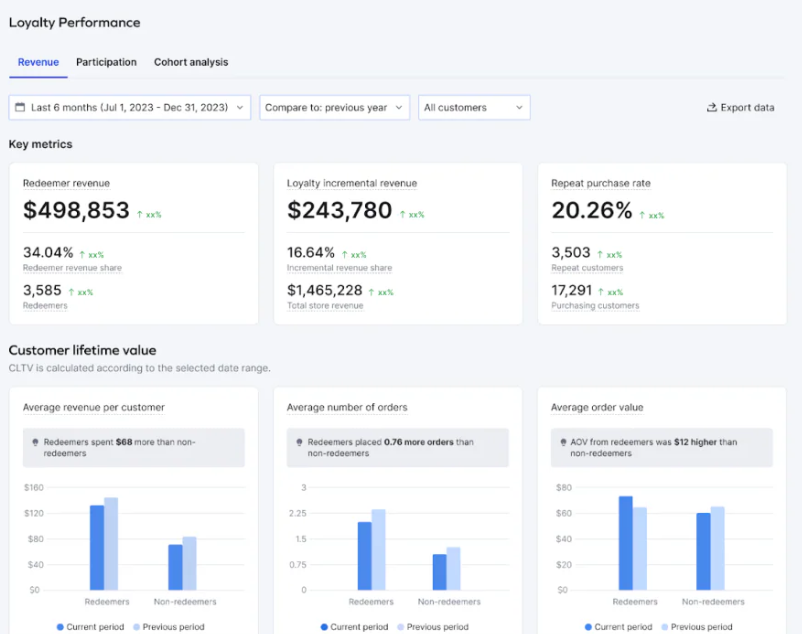
What makes Yotpo stand out as a referral marketing solution is how it connects referrals directly into its loyalty program. It helps reward advocates with loyalty points instead of one-time discounts or incentives, and this drives repeat referral behavior.
Yotpo also supports omnichannel solutions, enabling you to launch campaigns and engage with customers anywhere they engage with the brand.
Who it’s for:
Mid-market to enterprise e-commerce businesses that want reviews, loyalty, and referrals.
Key Features:
- VIP tiers: Customers move through tiers based on their spend or points earned, with higher tiers unlocking exclusive perks.
- Post-checkout referral triggers: Referral prompts surface at the post-checkout moment to capture peak customer excitement without disrupting the purchase experience.
- Fraud prevention: Protect the campaign from scammers and ensure rewards go to real advocates.
Pricing:
- Free plan
- Pro: $199/month
- Premium: available on demand
Pros:
- Easy to use: Straightforward platform that’s simple to manage.
- All-in-one customer engagement: Combines reviews, loyalty, and SMS with reliable review request automation.
- SEO-friendly product display: Helps to showcase products in a way that can improve search visibility.
Cons:
- Limited enterprise integrations: Integrating with large retail partners can be challenging.
- Features feel spread too thin: The platform offers many capabilities, but some, such as SMS, are not as strong as dedicated solutions.
- No reward voucher notifications: Doesn’t automatically email customers when they receive a reward voucher.
What core features should every referral marketing platform have?
If you’re on the hunt for a referral marketing tool, there are non-negotiables you should look out for.
First is its ease of use and automation. You want a tool that’s easy to navigate and simplifies launching a referral campaign.
Other features it should have include:
- Referral tracking and accurate attribution: It should have built-in tracking capabilities and must reliably assign credit for a conversion to the correct referrer, even when there are delays or purchases happen across multiple touchpoints.
- Campaign management and customization: You must be able to modify the experience via the software to match and feel like your brand’s style.
- Reward automation: Once a referral qualifies, the reward should trigger a payout automatically. It would be stressful and difficult to scale if you had to do a manual review for each case.
- Referral fraud prevention: Built-in protection is another essential for self-referrals, duplicate accounts, and suspicious signup patterns. It protects the program budget and keeps reward payouts tied to genuine referrals.
- Native integrations: The platform should be able to connect with your CRM tools, billing, e-commerce apps, and analytics tools for easy data flow between systems.
- Real-time reporting: There should be a dashboard breaking down performance by channel, participant, campaign, and revenue generated, giving you the data you need to make informed decisions.
- Reward flexibility: It should have multiple reward types (cash, store credit, gift cards, discounts, custom gifts) and structures (single-sided, double-sided, tiered, multi-step, time-based).
Over to you
It can be challenging to find and move forward with a referral marketing platform, considering there are multiple promising options out there.
Hopefully this list helps you find the ideal tool that aligns with your business goals and needs.
If Viral Loops happens to be that tool, go ahead and book a demo to get a rundown of what to expect when you choose us.
Frequently asked questions (FAQs)
Q1. How do you set up and launch a referral program successfully?
Begin by writing out your goals and objectives (lead generation, customer retention, or scaling both). Then, choose software that provides the features needed to achieve your goals.
Build a campaign, set your reward structures, connect your CRM or relevant tools, and promote the program through email and post-purchase touchpoints to drive initial participation.
Q2. How should you evaluate and compare referral platforms?
Compare platforms against your goals and specific criteria, e.g., attribution accuracy, reward automation, fraud prevention, integration depth, ease of use, segmentation, reporting, and user reviews.
Confirm your team’s technical ability. If you’ve got team members with skills, you may be considering tools with a custom API, or else you may want to consider options that provide customizable templates, an AI assistant, or a guided campaign wizard.
You also want to confirm pricing during your evaluation before making a decision.
Q3. What types of referral marketing platforms exist?
There are different types of referral marketing software, depending on your level of expertise and what you want to achieve:
- No-code campaign builders, e.g., Viral Loops, for startups, growing businesses, or even enterprises.
- In-product referral software, e.g., GrowSurf, for SaaS or related teams that want to launch the experience on their platform.
- Enterprise growth tools for large businesses, e.g., Talkable
Q4. How much do referral marketing platforms cost?
Pricing varies widely from free tiers and affordable entry plans at around $35–$50/month to $175–$450/month mid-tier options, up to enterprise plans reaching thousands per month, or custom-quoted contracts.
![10 Best Referral Program Software Tools [2026]](https://viral-loops.com/blog/wp-content/uploads/2026/09/NEW-10-Best-Referral-Program-Software-Tools-2026.png)
![12 ReferralCandy Alternatives in 2026 [Full Comparison]](https://viral-loops.com/blog/wp-content/uploads/2022/07/12-ReferralCandy-Alternatives-in-2026-Full-Comparison.png)

![10 Best Referral Rock Alternatives: Full Comparison [2026]](https://viral-loops.com/blog/wp-content/uploads/2025/09/10-Best-Referral-Rock-Alternatives_-Full-Comparison-2026.png)
![Best Viral Loops Alternatives in 2026 [Full Comparison]](https://viral-loops.com/blog/wp-content/uploads/2026/06/Best-Viral-Loops-Alternatives-in-2026-Full-Comparision-5.png)