“Unlock How to Design Viral Marketing Campaigns using the psychology of sharing: leverage social currency, emotion, practical value, and a robust referral engine to achieve exponential growth.”
We’ve all seen it happen.
A small startup with no budget explodes—a simple video, shared by a few people, mushrooms into a global phenomenon seen by millions. A product goes from unknown to sold-out in a matter of days.
We call it “going viral.” And for most marketers, it feels like catching lightning in a bottle. It seems random, unpredictable, and entirely dependent on luck.
But what if it isn’t?
What if “going viral” isn’t an accident but a science? What if there’s a predictable formula behind why people share?
This is the central question of how to design viral marketing campaigns. It’s not about luck. It’s about understanding people. It’s a deep dive into the psychology of marketing, exploring the specific, predictable, and repeatable triggers that drive word-of-mouth marketing.
People don’t share things by accident. They share for specific psychological reasons. They share to define their identity, to connect with others, to feel helpful, to express emotions, or to appear intelligent.
If you understand these underlying motivations—this complex web of consumer behavior marketing—you can stop hoping for virality and start engineering it.
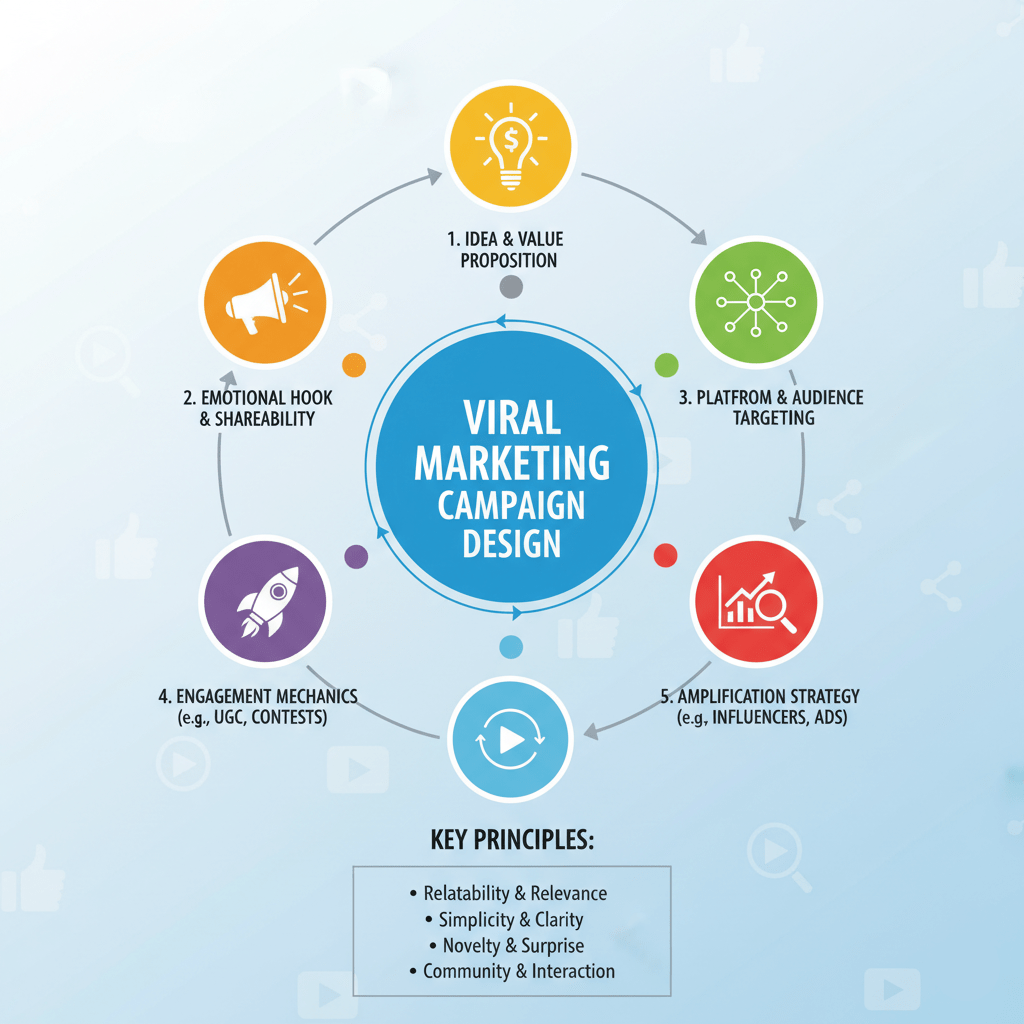
This guide is your blueprint. We will explore the fundamental principles that make content shareable. We’ll examine concepts such as social currency, triggers, emotions, and practical value. Then, we’ll show you how to apply powerful psychological knowledge directly to a referral campaign.
Finally, we’ll introduce the engine that makes it all run. Because knowing psychology is one thing; having the tools to put it into action is another. That’s where a platform like Viral Loops comes in, providing the practical framework to channel these psychological triggers into a measurable, scalable, and truly effective viral marketing campaign.
The Great Myth: Debunking “Accidental Virality”
Before we dive in, we must clear the air. The biggest mistake marketers make is chasing the symptom (millions of views) instead of the cause (the psychological reason for the first share).
Think about the last thing you shared with a friend.
Was it a “life hack” video? A shocking news article? A hilarious meme? A discount code for a service you love?
You didn’t just randomly select it. You made a conscious choice. You thought, “My friend needs to see this,” or “This is so me,” or “This is hilarious, it will make them laugh.”
That single, simple decision is the core of viral marketing.
Viral marketing isn’t about one person broadcasting to millions. It’s about one person being so compelled by something that they must share it with one or two other people. Those people then feel the same compulsion and share it with their own small circles.
It’s a cascade. It’s a chain reaction.
The goal isn’t to create one giant explosion. The goal is to create a message that is so infectious and perfectly tailored to human psychology that it’s nearly impossible not to pass it on. This is the heart of growth hacking psychology: building the sharing mechanism directly into the product or message itself.
So, how do we do it? We begin by understanding the six key principles of contagiousness, as famously outlined by Wharton professor Jonah Berger in his book, Contagious. Let’s refer to them as the six pillars of sharing.
Pillar 1: Social Currency
What It Is
At its core, Social Currency is about identity. We share things that make us look good.
Think of the information you share as an outfit you wear. It signals to the world who you are. Are you smart? Are you funny? Are you an insider with exclusive access? Are you wealthy? Are you compassionate?
Every Facebook post, every shared link, every restaurant recommendation is a carefully curated piece of our personal brand. This is a fundamental driver of consumer behavior marketing. We share things to improve our status and how others perceive us.
The Psychology Behind It
People love to feel like insiders. We love to have information that others don’t. This makes us feel special, meaningful, and informed. Sharing this “insider” information grants us social capital. It’s a status symbol, just like a luxury car or a designer bag, but it’s one of knowledge and access.
This principle breaks down into three parts:
- Finding Inner Remarkability: Is there something about your product, service, or content that is novel, surprising, or interesting? Something people will want to talk about?
- Using Game Mechanics: Leaderboards, points, and badges all make people feel a sense of achievement. People will share their status to show off their accomplishments.
- Making People Feel Like Insiders: Exclusivity is a powerful tool. If people feel they are part of a secret club, they will talk about it.
Real-World Example: Gmail’s Invite-Only Launch
Remember when Gmail first launched? You couldn’t just sign up. You had to be invited.
This was a masterstroke of Social Currency.
Google, already a high-status brand, created a product that was objectively better (1GB of storage, which was massive at the time). But instead of opening the floodgates, they choked the supply. They gave a small number of beta testers a limited number of invites.
Instantly, having a Gmail account wasn’t just about email; it was a status symbol. It meant you knew someone. It meant you were an “insider.”
The psychological effect was electric. People who had been invited felt powerful and generous, sharing them with their most valued contacts. People who wanted invites were vocal about it, begging their networks for access. The scarcity and exclusivity made “having a Gmail account” a remarkable thing to talk about. It was pure Social Currency in action.
How to Apply This to Your Referral Campaign:
- Utilize Exclusivity: Avoid a generic referral program. Create a “VIP Ambassador Program” or an “Insider’s Club.” Use language that implies scarcity and status.
- Create Milestone Rewards: Instead of just one reward, create a tiered system that offers multiple rewards, allowing users to progress through a series of milestones and earn corresponding rewards.
- 1 referral = 10% off (Good)
- 5 referrals = 25% off + a free sticker (Better)
- 10 referrals = Free T-shirt + “Brand Ambassador” status on your site (Best!)
This system turns sharing into a game. People will share not just for the discount, but to achieve the next level. This is a classic “game mechanic” that fuels Social Currency.
- Empower the Referrer: Frame the referral as a gift that the referrer is giving to their friend. “Give your friends $20 off their first purchase.” This makes the referrer look generous and thoughtful (they found this cool brand!), not spammy.
Pillar 2: Triggers
What It Is
Triggers are all about “top of mind, tip of tongue.”
A trigger is any sight, sound, or idea in the everyday environment that reminds a person of your product or message. The more frequently people are “triggered” to think about your brand, the more they will talk about it.
It’s about frequency, not just a one-time “wow” factor. A brilliant ad that no one remembers two days later is a failure. A good-enough message linked to a standard, everyday trigger is a massive success.
The Psychology Behind It
Our brains are lazy. We don’t have the capacity to hold every piece of information we’ve ever learned at the front of our minds. We rely on environmental cues to pull relevant information forward.
If I say “peanut butter,” you think “jelly.”
If I say “beach,” you think “sunscreen.”
If I say “coffee break,”… what do you think of?
If you’re a candy bar manufacturer, you want the answer to be your product. This is the essence of building a trigger. You are intentionally creating a mental link between a common occurrence and your brand.
Real-World Example: Kit Kat & Coffee
In 2007, Kit Kat’s sales were flat. They had a 70-year-old slogan: “Have a break, have a Kit Kat.” It was famous, but it wasn’t working.
A marketing team led by Colleen Chorak dug into when people consumed Kit Kats. They found a key pairing: coffee. People would often eat Kit Kats as a small treat during their mid-morning or mid-afternoon coffee break.
The trigger was born.
They didn’t change the product. They didn’t even really change the slogan. They just created a new campaign that explicitly linked “Kit Kat” with “coffee.” Ads showed people sipping coffee and snapping a Kit Kat. The new slogan became “A break’s best friend.”
The result? Sales exploded. They didn’t just sell a candy bar; they “owned” the coffee break. Every time someone in an office thought, “I need a coffee,” their brain was now triggered also to think, “I could go for a Kit Kat.”
How to Apply This to Your Referral Campaign:
- Link to a Common Event: Tie your referral request to a specific, recurring event.
- For a meal-kit service: “Friends stressing about what to make for dinner this Wednesday? Give them the gift of an easy night.”
- For a fitness app: “Know someone starting their New Year’s resolution? Help them succeed.”
- For a B2B software: “Just finished quarterly reporting? Tell a colleague how you got it done 50% faster.”
- Time Your Referral Prompts: Don’t just ask for a referral once at sign-up. Use triggers to ask at the perfect moment.
- Post-Purchase: After a customer makes a purchase, they are at the peak of excitement. Prompt them to share.
- Post-Positive-Review: A customer just left you a 5-star review. They are primed to share. Ask them immediately.
- Post-Milestone: A user just hit a 100-day streak in your app. They feel successful. Ask them to share their success (and your app).
- Use Visual Triggers: If you have a physical product, can your packaging serve as a visual trigger? Can the email confirmation you send be so unique that it reminds them to share?
Pillar 3: Emotion
What It Is
This is the big one. Emotional marketing is powerful because it’s simple: when we care, we share.
But not all emotions are created equal.
The key to designing for emotional sharing is understanding the difference between high-arousal and low-arousal emotions.
- High-Arousal Emotions (Good for Sharing): These are “activated” emotions that fire us up and make us want to act.
- Positive: Awe, excitement, amusement (humor), inspiration.
- Negative: Anger, anxiety, disgust.
- Low-Arousal Emotions (Bad for Sharing): These emotions deactivate us or make us passive.
- Joyous: Contentment, satisfaction.
- Negative: Sadness.
A video that makes you feel “sad” might make you cry, but you are less likely to share it than a video that makes you “furious” about an injustice. A blog post that makes you feel “content” is nice, but you won’t share it. A blog post that fills you with “awe” at a discovery will be sent to ten friends.
The Psychology Behind It
Emotions are a physiological response. High-arousal emotions, such as anger or awe, actually increase our heart rate. They put our bodies into a state of activation. We’re “fired up.” This physiological energy needs an outlet, and one of the easiest and most immediate outlets is sharing.
We share our anger to find validation (“Can you believe this?!”).
We share our humor to connect (“This made me die laughing, you have to see it.”).
We share our awe to bond over something bigger than ourselves (“This is incredible.”).
Persuasive marketing often targets these high-arousal emotions to drive immediate action.
Real-World Example: Dollar Shave Club’s Launch Video
In 2012, a completely unknown startup called Dollar Shave Club uploaded a video to YouTube titled “Our Blades Are F***ing Great.”
The video cost $4,500 and was shot in a single day. Within the first 48 hours, it garnered 12,000 sign-ups, overwhelming the company’s servers. Today, it has over 28 million views.
Why? It was pure, high-arousal amusement.
It was hilarious, unexpected, and completely authentic. The founder, Michael Dubin, deadpanned lines like, “Are our blades any good? No. Our blades are f***ing great,” while a toddler shaved a man’s head and a bear costume high-fived him.
It was both funny and weird, prompting people to share it. It didn’t make people feel “content.” It made them laugh out loud. That’s a high-arousal emotion. People shared it to pass that feeling of amusement on to their friends, and in the process, they built a billion-dollar brand.
How to Apply This to Your Referral Campaign:
- Identify Your Brand’s Emotion: What high-arousal emotion can you own?
- A travel company sells awe and excitement.
- A comedy club sells amusement.
- A political activism group sells anger (at the problem) and inspiration (to be the solution).
- Use Emotional Copy: Your referral request shouldn’t be bland.
- Bland: “Share with a friend and get $10.”
- Emotional (Excitement): “Want to blow your friend’s mind? Give them $10 off the best [product] they’ll ever try. It’s our little secret.”
- Emotional (Amusement): “Don’t be a bad friend. Bad friends let their friends use bad [product]. Be a hero. Give them $10 off.”
- Make the Reward Emotional: The reward itself can be an emotional trigger. Instead of just “10% off,” what about “a surprise gift” (excitement/curiosity) or “a donation to a charity in your name” (inspiration/awe)?
Pillar 4: Public
What It Is
This principle is simple: built to show, built to grow.
People tend to imitate what they see others doing. This is the psychology of social proof. However, if the use of your product or the fact that people are sharing it is private, it remains invisible. If it’s invisible, it can’t be imitated.
The “Public” principle is about making the private public. It’s about turning your customers into visible, walking billboards for your brand.
The Psychology Behind It
We are herd animals. When we’re uncertain about what to do, we look to others for cues. If a restaurant is empty, we assume the food is bad. If it has a line out the door, it’s excellent.
The same applies to products. If we see many people using a product, we assume it’s a good choice. This cognitive bias is a powerful shortcut for decision-making.
The job of the marketer, then, is to make sure that “use” is as visible as possible.
Real-World Example: Apple’s White Earbuds
In the early 2000s, portable music players (like the Sony Walkman) were common. But the headphones were almost universally black or gray. They were generic and private. No one knew what device you were using.
Then, in 2001, Apple launched the iPod. And it came with distinct, stark, white earbuds.
Suddenly, a private act—listening to music—became a public statement. You could spot a “cool” iPod user from across the street. The white earbuds became a status symbol, a badge of a creative and tech-savvy tribe.
Every person wearing them on the subway, in the gym, or walking down the street was a living, breathing advertisement for the iPod. Apple made its users’ private choice public, and it was a key driver of the iPod’s complete market domination. The “Sent from my iPhone” email signature is the digital equivalent.
How to Apply This to Your Referral Campaign:
- Create Public Badges: When someone successfully refers a friend, give them a digital “badge” they can share on social media or in their email signature (“I’m a [Your Brand] Ambassador”). This leverages both Social Currency and the Public principle.
- Build a “Wall of Fame”: Create a page on your website that celebrates your top referrers. Feature their photos (with permission) or usernames. This “leaderboard” is a public recognition that encourages others to compete.
- Encourage Social Sharing of Use: Don’t just ask people to share a link; instead, encourage them to share their own experiences and insights. Ask them to share a result.
- Fitness app: “You just hit your 5k goal! Share your new record with your friends!” (The post inherently shows them using the app).
- E-commerce store: “Your new [product] just arrived! Post an unboxing video and tag us for a chance to win…”
- Make Swag Desirable: The T-shirt you give away at 10 referrals (from the Social Currency example) is also a Public tool. If it’s a cool, well-designed shirt, people will actually wear it. That’s a walking billboard.
Pillar 5: Practical Value
What It Is
This is the most straightforward principle. We share things that are simply and obviously useful.
This principle is built on our innate desire to help others. Sharing a “life hack,” a “Top 10” list, a how-to guide, or an exclusive discount code isn’t just about the information; it’s an act of altruism. It makes us feel good to be helpful.
If your content or product saves people time, saves them money, improves their health, or helps them solve a problem, it has Practical Value.
The Psychology Behind It
Sharing helpful information strengthens social bonds. If you are the person in your friend group who always knows the best new restaurants, the most productive apps, or the best way to fix a leaky faucet, you are valuable to that group.
When we share Practical Value, we are saying, “I care about you, and I want to help you.” This is a powerful, pro-social behavior. The bar for sharing is often very low if the utility is very high. People love to share “news you can use.”
Real-World Example: BuzzFeed’s “Tasty” Videos
You know them instantly—the short, top-down, fast-motion videos of someone making a delicious-looking recipe.
Tasty videos are the definition of Practical Value.
In under 60 seconds, they teach you how to make “3-Ingredient Brownies” or “Cheesy Garlic Bread.” They are:
- Useful: They solve the “What’s for dinner?” problem.
- Easy to Understand: They are purely visual, with no complex language.
- Shareable: The format is perfect for a social media feed.
People share these videos with their partners, family, and friends, saying, “We have to make this!” They are sharing a piece of pure utility. They aren’t just sharing a video; they are sharing a future activity and a helpful solution. This simple, repeatable formula made “Tasty” one of the largest food networks in the world.
How to Apply This to Your Referral Campaign:
- Make Your Offer Genuinely Valuable: This is the most crucial part. “Refer a friend and get $1” is not valuable. “Give $25, Get $25” is. The practical value for both parties needs to be high. This is the foundation of your referral program’s success.
- Frame the Share as “Helping”:
- Weak: “Share our product.”
- Strong: “Help a friend save time and money. Send them this $20 gift to try [Your Service]. As a thank you, we’ll give you $20 too.”
This copy emphasizes the act of helping (Practical Value for the friend) rather than the selfish act of getting a reward.
- Share Useful Content (with a Referral CTA): Create blog posts, infographics, or free tools that have high Practical Value on their own. Then, at the bottom, add your referral CTA.
- Example: A tax software company writes a “Top 10 Tax Deductions You Probably Missed.” This is super valuable. At the end: “Want to make tax season even easier? Refer a friend to [Our Software] and you both get 50% off.” The user shares the article for its practical value, and the referral offer tags along for the ride.
Pillar 6: Stories
What It Is
We are wired for narrative.
Facts and figures are boring. They’re hard to remember. But Stories? Stories are sticky.
This principle is about building a narrative that people want to retell. Critically, your brand or product message must be seamlessly integrated into that narrative. The story acts as a “Trojan Horse.” People share compelling stories, and the brand message gets pulled in with them.
The Psychology Behind It
From the earliest campfires, humans have used stories to transmit information, culture, and warnings. Our brains are not optimized to remember individual data points; they are optimized to recognize patterns or plots. A good story engages us emotionally and intellectually, making its core message far more memorable.
When you tell someone a story, they are more likely to internalize the message and, more importantly, retell it accurately. You can’t just share a “fact.” But you can re-tell a “story.”
Real-World Example: TOMS Shoes
When TOMS first launched, they weren’t just selling simple canvas shoes. They were selling a story.
The story: “For every pair of shoes you buy, we give a pair of new shoes to a child in need.” One for One.
This story is brilliant. It’s simple, emotional, and easy to retell.
When someone compliments a person on their TOMS, the wearer doesn’t say, “Thanks, they’re made of canvas and have a rope sole.”
They say, “Thanks! And the best part is, when I bought this pair, the company gave a pair away to a kid who needed them.”
The customer instantly becomes a storyteller and a brand evangelist. They are sharing the story, and the brand (TOMS) and the product (the shoes) are the central characters. This narrative was so powerful that it built a massive company and launched the entire “buy-one-give-one” business model.
How to Apply This to Your Referral Campaign:
- Wrap Your Campaign in a Story: Don’t Just Launch a Program. Launch a mission.
- Boring: “Our New Referral Program.”
- Story: “Our goal is to help 1,000 teams [solve a problem] this year. We can’t do it alone. We’re growing through word of mouth, not with big ad budgets. Help us on our mission by telling a friend, and we’ll thank you both.”
- Use Your Founder’s Story: People connect with people. Is there a compelling reason your company was founded?
- “Our founder, Jane, was tired of [a common problem]. So she built [Your Product] in her garage. Now, she’s on a mission to help everyone… Share her story and her solution.”
- Highlight Customer Stories: Encourage your referrers to share their success stories with your product.
- Instead of “Share this link,” prompt them with: “Tell your friend about that time [Your Product] helped you [achieve a specific, awesome result].” This gives them a story to tell, not just a link to spam.
From Psychology to Practice: Building Your Viral Loop
You now understand the six psychological pillars of why people share:
- Social Currency (To look good)
- Triggers (Top of mind)
- Emotion (To feel & connect)
- Public (To imitate)
- Practical Value (To help)
- Stories (To share a narrative)
Now, how do you combine these into a functional, measurable system? You need to design a Viral Loop.
A viral loop is the process a user goes through to (A) discover your product, (B) use it, and (C) share it with new users, who then (D) repeat the loop.
A referral program is the most classic and controllable form of a viral loop.
Let’s build one, applying our principles:
- The Hook (The New User): A new user, let’s call her Sarah, hears about your product.
- The Incentive (The “Give”): Her friend, Mark, sends her a referral link. The message isn’t “Sign up for my thing.” It’s “I’m giving you $25 off this service I love.”
- Psychology Applied: This has high Practical Value (money off) and makes Mark look thoughtful and generous (Social Currency).
- The Action (Conversion): Sarah signs up and uses the $25 coupon. She has a great experience. The product delivers on its promise. This step is critical; your product must be of high quality.
- The Reward (The “Get”): Mark gets an email. “Success! Your friend Sarah just signed up. As a thank you, here is your $25 reward.”
- Psychology Applied: This is a reward that triggers Emotions (excitement, satisfaction).
- The Re-Engagement (The Next Share): This is where most campaigns fail. They stop here. A viral campaign immediately loops the user back. Mark’s reward email should also say:
- “That was easy, right? You’re now on Level 1. Refer four more friends to unlock the exclusive ‘Ambassador’ T-Shirt.”
- Psychology Applied: This introduces Social Currency (status), Public (a wearable badge), and Triggers (it prompts the next share immediately). The entire program is wrapped in a Story of “growing together.”
This is a complete viral loop design. Every step is engineered to motivate the following action.
The Engine: Where Viral Loops (The Platform) Fits In
This all sounds great. But building this system is hard.
How do you generate unique referral codes for every single user?
How do you track who referred whom?
How do you automatically send Mark his reward only after Sarah makes a purchase?
How do you prevent fraud, where one person signs up for 10 fake accounts?
How do you build a “milestone” reward system and track progress?
How do you A/B test your offer (“Give $25, Get $25” vs. “Give 50%, Get 25%”)?
Building this custom infrastructure is a massive engineering task. It’s a distraction from your core business.
This is the gap that Viral Loops fills.
Viral Loops provides the practical framework—the engine—to run your campaign. It’s explicitly designed to channel all the psychological principles we just discussed into a measurable, automated, and effective campaign.
- It handles the unique codes and link tracking.
- It manages the reward fulfillment (connecting to your store to issue discounts or to PayPal for cash).
- It prevents fraud with smart tracking and verification.
- It lets you easily build milestone reward campaigns (applying Social Currency).
- It provides beautiful, pre-built widgets and landing pages (applying Triggers and Practical Value).
- It gives you a dashboard to measure everything—your K-factor (viral coefficient), conversion rates, and top referrers (applying the Public principle internally).
You don’t need to be a growth hacking psychology expert or a senior developer to build a campaign like Dropbox, Airbnb, or TOMS.
You just need to understand the psychology (which you now do) and have the right tool to execute the viral loop design. Viral Loops is that tool. It’s the bridge between understanding why people share and providing them with the perfect mechanism to do so.
Conclusion: Stop Guessing, Start Designing
Virality is not magic. It’s not luck. It is the predictable result of a well-designed system that taps into the core of human nature.
How to design viral marketing campaigns is, at its heart, a question of applied psychology.
People share for various reasons, including social currency (to look good), Triggers (to remember), Emotion (to feel), Public Validation (to conform), Practical Value (to help), and Stories (to connect).
Your job is to stop creating “content” and start making “contagion.” Stop just asking for a share and start motivating it.
Design your referral program as a “gift” your user can give (Practical Value). Frame it as a “game” they can win (Social Currency). Make the rewards exciting (Emotion). Make success visible (Public). Wrap it all in a Story your customers are proud to tell. And use Triggers to remind them at the perfect moment.
When you do that, and power it with a robust platform like Viral Loops, you’re no longer just marketing.
You’re starting a movement.
Frequently Asked Questions (FAQs)
Q: What is the difference between viral marketing and word-of-mouth marketing?
A: Think of it this way: Word-of-Mouth (WOM) is the general concept of people talking about your brand. It can be online or offline, positive or negative. Viral Marketing is a specific strategy designed to cause and accelerate WOM, usually online. It’s the intentional engineering of a message that is so shareable it spreads at an exponential rate (like a virus). A good referral program is a viral marketing strategy designed to stimulate positive WOM.
Q: How do you measure the success of a viral marketing campaign?
A: The key metric is the Viral Coefficient, or K-factor. The K-factor answers one question: “How many new users does each existing user bring in?”
The formula is: K = (i) * (c)
- i = number of invites sent per user
- c = conversion rate of those invites
If your K-factor is 0.5, it means every 10 users brings in 5 new users. The campaign will eventually die out.
If your K-factor is 1, it means that every 10 users brings in 10 new users. This is sustainable growth.
If your K-factor is greater than 1 (e.g., 1.2), it means that every 10 users brings in 12 new users. This is exponential, viral growth. Platforms like Viral Loops are built to track and help you optimize this number.
Q: Can a “boring” product or B2B service go viral?
A: Absolutely! People overestimate the need for Emotion (like humor) and underestimate the power of Practical Value and Social Currency.
- Practical Value: A “boring” B2B software that saves a company 100 hours a month has immense Practical Value. People will share it with their colleagues to be helpful and look smart.
- Social Currency: Being the person who knows the “secret tool” that gives your company an edge is a huge status symbol in a professional environment.
- Example: Dropbox wasn’t “fun”; it was useful. Their referral program (“Get 500MB of free space”) was a pure example of Practical Value and Social Currency. It’s one of the most successful B2B/prosumer viral loops in history.
Q: How important is the incentive? Is “Give $10, Get $10” the only way?
A: Incentives are essential, but they aren’t everything, and cash isn’t the only option. The incentive must match the motivation.
- Practical Value: Offering cash discounts ($10 off), free products, or complimentary features (such as Dropbox’s storage) is a sensible approach.
- Social Currency: Status (badges, leaderboards), “Ambassador” titles, or exclusive access (to new features, to a private community) can be more potent than money for some audiences.
- Emotion/Story: Swag (such as T-shirts or stickers) can be highly effective. People share to get the reward, which then turns them into a Public billboard for your brand.
The best viral loop design tests different incentives to see what resonates most with its specific audience.
Q: How long does it take to “go viral”?
A: This is a common misconception. “Going viral” isn’t usually an overnight explosion like a movie. It’s more often a “slow burn” that builds momentum. A well-designed viral loop creates a steady, predictable, and accelerating stream of new customers. The goal isn’t a 24-hour media blitz; it’s to build a sustainable growth engine that brings in new users, month after month, with a K-factor greater than 1. That is true, business-building virality.