
![12 ReferralCandy Alternatives in 2026 [Full Comparison]](https://viral-loops.com/blog/wp-content/uploads/2022/07/12-ReferralCandy-Alternatives-in-2026-Full-Comparison.png)
ReferralCandy is an e-commerce referral marketing tool built to grow sales through word-of-mouth campaigns.
It connects natively with popular e-commerce platforms, making it easy to launch campaigns.
However, ReferralCandy’s commission-based pricing scales unpredictably, its feature set is limited to simple e-commerce coupon referrals, and it lacks support for pre-launch campaigns and A/B testing.
This guide provides an honest review of different referral marketing tools to help you pick the right ReferralCandy alternatives.
Before we proceed, we created this comparison table to give you an overview of what to expect.
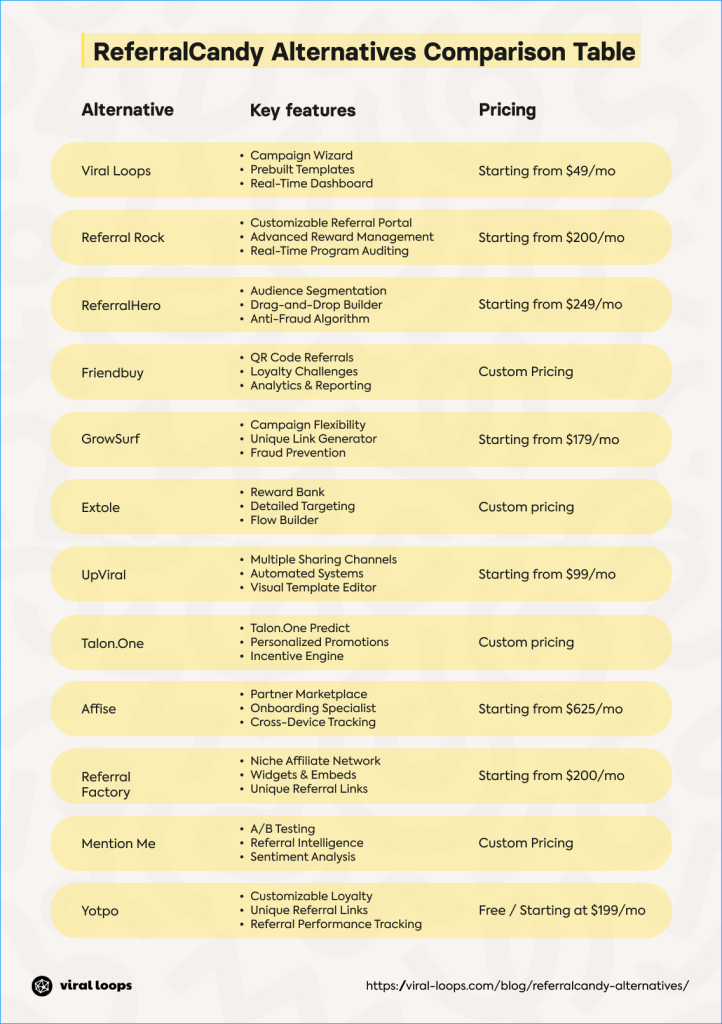
Disclosure: This article was created by Viral Loops and may reference its own products and services. The content reflects the author’s perspective and is based on publicly available information, accurate as of June, 2026. Companies and tools are listed for informational purposes only and are not ranked or endorsed unless explicitly stated.
Why do people switch from ReferralCandy?
We went through third-party review sites like G2 and Capterra to find out why real users consider switching from ReferralCandy.
Here’s what we found:
- Reason #1: Limited customization
Felipe M. likes how direct it is to run a referral program on ReferralCandy. However, they have reservations about personalization.
“More control over themes, notification settings and email templates would help a lot. […] It would be great if the platform offered more flexibility to better match our branding and user experience.”
- Reason #2: Unclear fraud alert reporting
Jen T., a retail entrepreneur, explains that ReferralCandy has a simple layout and that it’s easy to set up. The challenge for them, though, is about suspicious activity warnings.
“I wish that there was more information with the Suspicious referral alerts. It is very difficult on our end to figure out what the issue is.”
- Reason #3: Limited email customization
Shintaro M, a marketing support professional, commended the team’s support but highlighted this:
“It would be even better if the email template editor were easy to modify for people who don’t understand Liquid or HTML, and if there were an option to send emails manually as well.”
That said, let’s go over the top ReferralCandy alternatives you can use for your e-commerce referral marketing campaign.
1. Viral Loops
Viral Loops is an all-in-one referral marketing platform built to launch and scale word-of-mouth campaigns for e-commerce stores.
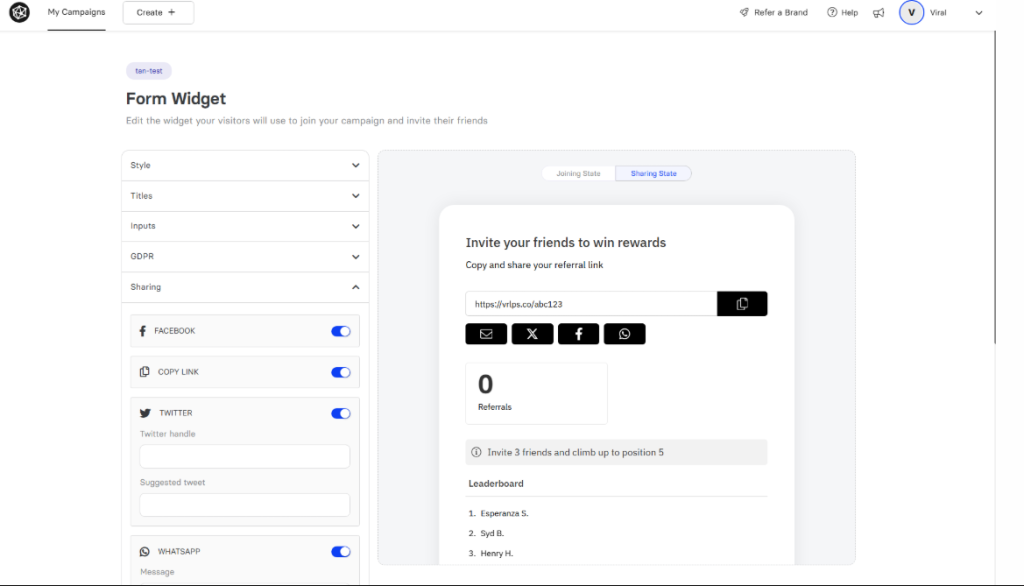
Instead of starting from scratch, you pick templates inspired by successful e-commerce campaigns like Nordstrom and Gilt and customize them for your brand.
We also have a dedicated Shopify referral template that matches your store’s branding and fits your business goals.
Once your campaign is created, we make it easy for your customers to share it through a referral widget on your store or a prebuilt landing page.
Our dedicated Shopify widgets automatically adapt to your store’s theme with zero configuration.
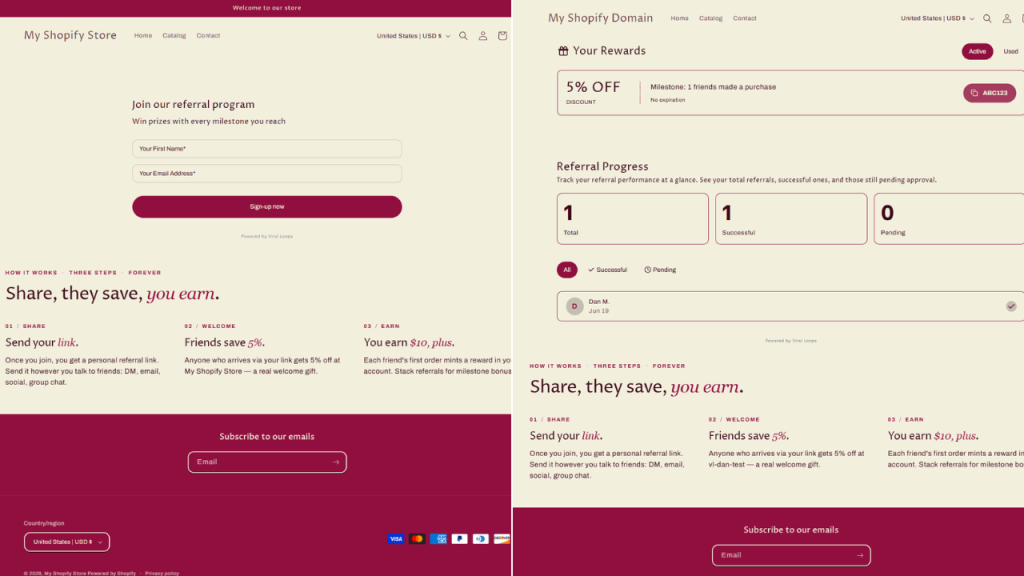
The widget includes a participant dashboard for tracking progress and rewards, plus a “how it works” section that gives participants quick instructions on getting started.
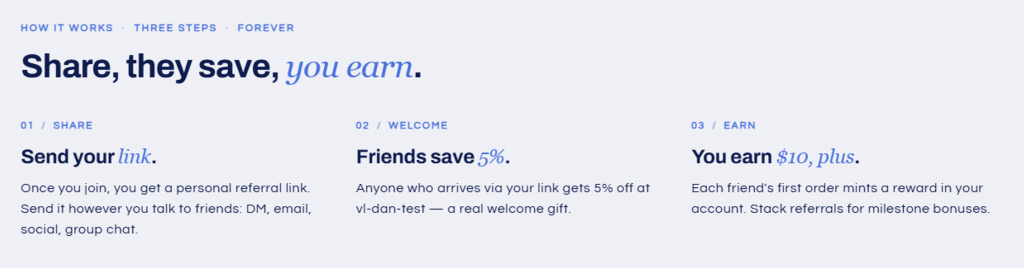
Viral Loops provides AI-assisted campaign setup and no-code installation, making it one of the fastest platforms with which to go live. Our native integration with Tremendous and Stripe handle automated reward fulfillment for participants, so you can offer any incentive that motivates customers to refer more.
And if you’re ever stuck, our support team is always available to provide solutions.
Key features:
- Campaign Wizard: AI-powered support to guide you through a campaign launch.
- Prebuilt templates: Create campaigns modeled after successful brands, reduce setup time, and eliminate guesswork on campaign structure.
- Real-time dashboard: Track participant referrals, rewards, and campaign performance by channel.
Pricing:
- Start-up: $49/mo.
- Plus: $139/mo.
- Growing: $229/mo.
- Power: $399/mo.
- Enterprise: Available on demand
Integrations:
Viral Loops integrates with Shopify, HubSpot, Klaviyo, Mailchimp, ActiveCampaign, Kit, Substack, Ghost, Campaign Monitor, AWeber, GA4, Zapier, Webhooks, and offers the Viral Loops API. It also integrates with Tremendous, Stripe, and Sendoso for automated reward fulfillment.
Pros:
Here’s what people like about Viral Loops, pulled from user reviews on third-party platforms:
- Helpful support: “Thanos [Support] is quite possibly one of the most helpful account managers there is. He will make sure you are set up perfectly on Viral Loops and support you along the way. 10/10 honestly.”
- Wide range of features: “Better product, more suitable pricing. The Loopify tool is good for basic referral tracking. VL has dashboards, can export large files of mailing lists supporting several data formats. We also needed API integrations with Webhooks and CRM tools, and VL supports a wide variety of vendors.”
- Easy-to-use: “It is easy to use […] it walks you through setting up campaigns that will bring more visibility to your product-services. Viral-Loops helped me set up brand advocates and is a very valuable tool. ”
Cons:
Here’s what people wish could be better:
- Prices rise quickly with growth: “Sometimes it can be expensive; if you run a campaign that is successful, the cost increases significantly.”
- Complex setup needs technical effort: “Setting up more advanced campaigns may require extra work or integrations that aren’t always straightforward.”
Best for:
- E-commerce brands
- Newsletter creators and content publishers
- Fintech companies
- Growth marketers
- Small businesses or startups
- Enterprises
2. Referral Rock
Referral Rock is referral marketing software for brands that want to run ongoing partner programs with minimal manual management.
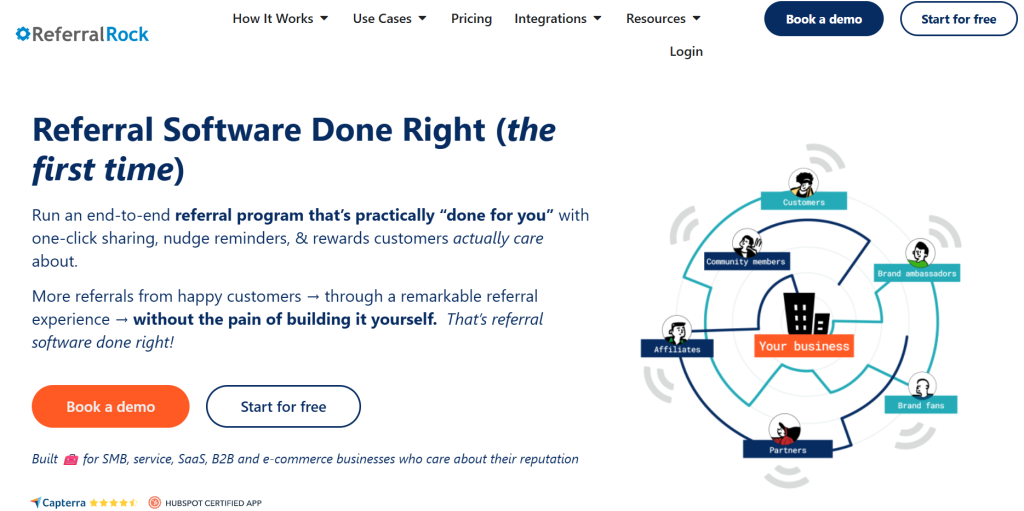
It lets users integrate referral experiences across their customers’ life cycles by embedding auto-generated links into checkout flow, in-app pages, and emails.
It also lets your team members onboard customers into the referral program, making the campaign a team effort.
Key features:
- Customizable referral portal: A dedicated page where advocates can track referrals, status, and rewards.
- Advanced reward management: Offer multiple reward structures triggered based on checkouts in your e-commerce store.
- Real-time program auditing: Flags issues with the campaign and highlights optimization opportunities.
Pricing:
Referral Rock has three pricing tiers:
- Small businesses and B2B companies
- E-commerce and consumer apps
- Enterprise and franchises
The e-commerce category starts at $200 per month.
Integrations:
Referral Rock integrates with HubSpot, Salesforce, Shopify, BigCommerce, ActiveCampaign, Marketo, Intercom, Zoho CRM, Zapier, and more.
Pros:
Users on Capterra point to these advantages:
- Feature-rich platform: Offers robust out-of-the-box functionalities and multiple ways to configure and connect referral programs.
- Exceptional technical support: The support team is known for helping with technical implementation and troubleshooting.
- Easy to deploy: The platform is adaptable, simple to set up, and includes convenient features such as one-click sign-up.
Cons:
They’ve also identified several drawbacks:
- Intimidating user interface: The admin dashboard can feel overwhelming and not so user-friendly for first-time users.
- Learning curve for advanced features: More sophisticated campaign settings and reward structures can take time to understand.
- Confusing onboarding: The onboarding checklist can be confusing and not tailored to a user’s specific needs.
Best for:
- Referral Rock is for SMBs, SaaS, B2B, and e-commerce businesses.
3. ReferralHero
ReferralHero is an AI-powered referral and affiliate marketing platform for SaaS, fintech, home service businesses, and e-commerce brands.
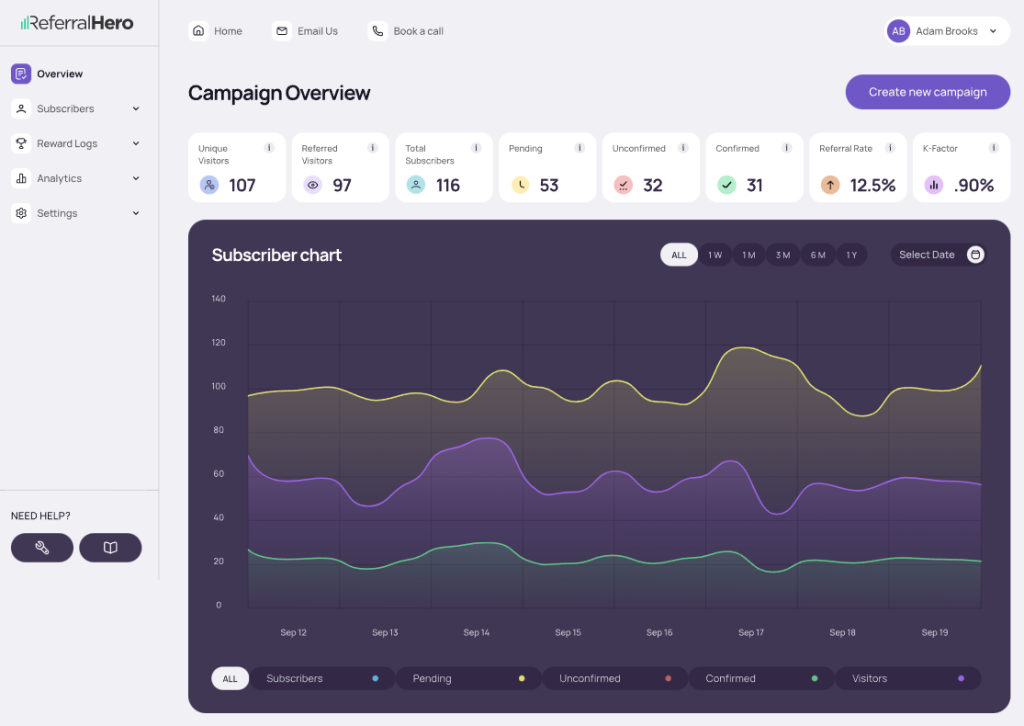
It helps you identify top brand advocates and empower them to be more effective referrers by offering about 14 different reward structures.
ReferralHero provides multiple ways to integrate the tool into your website or product (JavaScript API, REST API, or mobile SDKs).
Another ReferralHero standout capability is its tracking model, enabling users to monitor specific referral conversion events and define what counts as a successful referral.
Key features:
- Audience segmentation: Group participants by behavior and interaction for targeted messaging.
- Drag-and-drop builder: Build referral experiences that match your brand style.
- Anti-fraud algorithm: Keeps your referral campaign fair and crash-free.
Pricing:
ReferralHero’s referral program has three pricing tiers:
- Basic: $249/mo.
- Pro: $399/mo.
- Pro+Done for you: Available on demand
Integrations:
ReferralHero integrates with Stripe, HubSpot, Zoho, Salesforce, ClickFunnels, AWeber, Google Analytics, Mailchimp, WooCommerce, and Shopify.
Pros:
Users highlight these advantages:
- Easy implementation: Straightforward setup process backed by responsive and helpful customer support.
- Time-saving automation: Clear dashboard and automation tools reduce the manual work involved in managing referrals.
- Comprehensive platform: Offers an intuitive experience with the core tools needed to launch and manage referral programs.
Cons:
Users also point to these disadvantages:
- Confusing reporting: Analytics and reporting can take time to understand when first using the platform.
- Limited onboarding experience: Lacks video tutorials and educational content that explain the platform in depth.
- Requires guidance: Understanding the platform can be challenging without direct assistance from the support team.
Best for:
- SaaS, fintech, home services, retail stores, mobile apps, and service businesses.
4. Friendbuy
Friendbuy is a referral and loyalty tool that allows brands to combine customer acquisition and retention strategies in a single platform.
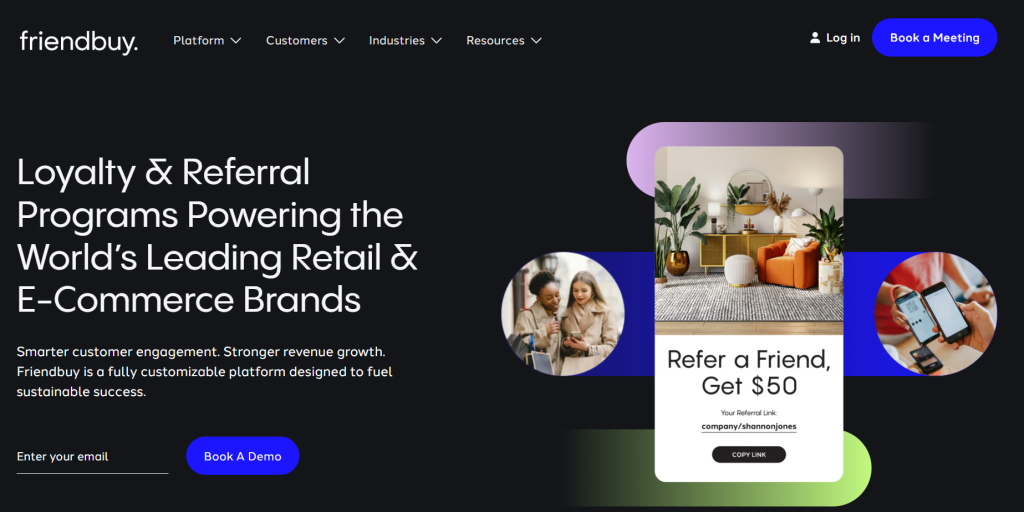
Friendbuy’s differentiator is its dual focus on referral and loyalty. E-commerce businesses can reward customers for inviting others and for their engagement.
It also includes A/B testing by cohort, allowing growth marketers to test copy, referral triggers, and reward structures to identify what drives conversion.
We’ve got a Friendbuy alternative guide you can go through if this tool is on your shortlist.
Key features:
- QR Code Referrals: Enables instant referral sharing that partners can add to their digital wallets and share.
- Loyalty challenges: Boost retention with activities that reward specific actions.
- Analytics and reporting: Track active registrations, member activity, average order value, redemption rates, and tier movements.
Pricing:
Custom pricing, available on demand.
Integrations:
Friendbuy connects with Shopify, WooCommerce, BigCommerce, Klaviyo, Stripe, Segment, Chargebee, ReCharge, and Facebook Sharing.
Pros:
According to reviews, users appreciate:
- Flexible level of involvement: Teams can choose a hands-on or hands-off approach depending on how much control they want over their referral program.
- Easy-to-use system: The platform makes it simple for administrators and participants to launch and manage referral campaigns.
- User-friendly analytics: Users appreciate the intuitive interface and analytics tools that make it easier to monitor referral performance.
Cons:
They’ve noticed these drawbacks:
- Reporting discrepancies: Some users have experienced minor reporting inaccuracies, often related to tracking pixel issues.
- Customization limitations: Achieving highly specific customization requirements can be challenging for some teams.
- Dev tools could be improved: Users would like a dedicated JavaScript library for interacting with the API rather than relying on custom script injections.
Best for:
- Friendbuy is best for mid-market to enterprise e-commerce brands in health, beauty, fashion, food, travel, wellness, pets, and financial industries.
5. GrowSurf
GrowSurf is a referral marketing platform used to build, manage, and measure branded referral, advocate, and affiliate experiences.
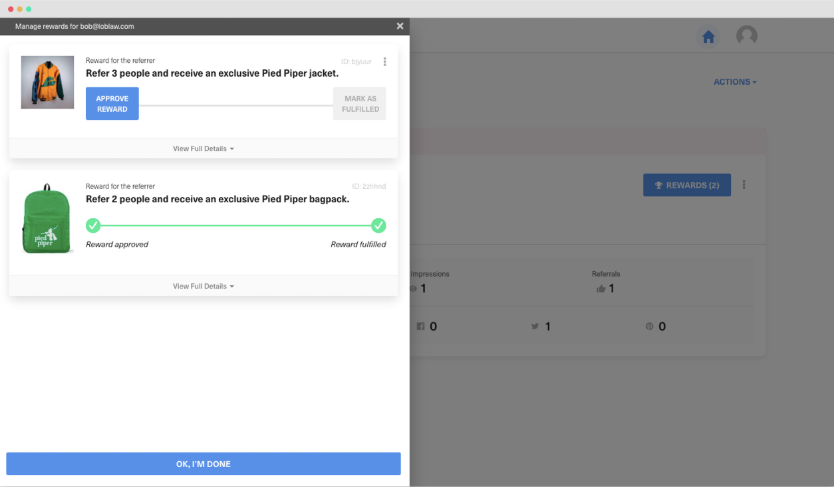
GrowSurf stands out for its deployment flexibility, allowing brands to add referral programs as popups, embeds, mobile SDK buttons, or dedicated pages hosted on your subdomain.
It also includes AI-powered optimization that suggests tailored rewards, generates promotional copy, and improves link performance.
Curious about other GrowSurf alternatives? Visit this guide.
Key features:
- Campaign flexibility: GrowSurf supports multi-step campaigns, dynamic rewards, offline/manual triggers, and team collaboration.
- Automatic unique link generator: Generates a custom link for every participant without requiring account creation.
- Fraud prevention: Blocks burner emails, applies IP thresholds, and allows manual fraud tagging.
Pricing:
- Startup: $179/mo. for two referral programs and two members
- Business: $449/mo. for five referral programs and five members
- Custom plan
Integrations:
GrowSurf integrates with Stripe, PayPal, Salesforce, Chargebee, Marketo, HubSpot, Tango, Intercom, Brevo, and Pendo.
Pros:
Here’s what users like about this tool:
- Built to scale: Supports both small referral programs and larger, more sophisticated campaigns as businesses grow.
- Easy to launch: Helps teams run referral programs without extensive technical resources or development work.
- Exceptional support: The support team is responsive, knowledgeable, and helpful throughout implementation.
Cons:
The parts they don’t like include:
- Confusing campaign setup: The interface for managing campaign assets and configuring programs is not so intuitive.
- Reward approval requires a manual process: Approving and disbursing referrals requires manual work and may not update as quickly as users would like.
- Limited analytics: The platform’s reporting tools lack the depth needed for detailed optimization.
Best for:
- Best for product and marketing teams across B2C, fintech, SaaS, AI, healthtech, education, and insurtech.
6. Extole
Extole helps enterprise-grade businesses launch organic customer acquisition and retention programs with AI.

Retail or e-commerce brands can create an omnichannel referral, ambassador, employee, or loyalty campaign, allowing customers to participate in-store, in-app, on desktop, and on mobile.
Extole helps you find the best people to invite to a campaign. What sets it apart is the depth of enterprise tools, robust APIs, and webhooks to ensure a seamless experience across platforms.
See how Extole compares to other referral platforms here.
Key features:
- Reward bank: A gamified redemption center where participants accumulate and merge rewards across multiple campaigns, driving higher engagement and payout values.
- Detailed targeting: Personalize rewards, content, and rules for distinct audience segments.
- Flow builder: Create personalized customer referral journeys that include triggered events, rewards, and creatives.
Pricing:
Extole’s pricing is available on demand.
Integrations:
Extole integrates with Shopify, BigCommerce, Salesforce, Segment, Klaviyo, Braze, Alkami (for financial services), BHN/Tango (for reward fulfillment), Zapier, and BLVD (for appointment-based businesses).
Pros:
Users highlight these strengths:
- Enterprise-grade features: Users appreciate Extole’s mature feature set, which supports sophisticated referral and customer advocacy programs.
- End-to-end management: The platform effectively handles the entire referral workflow, from campaign setup to reward management and program execution.
- Seamless integration: Users highlight smooth integrations with internal tools and data infrastructure.
Cons:
And they’ve also noted these drawbacks:
- Confusing UI design: Certain parts of the UI/UX are not logically structured.
- Not very intuitive: The platform can feel difficult to understand initially, especially when learning how different features work together.
- Limited reporting: Dashboards and reporting aren’t very user-friendly.
Best for:
- Enterprise-led marketing teams across consumer fintech, retail, travel, and telecom.
7. UpViral
UpViral is a referral marketing platform built around viral mechanics like sweepstakes, waitlists, and reward programs.

You can get started with templates and customize them using a drag-and-drop editor.
It lets users run ‘triple’ A/B testing, which simultaneously tests campaigns across landing pages and email follow-ups, automatically optimizing toward the better-performing variant.
Key features:
- Multiple sharing channels: Enable users to share their referral links across different platforms.
- Automated systems: Stay in control of your business by automating reward selection based on triggers, reward fulfillment, and campaign scheduling.
- Visual template editor: A WYSIWYG builder to create on-brand viral campaigns.
Pricing:
- Starter: $99/mo.
- Business: $149/mo.
- Premium: $399/mo.
Integrations:
UpViral connects with Klaviyo, Mailchimp, ActiveCampaign, HubSpot, Drip, Omnisend, Brevo, Kit, Zapier, Make, Integrately, ClickFunnels, Kartra, and WebinarJam.
Pros:
According to the most recent available reviews on third-party apps, users mention these positives:
- Easy to use: Users praise UpViral for its efficiency and for making campaign management simple for teams.
- User-friendly interface: The platform has a clean interface that makes campaign setup and implementation quick.
- Automates contest management: UpViral reduces the manual effort required to run contests.
Cons:
The drawbacks highlighted include:
- Limited embedding options: Users would like more flexibility to embed campaigns and referral widgets directly on their websites.
- Learning curve for beginners: New users may need time to fully understand the platform.
Best for:
- Retail stores, e-commerce businesses, digital marketers, and PPC marketers.
8. Talon.One
Talon.One is an enterprise promotion and loyalty software solution for building incentive programs, such as customized discounts and coupons, to keep customers happy and encourage engagement.
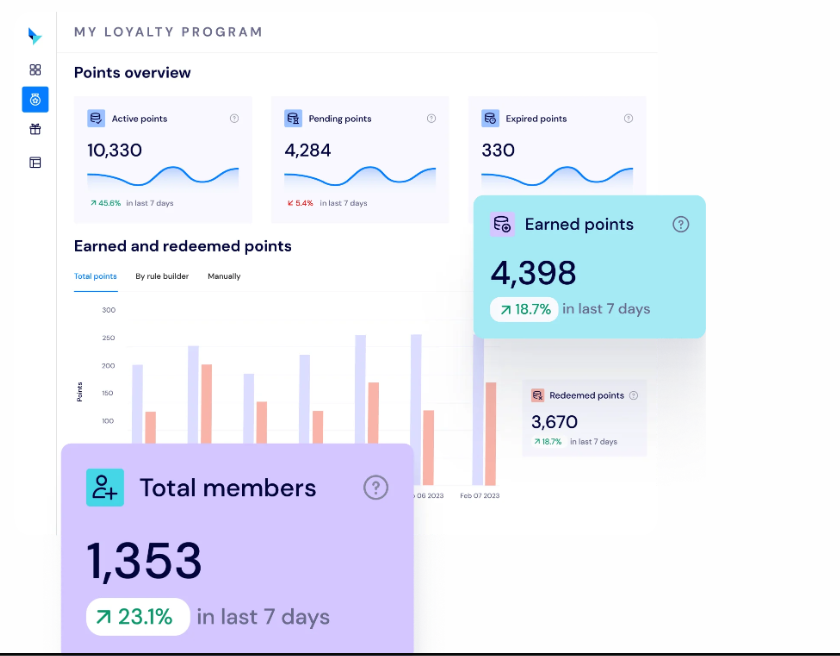
This tool’s differentiators include its:
- Omnichannel loyalty system, enabling businesses to engage clients across e-commerce stores, apps, and points-of-sale.
- Rules engine that simplifies promotional logic without hard-coded limitations, from stacked discounts and geo-fenced offers to loyalty tiers.
It operates as an API-first solution, keeping loyalty experiences embedded in your website or product.
Key features:
- Talon.One predict: Leverage machine learning and AI to identify the best incentives for different audience segments.
- Personalized promotions: Run personalized promotion campaigns across different channels and stages of the customer journey.
- Incentive engine: Customize specific conditions customers must meet to receive rewards and meet discount criteria.
Pricing:
Talon.One’s pricing is available on demand. You’ll need to contact its sales team.
Integrations:
Talon.One integrates with several third-party apps, including Salesforce, Braintree, Stripe, Marketo, Mailchimp, Leanplum, Wirecard, Appnexus, Domo, Cegid, and more via API.
Pros:
Some of its advantages, as highlighted by users, include:
- Limited engineering dependency: Enables operational teams to create and manage promo codes without relying on developers.
- Intuitive interface: Users appreciate the clean, easy-to-navigate dashboard.
- Powerful promotion engine: Can handle complex loyalty programs and promotional rules through a flexible rule engine.
Cons:
Here are the downsides from users:
- Unclear analytical data: Campaign redemption data can be difficult to analyze and interpret.
- Confusing reporting: Users report that navigating reports can feel inconsistent at times.
- Limited analytics depth: Dashboard insights are too shallow for advanced decision-making.
Best for:
- Enterprise-level product managers, marketers, and developers across retail and e-commerce, travel, finance, and quick-service restaurants.
9. Affise
Affise is an affiliate marketing and partner program that helps brands build, manage, and scale performance marketing campaigns.
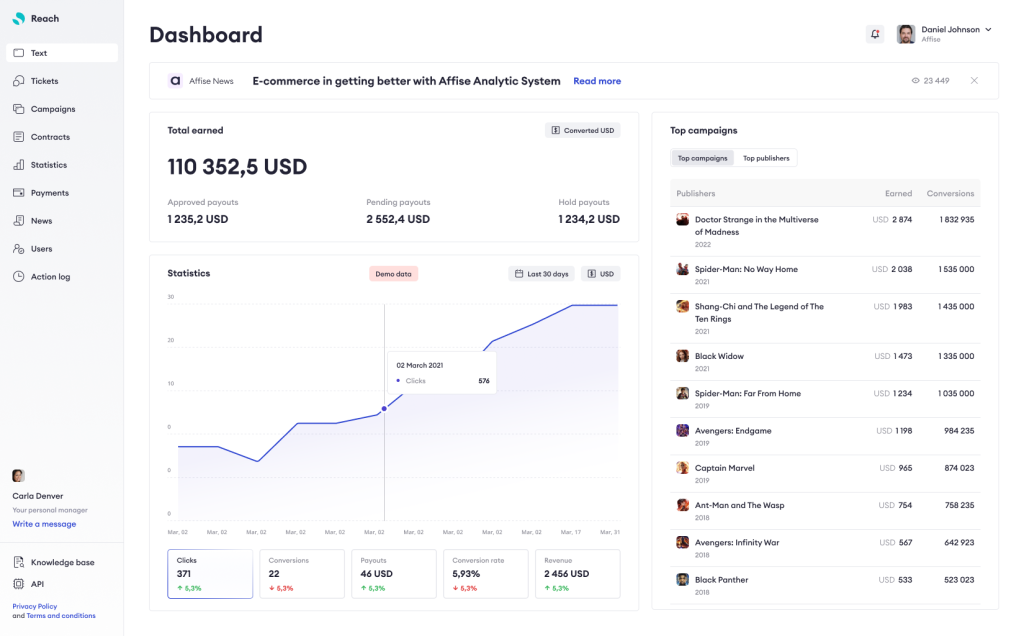
Aside from its affiliate marketing offering, Affise stands out with:
- Affise Performance, for affiliate marketing management with cross-device attribution.
- Affise Mobile Attribution, its mobile measurement partner for funnel tracking of installations, in-app events, and re-engagements.
This makes it one of the few tools in the affiliate category that covers web affiliate programs and mobile app growth.
Key features:
- Partner marketplace: Find potential partners from a vast global network and recruit them.
- Onboarding specialist: Access to an expert to help the team set up and customize an Affise account for you.
- Cross-device tracking: Monitor client engagement and performance across devices, browsers, and channels.
Pricing:
Affise has multiple pricing categories for Affise Performance, Affise MMP, and Affise Reach. Here’s what they offer for Affise Performance:
- Beginner: $625/mo.
- Core: $888/mo.
- Expand: $1,239/mo.
- Custom: $2,499/mo.
Integrations:
Affise integrates with HubSpot CRM, Zapier, SendGrid, Salesforce, Intercom, Shopify, PropellerAds, WeCanTrack, and supports custom integrations via an API and postback URLs.
Pros:
Here are some positives users have seen:
- Customizable platform: Users appreciate the flexibility to tailor campaigns to specific business needs.
- Intuitive interface: The platform offers a polished UI/UX that makes navigation and campaign management straightforward.
- Advanced filtering capabilities: Make it easy to filter statistics by results, publishers, advertisers, dates, and other performance variables.
Cons:
Here are the negatives they’ve also noticed:
- Slow load times: Some users report that pages and dashboards can take longer than expected to load.
- Limited traffic routing rules: Users feel the platform could offer more options for creating advanced rules and redirecting traffic.
- Advanced setup lacks documentation: Features like API integrations and custom domain setup would benefit from clearer guides and walkthroughs.
Best for:
- Marketers across e-commerce, travel, Web3, finance, and SaaS spaces.
10. Referral Factory
Referral Factory is referral software for on-brand customer, affiliate, and referral programs.
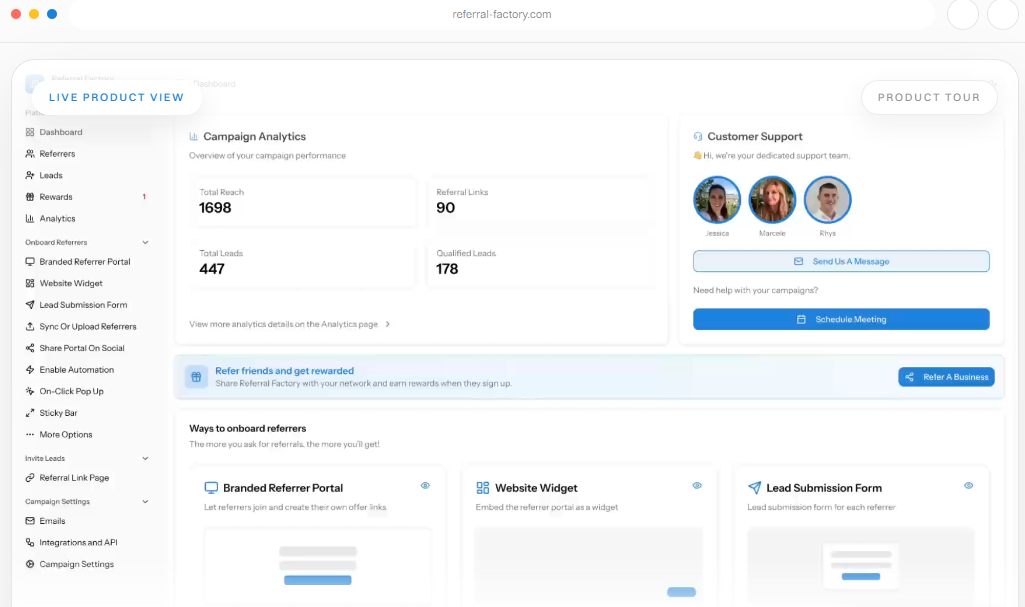
Referral Factory has an AI-powered campaign builder that generates complete referral campaigns by analyzing a user’s website URL and business details to auto-create branded pages, copy, visuals, and calls to action.
It also provides a library of templates to help launch a campaign quickly.
Key features:
- Niche affiliate network: Gives brands access to pre-vetted partners at no additional cost.
- Widgets, pop-ups, and embeds: Install referral experiences as pop-ups and widgets on your website, so users can participate whether they’re logged in or logged out.
- Unique referral links: Generate unique referral links, with referral codes for verbal, offline, checkout, or sales-assisted referrals.
Pricing:
- Basic: $200/mo.
- Pro: $400/mo.
- Enterprise: $1,000/mo.
Integrations:
Referral Factory connects with HubSpot, Salesforce, Pipedrive, Intercom, Stripe, Shopify, WooCommerce, Zapier, Make.com, Monday.com, and offers an API for custom configuration.
Pros:
Here are some positives from users on Capterra:
- Helpful email automation: Automated email workflows make it easier to engage referrers and leads without manual follow-up.
- Visual campaign funnel: The funnel view provides users with a clear way to track campaign performance and understand the conversion flow.
- Effective user management: The platform makes it easy to manage participants and monitor referral activity.
Cons:
Areas for improvement include:
- Confusing reward qualification rules: Users report that understanding how rewards are qualified can sometimes feel unclear.
- Hidden features reduce usability: Important sections, such as failed rewards, can be difficult to find within the platform.
- Limited qualification automation: The platform lacks the flexibility to automate reward qualification based on deal value or custom revenue thresholds.
Best for:
- Referral Factory is best for small to mid-market businesses across any industry that want to launch a branded referral or affiliate program.
11. Mention Me
Mention Me is a customer advocacy intelligence platform built to help e-commerce brands grow through referrals, word of mouth, and first-party advocacy data.
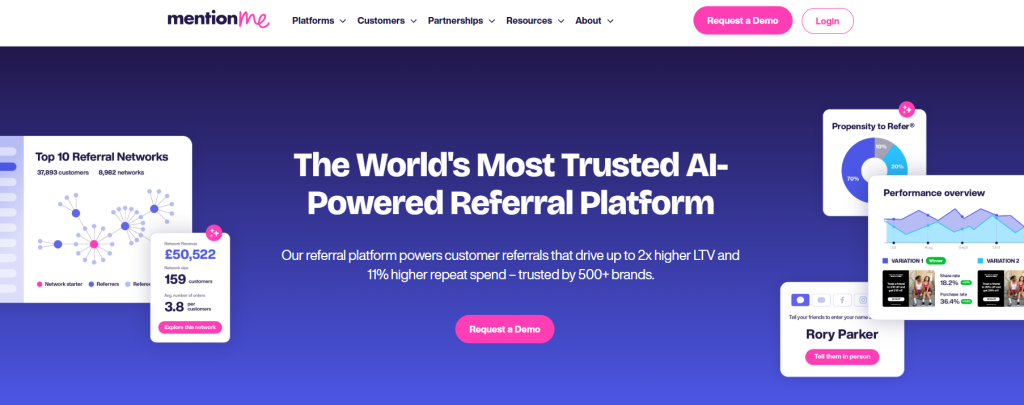
One of its most distinctive features is Name Share, a proprietary tech that lets customers refer friends by sharing their name instead of a link. This ensures that word-of-mouth recommendations can happen in chat and in person.
It also lets you leverage referral data for a paid ads campaign to target an audience similar to your top referrers or existing customers.
Key features:
- A/B testing: Test reward structures, sharing methods, and campaign triggers to find the best combination for your referral programs.
- Referral intelligence: AI-generated insights drawn from campaign data to guide optimization.
- Sentiment analysis: Helps you understand why customers refer others so you can improve the customer experience and boost referrals.
Pricing:
Mention Me’s pricing is only available on demand.
Integrations:
Mention Me integrates with Klaviyo, SAP Emarsys, Bloomreach, Attentive, Ometria, Shopify, Salesforce, and more.
Pros:
Here are some of Mention Me’s advantages:
- Easy setup: Users appreciate the straightforward setup process, which helps them get campaigns running quickly.
- Supportive growth team: The team is frequently praised for its proactive approach and commitment to helping brands grow their referral programs.
- Built-in campaign testing: Users can test and optimize campaigns to improve performance and increase customer engagement.
Cons:
Its drawbacks include:
- Can be complex: New users may need time to understand how the platform works.
- Support-dependent changes: Certain updates, like changing referral codes, require contacting support, which can slow execution.
Best for:
- Mention Me is best for mid-market and enterprise e-commerce brands, particularly in fashion, retail, health, travel, and consumer goods.
12. Yotpo
Yotpo is a customer retention tool that combines loyalty points, referral programs, reviews, and UGC in a single platform for e-commerce brands.
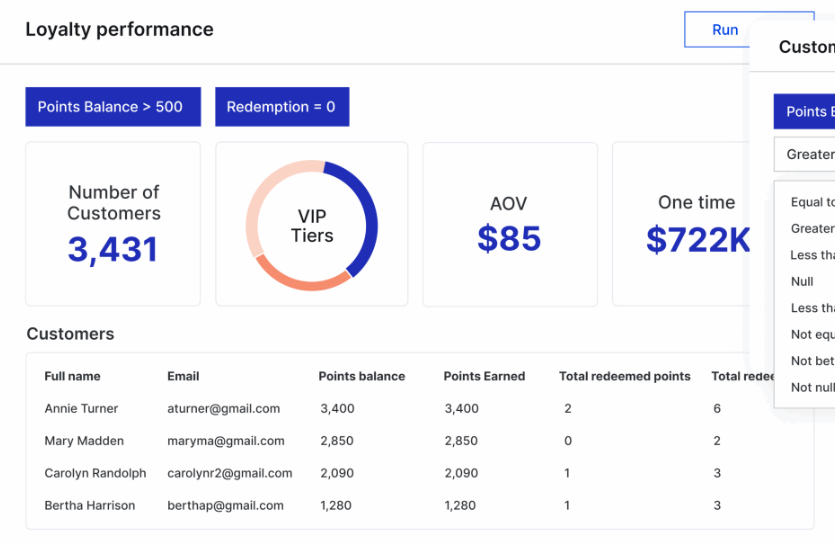
What sets Yotpo apart includes its:
- Cross-product integration, where loyalty, reviews, and referrals share the same data layer.
- AI visibility features that guide AI engines in recommending your product.
- Omnichannel solutions that let clients participate in referral and loyalty campaigns anywhere they engage with your brand.
Key features:
- Customizable loyalty experiences: Create agile campaigns that match your brand’s style and evolve as it grows.
- Unique links: Generate unique referral links that customers can share without logging in.
- Referral performance: Monitor referrals from share to purchase and evaluate program performance in real time.
Pricing:
Yotpo’s pricing is categorized into Reviews & UGC and Loyalty & Referrals. Here are the plans associated with the latter:
- Free:
- Pro: $199/mo. for 500 monthly order volume
- Premium: Custom pricing
- Enterprise: Available on demand
Integrations:
Yotpo integrates with Shopify, Klaviyo, Mailchimp, Optimizely, BigCommerce, Talkable, Google Shopping, and a broad library of e-commerce and marketing tools.
Pros:
Users on G2 typically point to these advantages:
- Flexible automation: Users like the ability to automate referral emails and customize email layouts to fit campaign needs.
- Strong Shopify integration: Seamlessly connects with Shopify, making referral tracking and customer management much easier for e-commerce brands.
- Simple interface: The platform offers a straightforward, intuitive interface that makes campaign management easy.
Cons:
They’ve also identified several disadvantages:
- Inconsistent platform reliability: Occasional glitches, with overall experience sometimes depending on the quality of support received.
- Limited reward automation: The platform does not automatically send emails when customers receive reward vouchers, creating extra manual work.
- Can become expensive fast: Costs can rise quickly, and managing multiple modules may feel overwhelming for growing teams.
Best for:
- Yotpo is best for mid-market to enterprise e-commerce brands.
What are the best ReferralCandy alternatives for SaaS brands?
ReferralCandy focuses on e-commerce referral campaigns. Its key features don’t translate well to SaaS businesses.
Here are the top ReferralCandy alternatives that work well for SaaS:
- Viral Loops: Viral Loops is a strong contender for SaaS brands because it offers SaaS-friendly referral, pre-launch, launch, and milestone templates, making it easy to launch viral referral campaigns. Rewards are tied to upgrades, free trials, early access, or subscription discounts. Our integration with HubSpot means you can track signups, trials, and recurring revenue.
- GrowSurf: This tool is designed for B2B and SaaS brands, offering native tracking for signups, trial conversions, and paid upgrades. Its mobile SDK and AI-powered reward optimization make it a good fit for product-led teams.
- Refgrows: Another good option for SaaS teams with technical experience. It lets you embed a partner dashboard inside your product so users can share and track performance right on the app. Refgrow’s multi-tier payouts and a built-in network of SaaS-focused affiliates also make it useful for subscription businesses.
What are the best ReferralCandy alternatives for startups?
Startups need referral marketing software that fits their budget, is easy to set up and launch, and scales with them as the business grows.
Here are the best ReferralCandy alternatives that meet these criteria:
- Viral Loops: Our tool is a good option for startups because its prebuilt referral campaigns, modeled after successful brands like Dropbox, simplify setup. Our no-code campaign builder, which guides users through the entire campaign process and pricing, and is accessible to early-stage teams, also makes us a good fit for startups.
- GrowSurf: A good fit for startups that need campaign flexibility, embedded referral programs, and automated reward workflows without heavy engineering work.
- UpViral: Consider this tool if your focus is lead generation by running giveaways, sweepstakes, or other reward-based campaigns to grow your audience quickly.
- KickoffLabs: Use KickoffLabs if you’re building early traction and validating demand for your product. It’s ideal for running giveaways, waitlists, and prelaunch campaigns.
What are the best ReferralCandy alternatives for enterprises?
Here are the best ReferralCandy alternatives for enterprises:
- Viral Loops: Viral Loops works well for enterprises that need to launch referral and affiliate marketing campaigns at scale without having to build from scratch. Our API access, advanced integrations, mass reward payouts, and customizable campaign workflows allow enterprise teams to design an experience that reflects their brand style.
- Talon.One: This tool features an API-driven promotion engine that lets enterprises build customized referral, loyalty, and discount logic without platform constraints. Ideal if your company has tech or developer resources.
- Extole: Extole combines enterprise software with robust support for each account. This is an effective option for brands that want a managed partnership.
How to choose a ReferralCandy alternative
You’ve gone through the list, now here’s how to make the right choice:
- Evaluate goals: Begin by listing what you need to achieve with a referral marketing tool. Customer acquisition, awareness, or retention? Find tools with features that help you achieve those goals.
- Ease of use: Does the software have an onboarding guide or a specialist to help you get started? If your team is tech-savvy, you can opt for software with advanced features. Otherwise, go for a tool that’s easy to navigate. You may want to go through user reviews to confirm its ease of use.
- Campaign flexibility: Beyond your goals, prioritize platforms that support multiple campaign types, from referral programs and affiliate marketing to ambassador programs and prelaunch waitlists. That typically means they can scale as the business grows.
- Integrations and automations: Look for software that connects with your existing stack and automates rewards, email workflows, and referral tracking. Check API availability for custom integrations, too.
- Pricing and scalability: Compare multiple pricing options and shortlist those that match your budget. Check whether costs remain sustainable as your referral program grows.
Over to you
Decision time.
You probably need a moment to go over the different ReferralCandy alternatives listed here.
While you do that, consider partnering with Viral Loops.
Our referral marketing platform is designed to help you launch e-commerce referral campaigns fast.
Instead of starting from scratch, you can leverage templates inspired by successful brands.
Schedule a free demo to see how Viral Loops can help you launch a growth campaign.
![9 Best Referral Marketing Platforms [In-Depth Comparison]](https://viral-loops.com/blog/wp-content/uploads/2025/06/UPDATE-9-Best-Referral-Marketing-Platforms-In-Depth-Comparison.png)
![10 Best Referral Rock Alternatives: Full Comparison [2026]](https://viral-loops.com/blog/wp-content/uploads/2025/09/10-Best-Referral-Rock-Alternatives_-Full-Comparison-2026.png)

![10 GrowSurf Alternatives in 2026 [Full Comparison]](https://viral-loops.com/blog/wp-content/uploads/2022/05/10-GrowSurf-Alternatives-in-2026-Full-Comparison.png)
![12 Best Referral Factory Alternatives: Full Comparison [2026]](https://viral-loops.com/blog/wp-content/uploads/2026/05/12-Best-Referral-Factory-Alternatives_-Full-Comparison-2026.png)