“Learn how to build trust for a fintech app using a peer-to-peer referral program that leverages the power of social proof to acquire high-trust users.”
You’ve done it. You’ve built a fintech app that could change how people manage their money. It’s faster, wiser, and more intuitive than anything offered by the big, clunky banks. There’s just one colossal problem. Nobody trusts you. And why should they? In a world of data breaches, digital scams, and fly-by-night operations, you ask people to hand over their most sensitive financial information to a new, unproven app. That’s a huge ask.
This is the number one barrier to growth for every new fintech company. It’s not about features, user interface, or marketing budgets. It’s about overcoming a fundamental human instinct: skepticism, especially regarding money. You can pour hundreds of thousands of dollars into slick social media ads and glossy marketing campaigns, but you’ll find they fall flat. Why? Because when it comes to finance, people don’t trust ads. They trust people. Specifically, they trust people they already know.
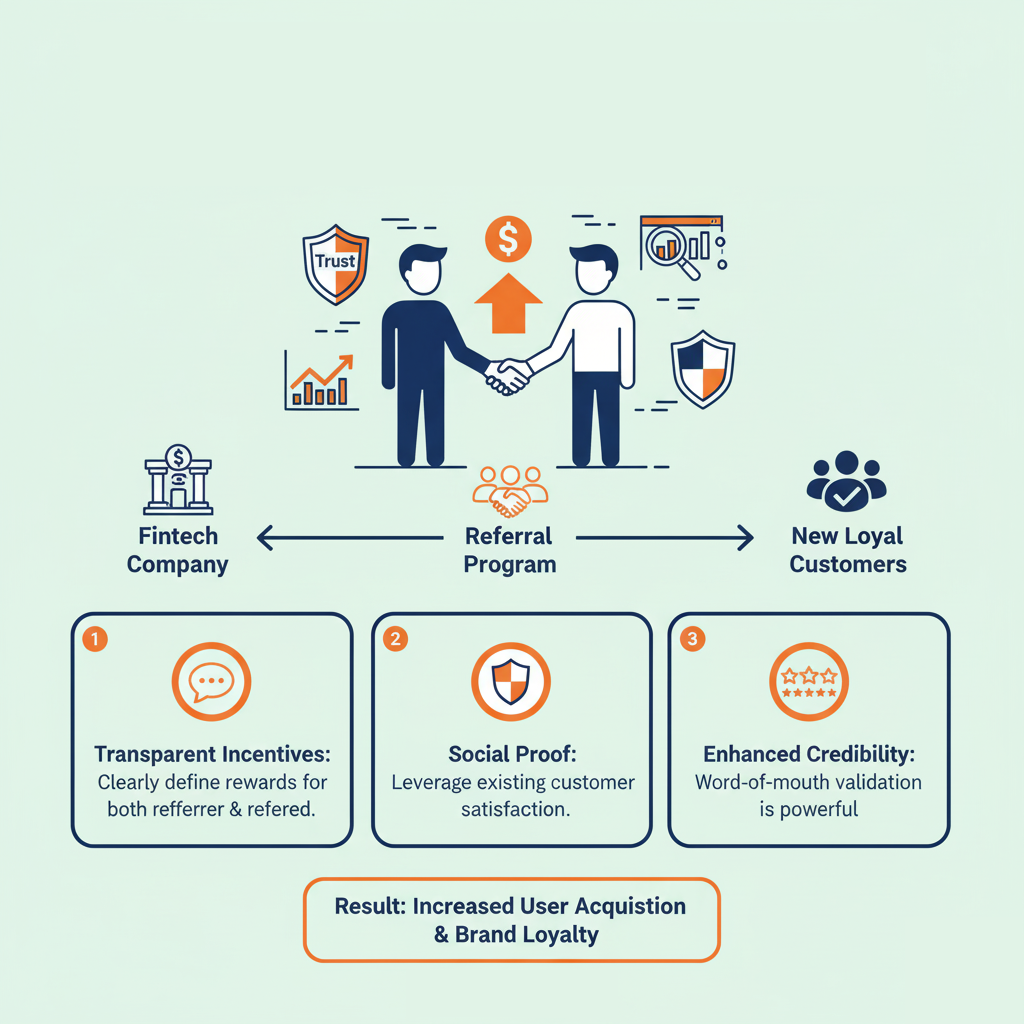
This is where the game changes. The most powerful tool in your arsenal for building brand credibility isn’t a bigger ad spend; it’s a structured peer-to-peer referral program. A referral is more than just a lead. It’s a vote of confidence. A trusted friend says, “I use this, I trust this, and you should too.” It transforms your earliest, most enthusiastic users into a network of powerful validators.
This article will explain why the trust deficit is so acute in financial services and why old marketing methods are ineffective. More importantly, we will provide a blueprint for building a referral program that serves as your primary engine for trust and growth. We will also show you how a platform like Viral Loops provides the essential, secure infrastructure to launch this strategy, turning word-of-mouth from a hopeful accident into a predictable, scalable machine for acquiring high-trust users.
The Great Fintech Trust Deficit: Why Users Are So Skeptical
Before building trust, we must understand why it’s so scarce in the first place. The financial world is built on a foundation of perceived stability and security. Traditional banks have a massive head start. They have physical branches, decades (or even centuries) of history, and government-backed insurance. They represent the old guard—slow and bureaucratic, maybe, but safe.
A new fintech app has none of this. You exist as code on a server and an icon on a phone. This digital-only nature creates a psychological gap. Users can’t walk into your “branch” and speak to a manager. This lack of a physical presence immediately puts you at a disadvantage.
Let’s break down the core reasons behind this trust deficit:
- The Fear of the Unknown: Finance is already complicated and intimidating for most people. They stick with what they know because it feels safer. A new app, with a new way of doing things, introduces uncertainty. Is it a legitimate company? Is it a scam? Will it be around in a year? These are the questions running through a potential user’s mind.
- High-Stakes Data: You aren’t asking for an email to sign up for a newsletter. You ask for bank account details, social security numbers, and direct access to a user’s financial life. A data breach in an e-commerce app is an inconvenience; a breach in a fintech app can be life-altering. Users are acutely aware of this, and the constant news of cyberattacks makes them incredibly cautious.
- Lack of History and Reputation: Brand credibility isn’t built overnight. Companies like Chase or Bank of America have spent generations building their names. As a startup, you have no track record. You can’t point to 50 years of stable service. You are starting from zero; a zero-history track record is often viewed as a negative in finance.
- Regulatory Complexity: The financial industry is a minefield of regulations. Savvy consumers know this and wonder if a new app is fully compliant. Questions about FDIC insurance, SIPC protection, and other security and compliance measures are top-of-mind. Users will assume the worst if you don’t address these concerns clearly and proactively.
This environment of skepticism is precisely why you need to approach growth from a different angle. You aren’t just selling features; you are confident in sales. You are asking users to take a leap of faith, and that requires a much stronger push than a clever advertisement can provide.
Why Traditional Marketing Is a Money Pit for New Fintechs
So, you have a marketing budget. The default move for most startups is to fire up Google Ads, create a Facebook campaign, and hire a few influencers. For a fintech app struggling with the trust deficit, this is like trying to put out a fire with gasoline.
Traditional digital advertising operates on a model of interruption and persuasion. It tries to convince strangers to take action. However, the core problem in fintech isn’t awareness; it’s belief. A potential user might see your ad ten times, but that repetition doesn’t build trust. In fact, it can sometimes have the opposite effect.
Here’s why these channels fail to bridge the trust gap:
- Ads Are Inherently Biased: Everyone knows the company pays for an ad. It’s a biased message designed to sell. This bias is a major red flag when the subject is as sensitive as personal finance. A flashy ad promising high returns or zero fees can feel “too good to be true,” triggering suspicion rather than excitement.
- The Rise of Ad Blindness: Consumers are bombarded with thousands of marketing messages daily and have become incredibly skilled at ignoring them. Your beautifully designed banner ad will likely be scrolled past without a second thought because it looks and feels like every other ad they’ve overlooked that day.
- Influencers Lack Financial Credibility: While influencer marketing can work for consumer goods, it often backfires in finance. An influencer promoting a new protein shake is one thing. That same influencer giving what appears to be financial advice or endorsing a savings app feels inauthentic and even dangerous. Users know the influencer is being paid, which cheapens the endorsement and can damage your fintech branding.
- They can’t answer the Core Question: A user asks, “Is this safe?” An ad can’t convincingly answer that question. It can list security features, but it’s still just you talking about yourself. It lacks the critical element of third-party validation from a trusted source.
Pouring money into these channels is a losing battle. You are shouting into a void of skepticism. You need a different strategy that implicitly uses a channel your target audience trusts: their social circle.
The Unbeatable Power of a Friend’s Recommendation: Social Proof in Action
Think about the last time you tried a new restaurant, watched a new series, or downloaded a new app. What was the final push that got you to do it? For most people, it wasn’t an ad. It was a recommendation from a friend, a family member, or a colleague.
This is the essence of word-of-mouth marketing, and its power is magnified tenfold in the financial sector. Nielsen’s Global Trust in Advertising Report consistently finds that over 80% of people trust recommendations from people they know above all other forms of advertising. It’s not even a close contest. A friend’s recommendation bypasses all the mental filters we put up against traditional marketing.
Why is it so effective?
It boils down to a psychological principle called social proof. When uncertain about a decision, we look to others for cues on how to act. If someone we know and trust has already taken the risk and had a positive experience, it dramatically lowers our perceived risk.
In the context of a fintech app, a referral does several critical things that an ad simply cannot:
- Instantly Transfers Trust: The user’s trust in their friend is immediately transferred to your app. The friend acts as a human filter, vouching for your legitimacy. The conversation in the user’s head changes from “Is this random app a scam?” to “My friend Sarah uses this, so it must be legitimate.”
- It Provides Authentic Validation: A referral is the ultimate customer testimonial. It’s not a curated review on a website; it’s an active, personal endorsement. The referrer is putting their reputation on the line, making the recommendation incredibly powerful.
- It Simplifies the Decision: The referral cuts through the noise and complexity. Users can rely on their friends’ judgment instead of researching your company, reading your security policies, and comparing you to competitors. It’s a mental shortcut to a decision.
- It creates a Network Effect: One happy user tells two friends. Those two friends have a great experience and each tells two more. This is how you achieve exponential growth. It’s a self-perpetuating engine fueled by genuine user satisfaction and trust.
A referral is not just a marketing tactic; it’s your most effective trust-building tool. By creating a formal referral program, you are weaponizing the authentic enthusiasm of your early adopters and turning it into a scalable growth channel.
Your Trust Engine: A Step-by-Step Guide to Building a Fintech Referral Program
Building an effective referral program isn’t simply adding a “Share with a Friend” button to your app. It requires careful thought and strategic planning. Your program must be motivating, easy to use, and, above all, trustworthy. A poorly designed program can do more harm than good.
Here is a step-by-step guide to building a referral program that drives high-trust downloads.
Step 1: Define Your Goals and Know Your Audience
First, what are you trying to achieve? The obvious answer is “more users,” but be more specific. Are you trying to increase the number of funded accounts or drive adoption of a particular premium feature? Your goal will shape your reward structure.
Next, understand what motivates your specific user base.
- Are they students looking for quick cash? A small monetary reward might work best.
- Are they savvy investors? A free stock or a temporary subscription to a premium analytics tool might be more appealing.
- Are they focused on long-term savings? You could offer a bonus contribution to their savings pot.
The reward should be a natural extension of your fintech branding and the value your app provides. Don’t just default to giving away Amazon gift cards if it doesn’t align with your mission.
Step 2: Craft an Irresistible, Dual-Sided Offer
The most successful referral programs reward the person making the referral (the referrer) and the new user who signs up (the referred friend). This is the “give a little, get a little” model, and it’s powerful for a few reasons:
- It Motivates the Referrer: The referrer gets a tangible benefit for their effort.
- It incentivizes the Friend: The new user gets an immediate bonus for signing up, reducing their joining friction.
- It Feels Less Transactional: When the referrer can say, “Hey, if you sign up using my link, you get $10,” it feels like they are doing their friend a favor, not just trying to earn a reward for themselves. This social dynamic is crucial.
The rewards must be clear, valuable, and delivered promptly. If a user has to wait 30 days or jump through hoops to get their reward, it erodes trust in the program and your app.
Step 3: Make Sharing Absolutely Effortless
This is non-negotiable. The referral process must be straightforward. You’ve already lost if sharing a referral link takes more than two taps.
- Seamless Integration: The referral option should be easy to find within your app. Place it in the user’s profile, on the main dashboard, and especially on “success” screens (e.g., after they complete a transaction or hit a savings goal). This is a key part of good user onboarding for fintech.
- One-Click Sharing: Integrate with the phone’s native sharing options. Users can send their unique link via a single tap on WhatsApp, SMS, email, or any other social app.
- Pre-Populated Messages: Provide a default message that users can edit. Something like: “Hey! I’ve been using [Your App] to manage my money, and I think you’d love it. Sign up using my link, and we will both get [the reward]!” This lowers the effort required to share.
Step 4: Promote the Program Relentlessly (But Smartly)
Don’t build a great program and then hide it. You need to actively and continuously remind users that it exists.
- During Onboarding, introduce the referral program as part of the initial user experience.
- Push Notifications: Send a notification after a user has had a positive experience, like “Loving [Your App]? Share it with a friend, and you both will get rewarded!”
- Email Campaigns: Include a referral call-to-action in your regular email communications.
- In-App Banners: Use non-intrusive banners to keep the program top-of-mind.
The key is to promote the program at moments of high user satisfaction. This is when they will feel optimistic about and willing to share your app.
The Pillars of a Trustworthy Referral Program
A referral program is a promise to your users. If you break that promise, you don’t just kill the program; you damage the core trust you’re trying to build. To ensure your program strengthens your brand, it must be built on three pillars: Transparency, Security, and Simplicity.
Pillar 1: Radical Transparency
Users need to understand precisely how the program works. Ambiguity is the enemy of trust.
- Clear Rules: The terms and conditions should be written in plain English, not legalese. What constitutes a successful referral? When is the reward paid out? Are there any limits? Be upfront about everything.
- Visible Tracking: Users should be able to see the status of their referrals. A simple dashboard that shows “Invitations Sent,” “Friends Joined,” and “Rewards Earned” provides crucial feedback and builds confidence that the system is working fairly. Nothing kills motivation faster than sending out referrals without knowing if they were successful.
Pillar 2: Uncompromising Security and Compliance
Many fintechs stumble here. Your referral program is an extension of your product and must be held to the same high security and compliance standards.
- Data Protection: The system managing your referrals must be secure. It will handle user data (like emails or phone numbers of referred friends), and any breach would be catastrophic for your reputation. You cannot afford to have your referral program be the weak link in your security chain.
- Regulatory Adherence: Depending on the nature of your rewards (especially if they are cash or stock), you may be subject to financial regulations like Know Your Customer (KYC) or Anti-Money Laundering (AML) laws. Your program must be designed to comply with these rules.
- Fraud Prevention: You need a robust system to detect and prevent fraud. Users will try to game the system by referring themselves with fake accounts. If fraudulent actors are rewarded, it devalues the program for your honest users and can cost you significant money.
Pillar 3: Simplicity and Fairness
If users must read a manual to understand your referral program, it has already failed.
- Simple Mechanics: “Refer a friend, you both get $X when they fund their account.” This is a simple, effective mechanic. Avoid overly complex multi-level or tiered systems, at least initially. Complexity breeds confusion and suspicion.
- Reliable Payouts: The reward must be delivered exactly as promised, every single time. A delayed or missed payment is a breach of trust you may never recover from. Automating this process is key to ensuring reliability at scale. This focus on clarity also ties into promoting financial literacy; you’re teaching users that economic systems can be straightforward and reliable.
Building a program with these pillars in mind is a significant undertaking. It requires expertise in security, data management, and user experience. This is why creating it from scratch is often a risky and resource-intensive distraction for a growing fintech.
Viral Loops: The Secure Infrastructure for Your Fintech Trust Engine
You should be focused on building the best core financial product, not on becoming an expert in referral marketing infrastructure. Building an in-house secure, scalable, fraud-proof referral program is a massive engineering challenge. If not done perfectly, it will distract your team, delay your roadmap, and be fraught with security risks.
This is where a specialized platform like Viral Loops becomes indispensable to your growth stack. Viral Loops isn’t just a marketing tool; it’s a secure, purpose-built infrastructure designed to handle the unique challenges of a fintech referral program.
Here’s how Viral Loops provides the essential framework for your trust engine:
Security and Compliance First
Viral Loops is built with a security-first mindset. We understand you’re handling sensitive data and operating in a regulated industry. The platform is designed to protect user information and ensure the integrity of your program, allowing you to run your campaigns with peace of mind. This focus on security means you can confidently launch a program that enhances, rather than compromises, your app’s trustworthiness.
Robust Fraud Detection
Our platform comes with advanced fraud detection and prevention mechanisms. We can identify suspicious patterns, block fraudulent sign-ups, and ensure that rewards only go to genuine users. This protects your budget and maintains the program’s fairness, which is critical for maintaining the trust of your legitimate advocates.
Seamless and Effortless Integration
Viral Loops is designed to integrate smoothly into your CRM and workflow. Our tools allow you to embed the referral experience natively within your application, making it a seamless part of the user journey. From the initial onboarding pop-up to the sharing widgets, you can create a fully branded experience without requiring a massive development effort from your team.
Scalable and Automated from Day One
Your referral program needs to work just as well for your first 100 users as it does for your first million. Viral Loops is built on a scalable architecture that can handle exponential growth without a hitch. More importantly, it automates the entire process—from generating unique referral codes to tracking successful conversions and distributing rewards. This automation frees up your team to focus on what they do best: improving your core product.
Fintech-Specific Templates and Analytics
You don’t have to start from scratch. Viral Loops offers pre-built templates inspired by the world’s most successful fintech referral programs, like Robinhood, Revolut, and N26. You can launch a proven campaign in a fraction of the time. Our comprehensive analytics dashboard gives you a clear view of what’s working. You can track invites, conversions, and the overall ROI of your program, allowing you to optimize for maximum impact.
By using Viral Loops, you aren’t just buying software. You are implementing a secure, expert-designed system to safely and effectively leverage social proof marketing, turning your users into your most potent and trusted sales force.
Conclusion: Stop Marketing, Start Building Trust
In the world of fintech, the old marketing playbook is broken. Users are skeptical, the stakes are high, and trust is the only currency that matters. You cannot buy this trust with banner ads or sponsored posts. You must earn it, one user at a time.
A peer-to-peer referral program is the most direct and scalable way. It’s a mechanism that channels the authentic enthusiasm of your happy customers and uses it to overcome the skepticism of new ones. It transforms a faceless app into a trusted recommendation from a friend. This isn’t just a growth hack; it’s a foundational strategy for building a defensible, credible brand.
Implementing a program built on transparency, security, and simplicity creates a positive feedback loop. Your best customers bring you more great customers, who become advocates themselves. This is how you build not just a user base but a community.
And you don’t have to build it alone. A platform like Viral Loops provides the secure, automated infrastructure to launch a world-class referral program quickly and safely. It allows you to focus on your product while deploying a proven strategy for building the one thing your fintech needs to survive and thrive: trust
Frequently Asked Questions (FAQs)
What’s the best reward for a fintech referral program?
The best reward aligns with your brand and what motivates your specific users. Cash rewards ($5, $10, etc.) are universally appealing and straightforward. Product-related perks, like a free month of a premium subscription, a temporary boost to a savings interest rate, or a free stock (popularized by Robinhood), can be very effective as they encourage deeper engagement with your app. The key is to make the reward valuable enough to motivate action but sustainable for your business. A dual-sided reward is almost always the best approach.
How do I prevent fraud in my referral program?
Fraud prevention is critical. Common tactics include using IP address tracking to flag multiple sign-ups from the exact location, implementing a “quality” check before paying a reward (e.g., the new user must fund their account or complete a transaction), and using device fingerprinting. A specialized platform like Viral Loops has sophisticated, built-in fraud detection that automates this process, flagging suspicious activity and allowing you to review it before rewards are issued.
When is the right time to launch a referral program?
Don’t launch a referral program on day one. You should wait until you have achieved product-market fit and have a core group of happy, engaged users. Your early adopters are your most likely advocates. If your product is still buggy or the user experience is poor, asking users to refer their friends will backfire. A good rule of thumb is to launch your program once you have qualitative feedback (like positive customer reviews) or quantitative data (like high retention rates) showing that users genuinely love your product.
How is a referral program different from an affiliate program?
While both involve rewarding people for bringing in new customers, they operate on different principles of trust. Referral programs are designed for existing customers to share with their personal network (friends, family). The trust comes from the personal relationship. Affiliate programs are typically for professional marketers, bloggers, or influencers who promote a product to a broader, less personal audience. A peer-to-peer referral program is far more potent for building initial trust for a fintech app.
Can a referral program build trust, or is it just a marketing gimmick?
It can absolutely build trust, but only if it’s done correctly. Trust isn’t built by the gimmick of the reward; it’s built on the social proof of the recommendation itself. The program is merely the mechanism that facilitates and encourages that recommendation. When a program is transparent, fair, and rewards genuine advocacy, it reinforces the idea that your company values its customers and is confident enough in its product to encourage them to share it. Conversely, a poorly executed or unfair program can destroy trust.
How does Viral Loops ensure compliance with financial regulations?
Viral Loops provides a secure and flexible infrastructure that can be configured to support your compliance needs. While Viral Loops does not provide legal advice, the platform allows you to implement necessary checks and balances. For example, you can integrate your own KYC (Know Your Customer) verification steps before a reward is paid out. The platform’s secure data handling and robust tracking provide a clear audit trail. We always recommend consulting with your legal team to ensure your specific program structure and reward system comply with all relevant financial regulations in your jurisdiction.