“Master your relationship marketing strategy with referrals. Learn to use trust, reciprocity, and rewards to turn happy customers into powerful, long-term brand advocates.”
Marketing can feel like a constant, uphill battle.
You spend a fortune on ads, shouting into the digital void, hoping someone—anyone—listens. You fight for every click, every lead, every conversion. When you finally make a sale, what happens? The cycle starts all over again. You’re back at the bottom of the hill, pushing the same rock, trying to find the next customer.
This is transactional marketing. It’s exhausting, expensive, and ultimately, it’s a leaky bucket. You’re so focused on attracting new customers that you overlook your existing ones slipping away.
There’s a better way.
It’s called relationship marketing. And its most powerful tool isn’t an ad; it’s a conversation. It’s the moment you stop treating customers like numbers on a spreadsheet and start treating them like partners.
The ultimate expression of this partnership? A referral.
Welcome to the definitive guide on using referrals within your relationship marketing strategy. This isn’t about one-off “get $5” gimmicks. This is about building bonds so strong that your customers become your most passionate, effective, and loyal marketing team. We’re going to explore the psychology of why this works, the practical steps to build it, and how to create a system that turns happy customers into powerful advocates.
Part 1: The Big Shift: What Is a Relationship Marketing Strategy?
Before we discuss referrals, we need to establish a standard foundation. For decades, marketing’s playbook was simple: “Make product, run ad, get sale.” This is the transactional model. It’s a one-way street. The relationship ends the second the credit card is approved.
A relationship marketing strategy flips the script entirely.
It’s a business philosophy built on the idea that winning a new customer is just the beginning of the journey, not the end.
The core goal isn’t just to make a single sale; it’s to create a long-term, mutually beneficial connection that maximizes customer lifetime value (CLV). Think about it. It’s the difference between a one-night stand and a marriage. One is focused on the immediate transaction; the other is focused on long-term growth, trust, and mutual support.
Why Bother with Relationships? The Hard Numbers.
This isn’t just a “feel-good” idea. It’s a brutal, economic reality.
- Acquisition is Expensive: Depending on your industry, acquiring a new customer can cost anywhere from 5 to 25 times more than retaining an existing one.
- Loyal Customers Spend More: Existing customers are more likely to try your new products and spend more per purchase. A 5% increase in retention marketing efforts can boost profits by over 25% (and sometimes as high as 95%).
- Loyalty Creates a Moat: A competitor can copy your product, but it’s the loyalty that creates a lasting competitive advantage, a moat. They can undercut your price. But they cannot copy the trust and personal connection you’ve built with your customers.
This is where so many businesses go wrong. They spend 90% of their budget trying to woo strangers while ignoring the loyal fans already in their corner. A customer relationship marketing approach rebalances the scales. It invests in the customers who have already proven they believe in you.
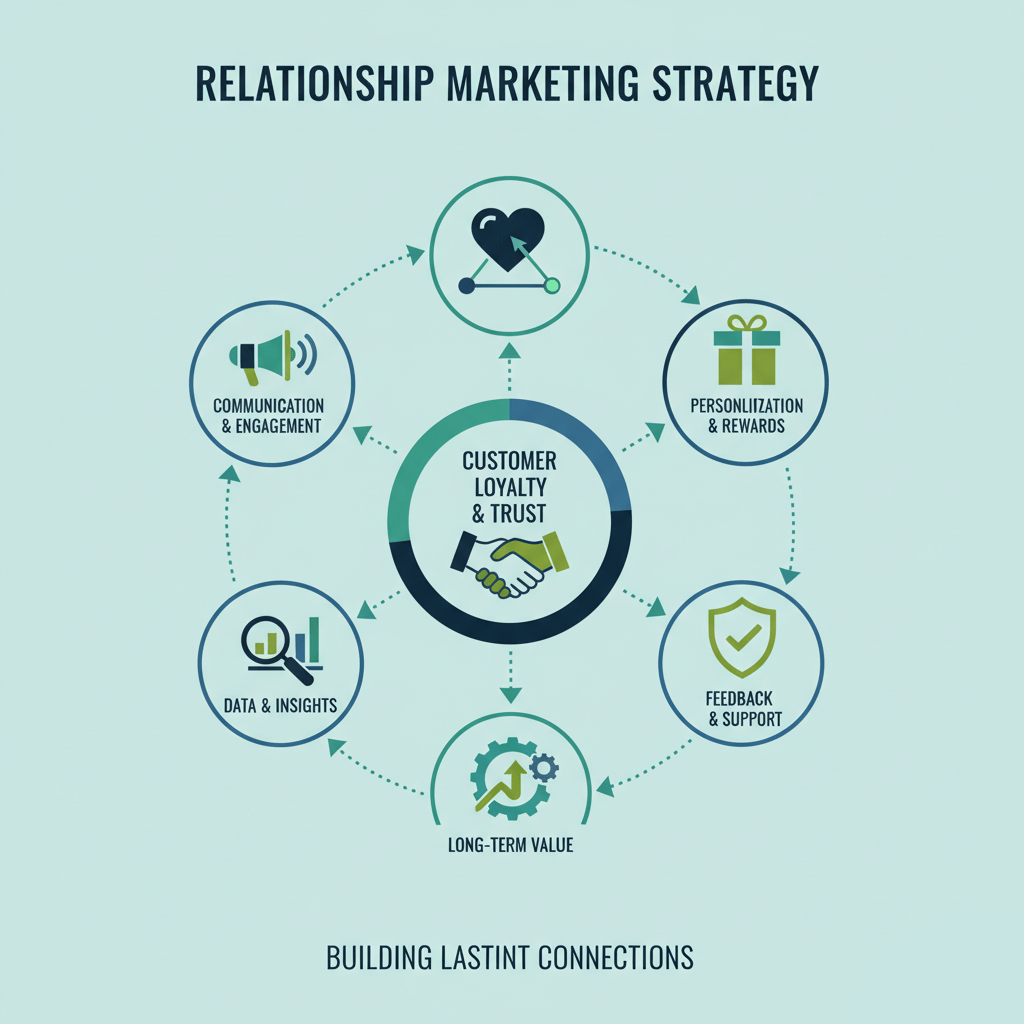
This strategy is built on a few key pillars:
- Trust: Delivering on your promises, every single time.
- Communication: Talking with your customers, not just at them.
- Value: Consistently providing value outside of the purchase (e.g., great content, support, or community).
- Recognition: Making your customers feel seen, heard, and appreciated.
When you nail these four things, you begin to build customer loyalty. And a loyal customer is the perfect candidate to become something even more valuable: an advocate.
Part 2: The Psychology of Advocacy: Why Referrals are Relational
Okay, so relationship marketing is about building loyalty. Great. But where do referrals fit in?
Most people see referral programs as a simple, transactional word-of-mouth marketing strategy.
- Customer A tells Friend B.
- Friend B buys.
- Customer A gets a reward.
Simple. However, this view overlooks the profound psychological power at play. When you build a relational referral program, you’re not just “buying a lead.” You are tapping into powerful human motivators that strengthen the bond you already have with that customer.
The Power of Trust and Social Proof
Think about the last time you bought something significant. Did you click the first Google ad you saw? Or did you text a friend who knows about that kind of thing?
People don’t trust ads. They trust people.
A referral cuts through all the marketing noise because it comes with built-in trust. When a friend recommends a product, they are lending you their personal credibility. They’re putting their reputation on the line. This is infinitely more powerful than any celebrity endorsement or flashy banner ad.
The Magic of Reciprocity
This is one of the most potent forces in human interaction. When someone does something nice for you, you feel a deep, psychological urge to do something nice in return.
Your relationship marketing strategy is the “first move.”
- You delivered a fantastic product.
- You provided incredible, human customer service.
- You sent them a personalized “thank you” note.
- You made them feel innovative, or safe, or successful.
You have consistently deposited “goodwill” into this customer’s emotional bank account. Now, when you ask for a referral, you’re not just asking for something; you’re asking for something valuable. You are giving them a transparent, tangible, and “approved” way to reciprocate the value you’ve already given them. They want to help you succeed because you’ve helped them.
Activating Identity: “I’m a [Brand] Person”
The deepest level of customer loyalty is when a customer stops using your brand and starts identifying with it.
They don’t just “drink Starbucks coffee.” They are “a Starbucks person.” They don’t just “own a Peloton.” They are “part of the Peloton community.”
When a brand becomes part of someone’s identity, sharing it isn’t a chore. It’s an act of self-expression. By referring a friend, they are saying, “This is my tribe. This is what we’re about. You should be part of it, too.”
This is the holy grail: turning customers into advocates who do your marketing for you, not for a $10 coupon, but because it reinforces who they are.
The Referral Ask as a Relationship Builder
Here is the central idea of this entire article:
A referral isn’t the end of a customer relationship. It’s a testament to it. And the act of asking makes it stronger.
When you ask a happy customer for a referral, you are implicitly telling them:
- “We value your opinion.”
- “We trust your judgment.”
- “We believe you have good taste and smart friends.”
- “You are part of our inner circle.”
This is an incredibly validating experience. It makes the customer feel like an insider, a partner, not just a data point. You are giving them a new, elevated role in your brand’s story: the role of brand advocacy.
Part 3: The Fatal Flaw: When “Referral Programs” Damage Relationships
“But wait,” you might be thinking. “I tried a referral program. It didn’t work. It felt… icky. My customers didn’t seem interested.”
This is a common problem. It occurs when you bolt a transactional referral program onto a non-existent relationship.
You can’t ask for a referral on the first date.
If your only interaction with a customer is the initial sale and a flood of spammy emails, your “relationship” is shallow. When you then pop up with a “Refer a Friend and Get $5!” message, it feels desperate and greedy. You haven’t earned the right to ask. You haven’t established the trust, reciprocity, or identity we just discussed.
This transactional approach has several problems:
- It Attracts Mercenaries, Not Advocates: The customer who refers for $5 is only loyal to the $5 they received. They will jump ship the second a competitor offers $6. You’re not building customer loyalty; you’re just renting their friend list.
- It devalues the Relationship: It frames the referral as a cheap transaction. It implies that their friends’ trust and their personal recommendation are only worth a few bucks.
- It creates a Poor First Impression: The referred friend also feels cheapened. They know their friend only recommended them to get a kickback. The trust is broken before the relationship even begins.
A proper relationship marketing strategy views the referral differently. The reward isn’t the reason for the referral; it’s a token of appreciation for it. The primary motivation is the customer’s genuine desire to share something they love.
Part 4: The Foundation: What You MUST Do Before Asking for a Single Referral
You wouldn’t build a house without a foundation. Likewise, you can’t launch a referral program without first creating a rock-solid customer relationship.
If your customers are just “satisfied,” they won’t refer you. Satisfaction is passive. It’s the absence of problems. You need to create delight. Delight is active. It’s an emotional, positive experience that people feel compelled to talk about.
Your customer engagement strategies are what build this foundation. Here’s your checklist.
1. Have an Unquestionably Great Product or Service
This is non-negotiable. It’s the table stakes. Your product must deliver on its promise. If it’s buggy, or breaks, or just doesn’t work, no amount of marketing can save it. All you’ll get are negative reviews, not referrals.
2. Provide Shockingly Good Customer Service
This is where you can truly stand out. Most customer service is mediocre. When a customer has a problem, they expect a long wait, a confusing phone tree, and an unhelpful agent.
Shock them with competence and kindness.
- Answer emails quickly.
- Empower your support team to resolve issues without escalating them.
- Be proactive. If you know a shipment will be late, tell them before they have to ask.
- Turn a problem into an opportunity. A customer who has a problem solved effectively can become even more loyal than one who never had a problem at all.
3. Personalize the Experience
Stop treating your customers like a faceless mob. Use the data you have to make them feel seen and valued.
- Use their name.
- Acknowledge their purchase history. (“We saw you loved the blue sweater; you might like the new matching scarf.”)
- Send a personalized, handwritten “thank you” note to your top 10% of customers. It costs almost nothing and creates a customer for life.
4. Build a Community, Not Just an Audience
An audience listens—a community talks to each other.
Brand community building is a core part of modern relationship marketing. Give your customers a place to connect, share tips, and feel a sense of belonging. This could be a:
- Private Facebook Group or Slack channel
- Lively comment section on your blog
- User forum
- In-person or virtual events
When customers are part of a community, they aren’t just connected to you; they’re also connected. This deepens their connection to the brand and makes them far more likely to advocate for it.
Only after you have these pieces in place—a great product, excellent service, and authentic engagement—are you ready to introduce a referral program. Now, they are primed for customer advocacy.
Part 5: The Playbook: How to Weave Referrals Seamlessly into Your Strategy
You’ve built the foundation. Your customers are happy. They’re engaged. You can feel the positive energy. Now is the time to channel that energy.
Here’s how to build a referral program that strengthens your relationships, rather than cheapening them.
Step 1: Identify Your True Advocates
Don’t blast your entire email list with a referral request. It’s lazy and ineffective. Instead, segment your audience and find the people who are most likely to say “yes.”
Look for:
- High-Value Customers: Your repeat purchasers.
- High-NPS Responders: Anyone who gave you a 9 or 10 on a Net Promoter Score survey.
- Social Media Fans: The people who are already tagging you and leaving positive comments.
- Long-Time Subscribers: The loyal fans who have been on your email list for years.
These are your people. Start with them.
Step 2: Frame the “Ask” Around the Relationship
The language you use is everything. Don’t make it about your need for leads. Make it about their status as a valued insider.
| Transactional “Ask” (Weak) | Relational “Ask” (Strong) |
| “Refer a friend and get $10.” | Share the love. Give a friend $10 off, and we’ll send you $10 too.” |
| “Help us grow.” | “You’re one of our best customers. We trust your judgment.” |
| “Join our referral program.” | “Welcome to the [Brand Name] Insiders. You get special perks, starting with this.” |
See the difference? The first column is a cold command. The second column is a warm invitation. It makes the customer the hero of the story. You’re giving them the power to “give” something to their friends.
Step 3: Offer Rewards that Deepen the Connection
Cash is the most transactional reward there is. It’s fine, but it doesn’t contribute to furthering your retention marketing goals. The customer takes the cash, and the relationship doesn’t grow.
Consider “relational rewards” that encourage customers to stay.
- Store Credit or a Gift Card: This is brilliant. It’s a “cash-like” reward that can only be spent with you, driving a repeat purchase and restarting the loyalty loop.
- Exclusive Access: “As an advocate, you get to shop our new collection 24 hours before anyone else.” This creates status and belonging.
- Premium Swag: A high-quality t-shirt, water bottle, or hat that says “Ambassador” or “[Brand] Insider.” This allows them to display their identity physically.
- A Charitable Donation: “For every friend who joins, we’ll donate $20 to [Shared Cause].” This aligns your brand with their personal values, building a much deeper connection than cash ever could.
And always, always use a two-sided reward. The advocate’s friend must get something, too. This changes the entire dynamic. The advocate isn’t just “selling” for you; they are “gifting” a great deal to their friend. It makes them look generous and thoughtful.
Step 4: Make It Unbelievably Easy
This is a non-negotiable part of your customer engagement strategies. If your referral process involves filling out a lengthy form, finding a complex URL, or waiting 60 days for a reward, no one will participate. You’ve introduced friction, and friction kills momentum.
The process should be:
- Simple to Find: A clear link in their account dashboard or in post-purchase emails.
- Simple to Share: A unique, one-click link they can copy or share directly to social media, email, or text.
- Simple to Track: A dashboard where they can see who has signed up and what rewards they’ve earned.
Step 5: Nurture Your Advocates (This is the Step Everyone Forgets)
What happens after someone sends you a referral?
Most companies: crickets.
This is a massive missed opportunity. The referral is not the end of the conversation. It’s the start of a new, deeper one.
- Thank Them. Immediately. Send an automated email the second their friend makes a purchase. “Wow, [Customer Name], you’re amazing! Your friend [Friend’s Name] just joined the family. As promised, here is your reward.”
- Create an “Advocate Tier.” Don’t just treat them like every other customer. Put them in a special segment.
- Ask for Their Opinion. Send your advocates a survey. “As one of our most valued members, what should we build next?” This is a zero-cost “reward” that provides immense value (to both of you).
- Give Unexpected Perks. Every once in a while, send your top 10 advocates a free product or a bigger-than-usual gift card, “just because.”
When you do this, you stop turning customers into advocates and start turning advocates into lifelong partners. You’ve created a powerful, self-sustaining brand community built on mutual respect and appreciation.
Part 6: The Flywheel: How to Automate and Scale Your Relationship Strategy
This all sounds great, doesn’t it? Building a community, sending personalized “thank yous,” tracking rewards, nurturing advocates…
It also sounds exhausting.
And if you try to manage it by hand with spreadsheets and manual email sends, it will be. You’ll miss a reward. A link will break. A new customer will be forgotten. And all that hard-earned relational trust will evaporate in an instant.
This is the central challenge of scaling a relationship marketing strategy. How do you maintain a personal, human, and special connection when you have 1,000, 10,000, or 100,000 customers?
This is precisely where a tool like Viral Loops comes in.
It’s not just “referral software.” It’s the engine that enables you to automate the mechanics of your program, allowing you to focus on the relationship.
Here’s how it facilitates the strategy we’ve just outlined:
- It Makes Sharing Effortless: Viral Loops creates a seamless, on-brand experience. It gives each customer a unique, easy-to-share link. No clunky forms. No confusing portals. It makes sharing feel like a natural part of being a customer.
- It Automates Reward Fulfillment: This is critical. When an advocate’s friend signs up, you can’t make them wait. Viral Loops tracks conversions and delivers rewards instantly (whether it’s store credit, a discount code, or points). This instant, positive feedback is what makes them feel valued and encourages them to do it again.
- It builds the Two-Sided Value Proposition: The platform is designed to handle two-sided rewards seamlessly. It gives a code to the friend and tracks the reward for the advocate, ensuring everyone feels the “win.”
- It creates the Continuous Advocacy Cycle: This is the flywheel. A happy customer shares. Their friend gets a great deal and has a great experience. They become a happy customer. The platform automatically invites them to the referral program as well. And the cycle repeats. Your word-of-mouth marketing strategy becomes a self-perpetuating growth machine.
By automating tracking, invites, and rewards, Viral Loops doesn’t replace human connection; instead, it enhances it. It protects it. It ensures that you’re delivering on your promises at scale, every single time. It makes your advocates feel seen, valued, and instantly appreciated, which only deepens their connection to your brand and fuels their desire to keep sharing.
Conclusion: Stop Chasing, Start Connecting
The traditional marketing approach is outdated. It’s built on a transactional, adversarial model where you have to yell, interrupt, and spend a fortune just to be heard.
The future of business growth is, and always has been, human relationships.
Your relationship marketing strategy is your plan to build those connections. It’s your commitment to providing so much value that your customers not only stay with you, but also actively root for you.
And a referral program is the ultimate expression of this strategy. It’s the moment a customer raises their hand and says, “I believe in this. I’m part of this. And I want my friends to be, too.”
When you stop treating referrals as a cheap trick to get leads and start treating them as a celebration of your best customers, everything changes. You stop buying transactions and you start building customer loyalty. You stop hunting for leads and you start turning customers into advocates.
This is how you build a brand that lasts.
Frequently Asked Questions (FAQs)
Q: What’s the main difference between relationship marketing and CRM?
A: This is a great question. Think of it this way: Relationship Marketing is the strategy and the philosophy. It’s the “why”—the goal of building long-term trust, loyalty, and CLV. CRM (Customer Relationship Management) is both a tool and a technology. It’s the “how”—the software platform (like Salesforce or HubSpot) that you use to store customer data, track interactions, and manage communications. You use a CRM to execute your relationship marketing strategy.
Q: When is the absolute best time to ask a customer for a referral?
A: You want to ask during a “moment of maximum delight.” Don’t just send a random email six months after their purchase. Ask them:
- Immediately after a 5-star review: They just told you they are happy. This is the #1 best time.
- Right after a positive customer service interaction: You just solved their problem, and they are feeling grateful.
- Right after they make a repeat purchase: This is a clear signal of loyalty.
- When they tag you positively on social media, they are already advocating for you in public.
Q: What are the best non-cash rewards for a B2B (business-to-business) referral program?
A: B2B relationships are often more profound and more complex, so the rewards should reflect that. Instead of cash, try:
- Service Credits: A free month of your software or a credit toward their next invoice.
- Exclusive Content/Training: Access to a “power-user” webinar, an advanced certification, or a private report.
- Co-Marketing Opportunities: Offer to feature them in a case study, a joint blog post, or on your podcast. This gives them valuable exposure.
- High-End Swag: Not just a pen. Think a high-quality leather notebook, an expensive “Ambassador” polo shirt, or a high-end desk accessory.
Q: How do I measure the success of a relational referral program?
A: A transactional program only measures one thing: Cost Per Lead. A relational program looks at much deeper metrics:
- Advocate Retention Rate: Are your advocates staying customers longer than your non-advocates?
- CLV of Referred Customers: Are the customers who come from referrals more valuable than customers from other channels? (The answer is almost always yes.)
- Referral Conversion Rate: What percentage of people who are sent a referral link actually use it? This measures the trust your advocate has in you.
- Share Rate: How many advocates are actively sharing their link? This shows the health and engagement of your advocate community.
Q: Can this strategy work for a new business with very few customers?
A: It’s not only can it work, it’s the only thing that works. When you only have 10, 50, or 100 customers, you can’t afford expensive ads. But you can provide a personal, high-touch experience. You can personally email every customer. You can pick up the phone. By treating your first 100 customers like royalty, you can build the foundation for a word-of-mouth marketing strategy that will fuel your growth for years to come.