“Use this essential Product Launch Checklist to strategically plan your pre- and post-launch phases, build massive hype, and achieve sustainable growth.”
You’ve poured countless hours, sleepless nights, and maybe a little too much caffeine into creating something new. The product is polished. The code is clean. The design is perfect. Now comes the moment of truth: the launch. This is where excitement meets terror. A successful product launch can set your company on a trajectory toward explosive growth. A failed one can mean a quiet, disheartening end to a brilliant idea.
So, what separates the runaway successes from the ones that fizzle out? It’s rarely the product itself. More often, it’s the plan. Or the lack of one.
Launching a product without a detailed checklist is like trying to build a piece of IKEA furniture without the instructions. You might get there eventually, but it will be messy, frustrating, and you’ll definitely have some crucial screws left over. This is not just about avoiding mistakes; it’s about systematically building momentum, creating excitement, and ensuring that on launch day, people are not only aware of your product but are also eagerly waiting to buy it.
This comprehensive guide is your set of instructions. We’ve broken down the entire process into two critical phases: Pre-Launch and Post-Launch. Follow this product launch checklist, and you’ll transform a stressful gamble into a calculated and successful strategy.
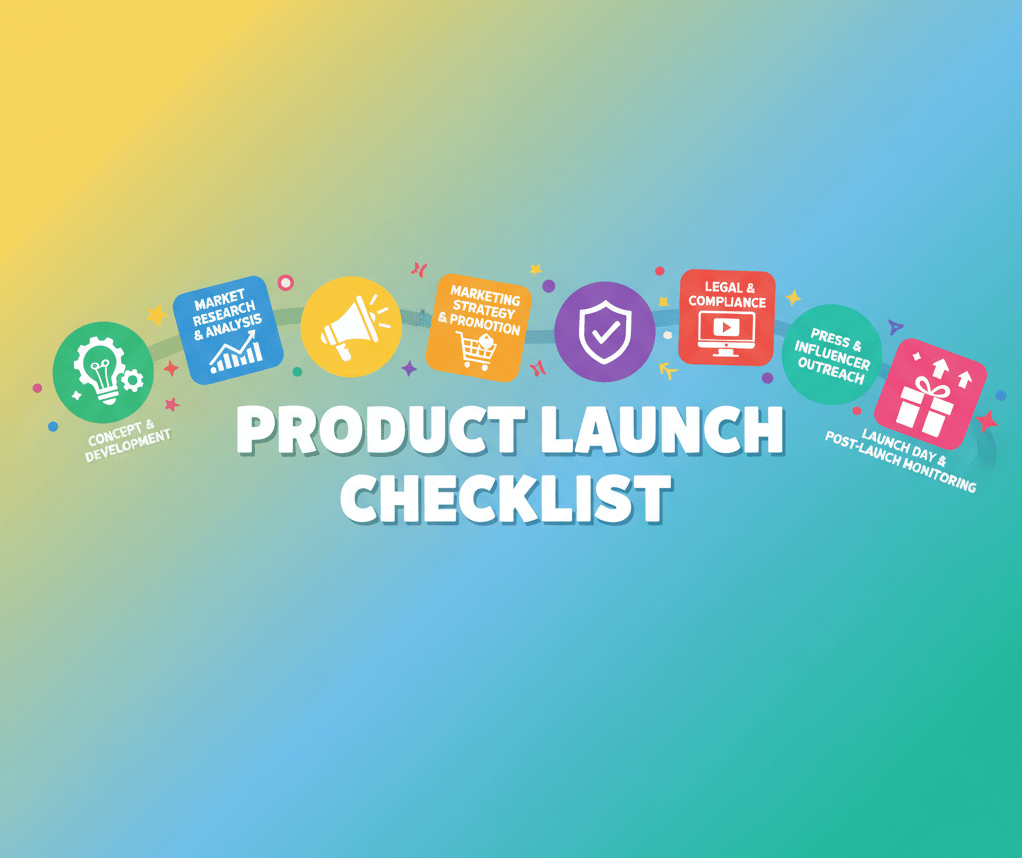
The Foundation: Why a Product Launch Checklist is Non-Negotiable
Before we dive into the nitty-gritty, let’s quickly establish why you absolutely need a structured checklist. A product launch involves a dizzying number of moving parts. Marketing needs to align with sales, which needs to align with product development and customer support. Without a central document, tasks fall through the cracks, deadlines are missed, and the entire team operates in a state of organized chaos.
Your product launch checklist serves as your single source of truth. It:
- Creates Alignment: Everyone on the team knows what needs to happen, who is responsible, and when it’s due.
- Prevents Oversights: It ensures you don’t forget critical steps, such as setting up analytics, preparing support documentation, or warming up your email list.
- Builds Momentum: A structured plan allows you to build hype methodically, layering marketing efforts to create a crescendo of excitement for launch day.
- Reduces Stress: Knowing you have a plan provides clarity and confidence, freeing you up to handle the inevitable unexpected challenges.
In short, a checklist transforms your launch from a hopeful wish into a deliberate and strategic operation.
Phase 1: The Pre-Launch Checklist – Building Your Launchpad
This is where the magic truly takes place. The work you do in the weeks and months leading up to your launch will directly determine the success of your launch day and beyond. Rushing this phase is the single biggest mistake you can make.
Step 1: Deep Dive into Market Research (Before You Build Anything)
You might think you know your market, but assumptions are the enemy of a successful launch. You need to validate everything with real data and conversations.
- Define Your Ideal Customer Profile (ICP):
- What it is: A semi-fictional representation of your perfect customer. This extends far beyond basic demographics, such as age and location.
- Why it’s important: If you try to market to everyone, you’ll connect with no one. Your ICP dictates your messaging, your marketing channels, your feature prioritization—everything.
- How to do it:
- Demographics: Age, location, job title, income level.
- Psychographics: What are their values, goals, and interests? What blogs do they read? What podcasts do they listen to? Who do they follow on social media?
- Pain Points: What are the deep, nagging problems they face that your product solves? Get specific. Instead of “They need to save time,” try “They waste 5 hours a week manually compiling reports from three different software systems.”
- Watering Holes: Where Do They Hang Out Online? Are they in specific subreddits, Facebook Groups, Slack communities, or industry forums? This is crucial for your marketing later on.
- Conduct Rigorous Competitor Analysis:
- What it is: Identifying and analyzing the companies that are already solving the problem you aim to solve.
- Why it’s important: You need to know the landscape you’re entering. What are competitors doing well? More importantly, what are they doing poorly? Their weaknesses are your opportunities.
- How to do it:
- Identify 3-5 direct and indirect competitors.
- Analyze their product, including its features, pricing, and user experience. Sign up for their free trials.
- Analyze their marketing: What is their core messaging? What channels are they using (SEO, ads, social)? What kind of content are they creating?
- Read their customer reviews on sites like G2, Capterra, or Trustpilot. Look for recurring complaints. These are goldmines of information about unmet customer needs.
- Validate Your Product Idea:
- What it is: The process of confirming that there’s a real, paying market for your solution before you invest heavily in building it.
- Why it’s essential: This step prevents you from building a beautiful product that nobody actually wants or is willing to pay for.
- How to do it:
- Surveys: Use tools like SurveyMonkey or Typeform to ask targeted questions to your potential ICP.
- Interviews: Conduct 10-15 one-on-one interviews with people who match your ICP. Dig deep into their problems. Don’t pitch your solution; listen to their struggles.
- “Smoke Test” Landing Page: Create a simple landing page that describes your product and its benefits, then add a “Sign up for early access” button. Run a small ad campaign targeting your ICP and see if people are interested enough to give you their email.
Step 2: Forging Your Go-to-Market (GTM) Strategy
With solid research in hand, it’s time to build your plan of attack. Your go-to-market plan serves as the roadmap for reaching your target customers and achieving a competitive advantage.
- Craft Your Unique Value Proposition (UVP) and Messaging:
- What it is: A clear, concise statement that describes the benefit of your offer, how you solve your customer’s needs, and what distinguishes you from the competition.
- Why it’s important: This is the core of your marketing. It’s the answer to the question, “Why should I choose you?”
- How to do it: Use a simple formula: We help [ICP] to [achieve a desired outcome] by [doing something unique/different]. For example: “We help freelance writers get paid on time by automating their invoicing and follow-ups.” Your messaging should be consistent across your website, ads, and all marketing materials.
- Determine Your Pricing and Positioning:
- What it is: Deciding how much your product costs and how it fits into the market landscape.
- Why it’s essential: Price communicates value. Are you the premium, feature-rich option? The affordable, simple solution? Your pricing must align with your ICP’s budget and the perceived value of your product.
- How to do it:
- Competitor-Based: Research what your competitors charge and price your services accordingly.
- Value-Based: Price based on the value and ROI your product delivers to the customer. This is often the most profitable approach.
- Cost-Plus: Calculate your costs and add a markup (less standard for software, more for physical goods).
- Consider models like freemium, tiered subscriptions, or one-time purchases.
- Choose Your Launch Marketing Channels:
- What it is: Selecting the specific platforms and tactics you will use to promote your product.
- Why it’s important: You can’t be everywhere at once. Focusing your efforts on the channels where your ICP is most active will yield the best results.
- How to do it: Based on your ICP research (“Watering Holes”), pick 2-3 core channels to focus on initially. This could be:
- Content Marketing/SEO: Writing blog posts that solve your ICP’s problems.
- Paid Ads: Google Ads, Facebook/Instagram Ads, LinkedIn Ads.
- Social Media: Building a community on Twitter, LinkedIn, or in a Facebook Group.
- Partnerships: Collaborating with influencers or other companies that serve your ICP.
- Community Engagement: Becoming a valuable member of relevant Reddit or Slack communities.
- Set Clear, Measurable Goals and KPIs:
- What it is: Defining what a successful launch looks like in numbers.
- Why it’s essential: Without goals, you can’t measure success or identify what’s working.
- How to do it: Use the SMART framework (Specific, Measurable, Achievable, Relevant, Time-bound). Examples include:
- “Acquire 5,000 waitlist sign-ups before the launch date of December 1st.”
- “Achieve 100 paying customers within the first 30 days of launch.”
- “Generate $10,000 in revenue in the first month.”
Step 3: Constructing Your Pre-Launch Hub: The Landing Page
Long before your product is ready, your landing page should be live. This is the central hub for all your pre-launch marketing efforts. Its only job is to convert visitors into waitlist subscribers.
- Essential Elements of a High-Converting Pre-Launch Page:
- Compelling Headline: Grab their attention immediately. Focus on the main benefit or outcome.
- Clear UVP: Your unique value proposition should be clearly presented and prominently displayed.
- Intriguing Copy: Briefly explain the problem you solve and how your product is the solution. Use bullet points to highlight 3-5 key features or benefits.
- Visually Appealing: Use high-quality mockups, images, or a short video of the product to enhance its visual appeal.
- The Waitlist Form: This is the star of the show. Make the sign-up form impossible to miss. Only ask for an email address to reduce friction.
- Call to Action (CTA): The button text should be exciting. Instead of “Submit,” try “Get Early Access” or “Join the Waitlist.”
- Optimize for Conversion:
- Keep the design clean and uncluttered.
- Ensure the page loads quickly and is optimized for mobile devices.
- Use social proof if available (e.g., “As seen in…” or quotes from early beta testers).
Step 4: Igniting the Hype Engine: Building a Powerful Waitlist
A waitlist is your most valuable pre-launch asset. Building a product waitlist is about more than just collecting emails; it’s about creating a tribe of early believers who are invested in your success.
- Why a Waitlist is a Game-Changer:
- Validation: It provides concrete proof that people want what you’re building.
- Momentum: It gives you a large, engaged audience to launch to on day one, avoiding the dreaded “launching to crickets” scenario.
- Feedback: You can survey your waitlist to gather feedback on features, pricing, and messaging before launching your product.
- Exclusivity: It creates a sense of scarcity and being an “insider,” which increases desire.
- Drive Traffic to Your Landing Page:
- Share the link on your chosen social media channels.
- Engage in relevant online communities (without spamming). Provide value first, then mention your project when it’s relevant.
- Consider running small, targeted ad campaigns.
- Write guest posts for blogs your ICP reads.
- Nurture Your Waitlist:
- Don’t just let those emails sit there. Send regular updates (e.g., every 1-2 weeks).
- Share behind-the-scenes content: sneak peeks of the UI, stories about the development process, and challenges you’ve overcome.
- Make them feel like co-creators. Ask for their opinion on things like feature names or logo designs.
- The Ultimate Growth Hack: Make Your Waitlist Go Viral:
- This is where you can pour gasoline on the fire. Don’t just ask people to sign up; incentivize them to share their information. This is the core of referral marketing for a product launch.
- Instead of one person signing up, what if that one person could bring you three more? This is how you turn linear growth into exponential growth. We’ll cover the exact tool for this later, but the strategy is to create a system where sharing provides tangible rewards.
Phase 2: The Post-Launch Checklist – Maintaining and Scaling Momentum
Launch day is not the finish line; it’s the starting line. All your pre-launch work was designed to ensure a strong start. The post-launch phase is about turning that initial spark into a sustainable fire.
Step 5: The Launch Day Blitz
The day has arrived. It’s time to execute with precision.
- Coordinate a Multi-Channel Announcement:
- Email Your Waitlist: This is your most important announcement. Send an email to your waitlist subscribers with a clear link to sign up or purchase. Consider offering them an exclusive early-bird discount or bonus as a token of appreciation for their early support.
- Publish on Your Website: Your full website should go live, replacing the pre-launch landing page.
- Announce on Social Media: Post across all your channels. Use the content and assets you prepared beforehand.
- Activate Your Partners/Influencers: If you have partnerships, ensure they post on launch day as agreed.
- Launch on Product Hunt (optional but powerful): This can drive a massive wave of initial traffic and sign-ups from a tech-savvy, early-adopting audience.
- Monitor Everything in Real-Time:
- Have your analytics dashboards (like Google Analytics) open. Watch the traffic.
- Monitor server performance to ensure your site doesn’t crash under the load.
- Keep a close eye on social media mentions, comments, and direct messages.
- Track sign-ups and sales as they happen.
- All Hands on Deck for Support:
- The first few hours and days will be filled with questions, bug reports, and feedback.
- Have your entire team ready to jump on customer support tickets, answer questions on social media, and engage with the community. A prompt, helpful response makes a great first impression.
Step 6: Listen, Learn, and Iterate: The Customer Feedback Loop
Your first users are a fountain of invaluable information. Your job is to make it easy for them to talk to you and to act on what they say.
- Actively Solicit Feedback:
- Welcome Email: In your welcome email sequence, ask new users why they signed up and what they hope to achieve.
- In-App Surveys: Utilize tools like Hotjar or Pendo to gather feedback directly within your product.
- NPS Surveys: After a user has had some time to experience the product, send a Net Promoter Score survey to gauge their loyalty.
- Personal Outreach: Email your first 100 customers personally and offer to jump on a quick 15-minute call to hear about their experience.
- Analyze and Prioritize:
- Organize feedback in a central location (a spreadsheet, Trello board, or dedicated tool).
- Look for recurring themes, common feature requests, and significant points of friction in the user experience.
- Use this data to inform your product roadmap. Prioritize fixes and features that will have the most significant impact on the user experience.
- Close the Loop:
- When you fix a bug or ship a feature that a specific customer requested, email them personally to let them know. This simple act turns customers into lifelong, fanatical advocates.
Step 7: Manufacturing Trust: Leveraging Social Proof
People tend to trust other individuals more than they trust brands. Social proof is the evidence that others are using and loving your product, which makes new customers feel more confident in their decision to buy.
- Encourage Reviews and Testimonials:
- Once a customer has had a positive experience, make it easy for them to leave a review.
- Send an automated email asking for a review on a relevant site (G2, Capterra, etc.) or for a testimonial you can use on your website.
- Offer a small incentive, like a gift card or a discount on their next bill, to increase response rates.
- Showcase User-Generated Content (UGC):
- Encourage users to share their successes with your product on social media. Create a unique hashtag.
- When you see great UGC, ask for permission to re-share it on your own channels. A customer showing off your product is the most authentic form of marketing you can achieve.
- Develop Case Studies:
- Identify your most successful customers and work with them to create in-depth case studies.
- Detail the problem they had before using your product and showcase the specific, quantifiable results they achieved with it. These are powerful sales assets for your website and sales team.
Step 8: Fueling the Fire: Driving Sustainable Growth
The launch buzz will eventually fade. You need a post-launch plan to build sustainable, long-term customer acquisition strategies.
- Fire Up Your Content Marketing Engine:
- Consistently publish high-value content (blog posts, videos, tutorials) that helps your ICP solve their problems. This builds trust and drives organic traffic through SEO over time.
- Focus on topics related to the problems your product solves, rather than just the product itself.
- Analyze and Optimize Your Funnel:
- Utilize analytics to determine where your most valuable customers are originating from. Which marketing channel had the highest conversion rate during launch? Double down on what works.
- Look for drop-off points in your sign-up or purchase process and work to improve them.
- Implement an Automated Word-of-Mouth System:
- Your happy early adopters are your secret weapon. Don’t just hope they’ll tell their friends; give them a reason and a mechanism to do so. This is the most scalable approach to post-launch growth.
The Secret Ingredient for Explosive Growth: Word-of-Mouth Marketing
You can follow every step on this checklist perfectly, but if you want to achieve truly remarkable growth, you need to master one more thing: word-of-mouth. Think about the products that have exploded in popularity—Dropbox, Airbnb, Morning Brew. They didn’t just have a great product; they built growth engines that encouraged and rewarded sharing.
Word-of-mouth is the most powerful marketing channel for three reasons:
- Trust: We inherently trust recommendations from friends and colleagues far more than we trust ads.
- Targeting: People naturally share products with others who are similar to them, resulting in highly targeted, high-quality leads.
- Cost-Effectiveness: It dramatically lowers your customer acquisition cost (CAC), allowing you to scale your business much more profitably.
The problem is that most companies treat word-of-mouth as a happy accident. The best companies engineer it. They build it directly into their product and marketing from day one.
Supercharge Your Launch with Viral Loops
So, how do you engineer word of mouth? You use a tool built specifically for it. Viral Loops is the ultimate platform for creating and managing referral programs that turn your users into a powerful, automated growth engine.
Here’s how Viral Loops fits perfectly into your pre- and post-launch checklist:
For Your Pre-Launch: Build a Massive, Engaged Waitlist
Remember Step 4, where we talked about making your waitlist go viral? This is how you do it. Instead of a simple “Join our waitlist” form, you use Viral Loops to create a referral campaign that rewards sharing.
- The Startup Prelaunch Template: This is perfect for pre-launch. Users get better rewards as they refer more friends. It gamifies the experience, creating a powerful incentive loop.
- Example:
- Sign up = You’re on the list!
- Refer three friends = Get moved up the list for earlier access.
- Refer five friends = Get your first month free.
- Refer 10 friends = Get a lifetime discount and exclusive swag. This turns every subscriber into a potential marketer for your brand before you’ve even launched.
- Example:
- The Tempting Giveaway Template: Create a viral giveaway where every person a user refers receives an extra entry to win a grand prize (such as a free lifetime subscription, a new laptop, or a consultation). This is a fantastic way to rapidly build a huge email list and generate massive pre-launch buzz.
For Your Post-Launch: Turn Customers into Your Sales Force
Once you have happy customers, it’s time to activate them. A refer-a-friend program is one of the most effective customer acquisition strategies you can implement.
- The Refer-a-Friend Template: This is the classic “Give $10, Get $10” model. With Viral Loops, you can easily create and embed a referral program into your product.
- How it works: A happy customer gets their own unique referral link. When their friend signs up using that link, the friend receives a discount (incentivizing them to convert), and the original customer earns a reward (such as an account credit, an Amazon gift card, or a cash payout).
- This creates a perpetual growth loop. Every new customer you acquire through a referral is another potential advocate who can bring you even more customers. It’s a scalable, automated system for acquiring high-quality users at a very low cost.
Conclusion: Your Launch is a Beginning, Not an End
Launching a product is an intense, challenging, and incredibly rewarding journey. By replacing guesswork with a methodical checklist, you dramatically increase your odds of success. A successful launch is built on a foundation of deep market understanding, a clear go-to-market strategy, and a meticulously executed pre-launch plan designed to build hype and a captive audience.
But the work doesn’t stop on launch day. The post-launch phase is about listening to your first customers, leveraging their enthusiasm into powerful social proof, and building sustainable growth engines.
The most powerful of these engines is word of mouth. By integrating a referral marketing tool like Viral Loops into your strategy from the very beginning, you’re not just launching a product; you’re launching a movement. You’re empowering your earliest fans to become your most effective salespeople, creating a growth loop that can carry you far beyond a successful launch day.
Frequently Asked Questions (FAQs)
Q1: How long should my product launch timeline be?
A: There’s no single answer, but a good rule of thumb for a new software or digital product is a 3-6 month pre-launch phase. This gives you enough time for thorough research, strategy development, content creation, and building a substantial waitlist. Rushing this phase is a common cause of launch failures.
Q2: What’s the single biggest mistake to avoid in a product launch?
A: The biggest mistake is skipping the validation step. Many founders fall in love with their idea and spend months or years building a product in isolation, only to launch it and discover that nobody has the problem they’re solving, or they aren’t willing to pay for the solution. Talk to potential customers early and often.
Q3: How many people do I need on my waitlist for a successful launch?
A: It’s less about the raw number and more about the quality and engagement of the list. However, a good starting point is to work backward from your goals. If your goal is 100 paying customers and you conservatively estimate a 5% conversion rate from your waitlist, you’d need 2,000 people on your list. Utilize a referral program to reach this goal more quickly.
Q4: When should I start marketing my new product?
A: You should start your pre-launch marketing efforts the moment you have a validated concept and a landing page. Marketing isn’t something you “turn on” for launch week; it’s a continuous process of building an audience, creating value, and earning trust that should begin months in advance.
Q5: Can referral marketing work for any type of product?
A: Referral marketing works best for products that deliver clear, demonstrable value and that people are genuinely excited to talk about. If your product addresses a genuine pain point and offers a seamless user experience, your customers will be more than happy to recommend it. The key is that the program should amplify existing customer satisfaction, rather than trying to create it from scratch.