“Discover 10 Product Launch Email examples that generated massive sales, covering teaser, waitlist, and urgency sequences for maximum conversion.”
You’ve done it. You’ve spent months, maybe even years, building your product. The code is clean, the design is pixel-perfect, and the packaging is beautiful. You’re ready to show it to the world.
But there’s a big, terrifying problem: What if you launch it into an empty room?
This is the fear that keeps founders and marketers up at night. You can have the best product on the planet, but if nobody knows about it, it simply doesn’t exist. This is where your product launch email strategy comes in. It’s the bridge between your hard work and your first wave of paying customers.
Let’s be honest. Most product launch emails are, well, boring. They’re a sterile “new product announcement email” that lands in an inbox with a thud and gets promptly ignored. They’re a single, lonely cannon shot that echoes in an empty field.
A grand launch, on the other hand, isn’t a single email. It’s a full-blown campaign. It’s a strategic product launch email sequence that builds anticipation, creates desire, and gives people a compelling reason to act now. It’s a symphony, not a single note.
In this article, we’re not just going to talk theory. We’re going to break down 10 real-world product launch email examples that absolutely crushed it. For each one, we’ll examine the launch email subject lines, copywriting, visuals, and the psychology that made them so effective.
We’ll cover the entire lifecycle of a launch:
- The Pre-Launch: “Coming soon” and teaser emails that build curiosity.
- The Hype: Waitlist and pre-order emails that build a captive audience.
- The Launch: The “big day” announcement that drives the sale.
- The Post-Launch: The follow-ups that capture fence-sitters with social proof and urgency.
And at the end, I’ll show you how to pour rocket fuel on this entire process by supercharging your emails with referral marketing.
Ready? Let’s get started.
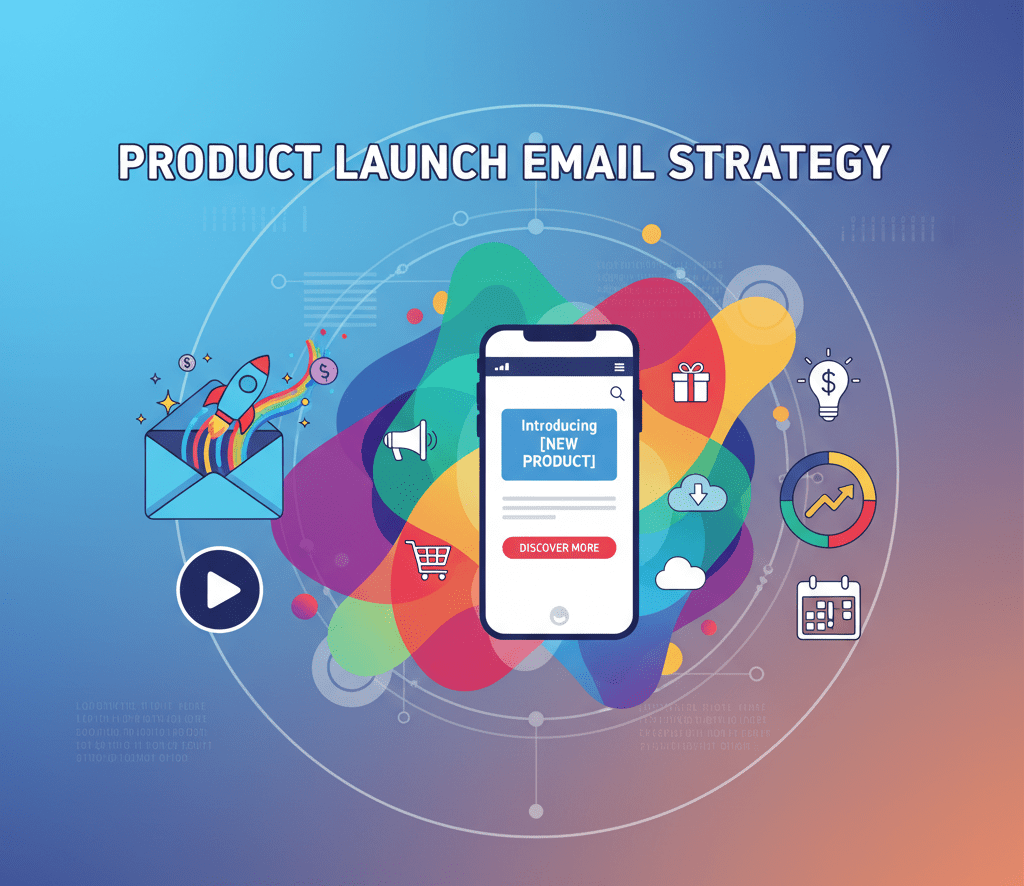
The Anatomy of a Winning Launch Sequence
Before we jump into the examples, remember this: these emails don’t live in a vacuum. They are part of a multi-step conversation. You can’t just send a “buy now” email to a cold list and expect results. You have to warm them up.
- The Teaser (Pre-Launch): Offers hints at what’s to come. Focuses on curiosity or a significant problem.
- The Hype (Waitlist): Announces the solution. Drives signups for a “waitlist” to build an engaged, segmented list. This is a critical phase in the pre-launch email campaign.
- The Launch (Go-Live): The official “it’s here!” sales announcement email. This is where the primary call-to-action (CTA) to make a purchase resides.
- The Follow-Up (Post-Launch): Utilizes social proof (reviews, testimonials) or urgency (launch discount ending, limited stock) to convert those who haven’t made a purchase yet.
Now, let’s see this in action.
10 Product Launch Email Examples That Worked
Stage 1: The Pre-Launch Teaser
These emails are designed to build suspense. They don’t give everything away. They just make you need to know more.
Example 1: Apple (The “Minimalist Mystery” Teaser)
- Company: Apple
- Product: iPhone / Apple Event
- Subject Line: “See you on the 7th.”
Why It Worked:
Apple is the absolute master of the minimalist “coming soon email.” This email is famous in marketing circles for what it doesn’t say.
- The Subject Line: It’s confident. It’s not a question. It’s a statement. It assumes you already care and are just waiting for the date to arrive. The simplicity creates immediate intrigue.
- The Copywriting: There is almost no copy. The entire email is typically a single, cryptic graphic (like the out-of-focus lights of the Apple logo for the iPhone 7 launch) and the date.
- The Visuals: The visual is the message. It’s abstract, high-design, and feels exclusive. It sparks millions of conversations online as people try to decipher the “clues” in the image.
- The CTA: The call-to-action is passive: “Add to your calendar.” Apple isn’t asking you to be interested; it’s telling you when to show up.
How You Can Apply This: You may not be Apple, but you can still apply the principle. Instead of a vague date, send an email with a powerful, problem-focused subject line, such as “The one thing your camera bag is missing.” Inside, show a silhouette of your product or a macro shot of a single feature. Hint at the problem you’re solving without revealing the complete solution. Make them curious.
Example 2: Peak Design (The “Problem-Agitator” Teaser)
- Company: Peak Design
- Product: The Travel Backpack (via Kickstarter)
- Subject Line: “The bag you’ve been waiting for.”
Why It Worked:
Peak Design runs some of the most successful Kickstarter campaigns ever, and their email marketing for product launch is a huge reason why. They start months in advance.
- The Subject Line: This is a perfect, benefit-driven subject line. It doesn’t specify what it is, but it speaks directly to their audience of photographers and travelers who are constantly seeking the perfect bag.
- The Copywriting: Their pre-launch emails are brilliant at agitating a problem. They’ll start with copy like: “Travel is messy. Your bag is either too big, too small, or a black hole where your gear disappears. For 4 years, we’ve been working to fix that.” This prompts the reader to nod in agreement, thinking, “Yes, I hate that!”
- The Visuals: They use high-energy videos and detailed diagrams even in the pre-launch phase. They show the problem (a messy, disorganized bag) and then hint at their solution.
- The CTA: The call-to-action is not “Buy.” It’s “Get Notified on Launch.” This is a low-friction CTA that builds their launch-day list. They are capturing intent before the product is even available, ensuring a massive day-one sales spike.
Stage 2: The Hype & Waitlist
You’ve teased them. Now it’s time to capture their email and build your tribe. These are some of the most essential waitlist email examples you’ll ever see.
Example 3: Robinhood (The “Simple-Value Prop” Waitlist)
- Company: Robinhood
- Product: Commission-free stock trading app
- Subject Line: “Stop paying fees to trade.”
Why It Worked:
Robinhood’s pre-launch is legendary. They gathered nearly 1 million users before they ever wrote a single line of code for the final app. Their launch email was just the gateway.
- The Subject Line: This is a perfect problem-solution subject line. It’s aggressive, clear, and presents an unmissable value proposition. It targets a single, massive pain point.
- The Copywriting: The email (and the landing page it led to) was absurdly simple. It was one headline: “Commission-free trading. Stop paying up to $10 for every trade.” Below that was a single field for your email.
- The Visuals: Stark, simple, and green. It showed a simple phone mockup. The focus was 100% on the text and the signup form. There were no distractions.
- The CTA: “Join the waitlist.” This is where the real magic happened. After signing up, you were taken to a page that said, “You’re #50,432 in line.” But you could move up by referring friends. This email was the entry point to one of the most successful viral referral loops in history.
Example 4: Harry’s (The “Gamified-Referral” Waitlist)
- Company: Harry’s
- Product: Men’s razors (subscription)
- Subject Line: “You’re on the list. Now, here’s how to get free stuff.”
Why It Worked:
Harry’s, a men’s grooming brand, collected 100,000 email addresses in a single week before their launch. How? They gamified their waitlist.
- The Subject Line: This is a brilliant two-part psychological punch. “You’re on the list” (confirmation, sense of belonging). “Now, here’s how to get free stuff” (reward, intrigue).
- The Copywriting: The email was simple: “Thanks for signing up. The best way to get our products is to get them for free.” It then clearly laid out the rewards.
- The Visuals: They showed the reward tiers visually. “Refer five friends -> Get Free Shave Cream.” “Refer 10 friends -> Get a Free Razor.” “Refer 50 friends -> Get a Year of Free Blades.” Seeing the products made the rewards tangible.
- The CTA: “Get Your Unique Link.” This call-to-action was all about sharing. It wasn’t about buying. It was about evangelizing. They turned every single waitlist subscriber into a potential salesperson. This is a model pre-launch email campaign.
Example 5: MasterClass (The “Aspiration-Sell” Coming Soon)
- Company: MasterClass
- Product: A new celebrity-taught class
- Subject Line: “Gordon Ramsay teaches cooking. Coming soon.”
Why It Worked:
MasterClass doesn’t sell online classes; it sells access to genius. It sells aspiration. Their “coming soon” emails are a perfect example of this.
- The subject line is direct, name-drops a huge authority, and uses simple language. It is the value proposition. You instantly know what it is and why you should care.
- The Copywriting: The copy doesn’t talk about “10 modules” or “20 hours of video.” It talks about the transformation. “Learn from a legend.” “See the world through his eyes.” “He’ll teach you not just what to cook, but how to think.” It’s emotional and benefit-driven.
- The Visuals: Absolutely stunning. A cinematic, high-production-value photograph of the celebrity dominates the email. It looks like a movie poster, not a course announcement. This positions the product as premium entertainment, not dry education.
- The CTA: “Be the first to know” or “Reserve your spot.” This creates a feeling of scarcity (even if it’s artificial) and makes the user feel like they’re getting early access.
Stage 3: The Launch Day
The big day is here. The waitlist is complete, and the hype is at its peak. These new product announcement email examples are designed to convert interest into revenue.
Example 6: Superhuman (The “Exclusivity” Launch)
- Company: Superhuman
- Product: Premium email client
- Subject Line: “Your Superhuman Invite”
Why It Worked:
Superhuman is a premium email service that famously had a massive waitlist. Getting off the waitlist was an event in itself. This email isn’t a “buy now” blast; it’s a golden ticket.
- The Subject Line: “Your Superhuman Invite.” The word “Invite” is key. It doesn’t say “Welcome” or “Get Started.” It implies you’ve been chosen. This makes the recipient feel special and part of an exclusive club.
- The Copywriting: The copy is minimal and congratulatory. “You’re in.” “Your wait is over.” It reinforces the idea that you’ve earned this. It immediately frames the product as a high-value, in-demand tool.
- The Visuals: Extremely clean, minimalist, and on-brand. Often, it’s just text on a white background with their sleek logo. The design is the brand: fast, clean, and professional.
- The CTA: “Schedule Your Onboarding” or “Start Your 30-Day Trial.” By requiring a 30-minute personal onboarding call, they further increase the perceived value and ensure users actually learn how to use the product, reducing churn.
Example 7: Slack (The “Benefit-Driven” Launch)
- Company: Slack
- Product: Team communication tool
- Subject Line: “Slack is here. Be less busy.”
Why It Worked:
When Slack first launched, it was entering a crowded market. It had to explain its value immediately.
- The Subject Line: A perfect one-two punch. “Slack is here” (The announcement). “Be less busy” (The core benefit). It’s not “Our new chat tool”; it’s “A solution to your problem.”
- The Copywriting: The launch email was a masterclass in problem-solution copywriting. It was full of “Imagine if…” statements. “Imagine all your team communication in one place.” “Imagine less email.” They sold the outcome, not the features. The copy was human, fun, and used emojis, which helped it stand out.
- The Visuals: They used simple, colorful icons and plenty of white space to break up the text. They might include a simple GIF showing the core functionality (such as a channel conversation) to make the abstract concept of “team communication” more tangible.
- The CTA: “Try Slack for Free.” This is a powerful, risk-free offer. For a new B2B tool, “free” is the most effective CTA to drive adoption.
Example 8: Beardbrand (The “Founder-Led” Launch)
- Company: Beardbrand
- Product: A new beard oil or grooming kit
- Subject Line: “It’s here. A letter from our founder.”
Why It Worked:
Beardbrand is a community-driven brand. Their customers don’t just buy products; they buy into an identity. A personal launch email template is perfect for this.
- The Subject Line: It creates intimacy. This isn’t a corporate broadcast. It’s a letter from a person. This makes it feel meaningful and personal, dramatically increasing open rates.
- The Copywriting: The email is written in the first person, from the founder (Eric Bandholz). He tells the story behind the product. “I was tired of beard oils that were greasy and smelled… so we spent the last 8 months developing this…” This builds authenticity and trust. People connect with stories, and they buy from people they trust.
- The Visuals: The email often includes a high-quality, personal photo of the founder using the product. It’s not a sterile studio shot. It’s a lifestyle photo that reinforces the brand’s identity.
- The CTA: “Shop the New Collection.” It’s direct, but after reading the personal story, it feels less like a “buy” button and more like an “support the mission” button.
Stage 4: The Post-Launch
You’ve launched. You got a big spike. But what about the 80% of people who saw the email but didn’t make a purchase? Now you follow up.
Example 9: Casper (The “Social Proof” Follow-Up)
- Company: Casper
- Product: The Casper Mattress
- Subject Line: “See what everyone’s dreaming about 😴”
Why It Worked:
Buying a mattress online was a new, scary concept. Casper’s biggest hurdle was trust. Their post-launch emails tackled this head-on with overwhelming social proof.
- The Subject Line: It’s clever, on-brand (“dreaming”), and sparks curiosity. It hints that other people are already using and loving the product.
- The Copywriting: The email is light on marketing copy and heavy on customer quotes. It’s just a stream of 5-star reviews. “This is the best mattress I’ve ever owned.” – Sarah K. “I haven’t slept this well in years.” – Mark T.
- The Visuals: They pull in quotes from major publications (Wired, Forbes, TechCrunch) and use their logos for authority. They also feature user-generated content (UGC) – real photos from customers’ bedrooms.
- The CTA: “Shop Now” or, more importantly, “Try it 100-Nights Free.” This CTA, combined with the massive social proof, systematically destroys every purchasing objection. “Everyone loves it… and even if I don’t, I can just return it. There’s no risk.”
Example 10: Trello (The “Urgency” Follow-Up)
- Company: Trello
- Product: Trello Gold (Premium features)
- Subject Line: “Last chance: 24 hours left for your launch discount.”
Why It Worked:
This is the classic “last chance” sales announcement email. It is, without a doubt, one of the highest-converting emails you will ever send in your sequence.
- The Subject Line: It’s pure, unadulterated urgency. “Last chance.” “24 hours left.” There is no ambiguity. This creates a powerful sense of FOMO (Fear Of Missing Out).
- The Copywriting: The copy is short, direct, and action-oriented. The time for storytelling is over. It restates three things very clearly:
- The Offer: “50% off your first year of Trello Gold.”
- The Deadline: “This offer ends tonight at midnight.”
- The Value: “Get custom backgrounds, more storage, and…”
- The Visuals: The most effective visual here is a countdown timer. Seeing the (days:hours:minutes: seconds) ticking down right in the email creates a visceral sense of urgency that text alone cannot convey.
- The CTA: “Upgrade Now.” It’s a strong, imperative command. Not “Learn More.” Not “See Features.” It’s “Upgrade Now.” This email is a closer.
How to Supercharge Your Product Launch Emails with Referral Marketing
You’ve just seen 10 excellent marketing email examples. You could copy these templates, build your sequence, and you would do well.
But what if you could multiply the power of every single email you send?
Think about it. When you send a launch email to your list of 1,000 subscribers, you have 1,000 chances to make a sale. That’s a finite number.
What if you could turn those 1,000 subscribers into 1,000 marketers? What if 300 of them shared your launch with five friends each? Suddenly, your email wasn’t just seen by 1,000 people. It was seen by 1,000 + (300 * 5) = 2,500 people. You just more than doubled your reach without spending another dollar on ads.
This is the power of referral marketing. And it’s not just a “nice to have”—it’s the engine that powered the launches of Robinhood, Harry’s, and countless other hyper-growth companies.
This is where a tool like Viral Loops comes in.
Viral Loops is a platform designed to build these referral campaigns directly into your product launch flow. It’s the “how” behind the “what” we saw with Harry’s and Robinhood.
Here’s how it works with your email sequence:
- It Integrates with Your Waitlist: A user gets your “coming soon email” (like the Peak Design example). They click “Get Notified” and are directed to your page.
- It provides the “Thank You” Pop-up: After they sign up, Viral Loops provides the pop-up or “thank you” page. This is the crucial moment. Instead of just saying “Thanks!”, it says: “You’re on the list! Want to get 20% off at launch? Refer three friends.”
- It Generates Unique Referral Links: Viral Loops instantly generates a unique referral link for that specific subscriber.
- It Embeds Widgets Directly in Your Emails: This is the game-changer. Your following email (the waitlist confirmation) can have a Viral Loops widget embedded right inside. It will say:
- “You’ve referred 0 out of 3 friends.”
- “Here’s your unique link: [your.link/1a2b3c]”
- [Share on Facebook] [Share on Twitter] [Share on Email]
Now, your waitlist email examples are no longer static. They are interactive, gamified, and working for you. Your subscribers check back to see their progress, and they are incentivized to share your product with their entire network before it’s even for sale.
You can use this for any launch:
- Pre-Launch: Run a waitlist (like Robinhood) to get rewards.
- Launch Day: Run a giveaway. “Share our launch with a friend, and you’re both entered to win [Prize].”
- Post-Launch: Offer a two-sided reward. “Love your new [Product]? Give a friend 15% off, and you’ll get $15.”
By integrating a referral program with Viral Loops into your product launch email sequence, you stop just announcing your product and start building a self-perpetuating movement.
Your Launch Is Not an Accident
A massive product launch doesn’t happen by accident. It’s not about luck. It’s the result of a carefully constructed plan.
These 10 examples show you the power of a strategic product launch email sequence. They prove that by building curiosity, solving a real problem, and using psychology, you can create a tidal wave of demand.
But the real secret of the biggest launches—the Harry’s, the Robinhoods, the Dropboxs—is that they didn’t just talk to their audience. They empowered their audience to speak on their behalf.
So as you plan your next launch, don’t just write a launch email template. Build a growth engine. Combine the killer copy of Beardbrand, the urgency of Trello, and the powerful referral engine of Viral Loops.
Stop just announcing your products. It’s time to launch them truly.
Frequently Asked Questions (FAQs)
Q: What is a product launch email, really?
A: A product launch email is not just one email. It’s a strategic sequence of emails designed to build anticipation, capture leads, and convert them into customers for a new product or service. A successful campaign includes teasers, waitlist builders, a principal launch announcement, and post-launch follow-ups.
Q: How many emails should be in a product launch email sequence?
A: There’s no magic number, but a 3- to 5-email sequence is a common and effective starting point.
- Email 1 (Teaser): 1-2 weeks before launch.
- Email 2 (Hype/Waitlist): 1 week before launch.
- Email 3 (Launch Day): The “It’s Here!” email.
- Email 4 (Follow-up): 1-2 days after launch (e.g., social proof, case study).
- Email 5 (Last Chance): The final 24 hours of any launch-specific discount.
Q: What are the best product launch email subject lines?
A: The best ones are clear, not clever. They fall into a few categories:
- Curiosity: “It’s coming…” / “The one thing you’ve been missing.”
- Benefit-Driven: “The [Problem]… solved.” / “Your [Task] just got 10x easier.”
- Direct Announcement: “[Product Name] is here.” / “A letter from our founder.”
- Urgency/Exclusivity: “Your invite is inside.” / “Last chance for 50% off.”
Q: How do I build a product launch waitlist?
A:
- Create a simple landing page that clearly states the product’s main benefit.
- Have a single, clear CTA: “Join the Waitlist.”
- Drive traffic to this page from your social media, existing email list, and content.
- Crucially: Use a referral tool like Viral Loops on the “thank you” page to incentivize every new subscriber to share their unique link and refer their friends.